
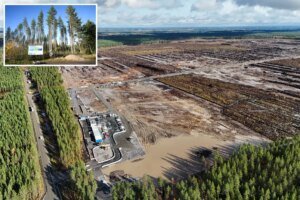


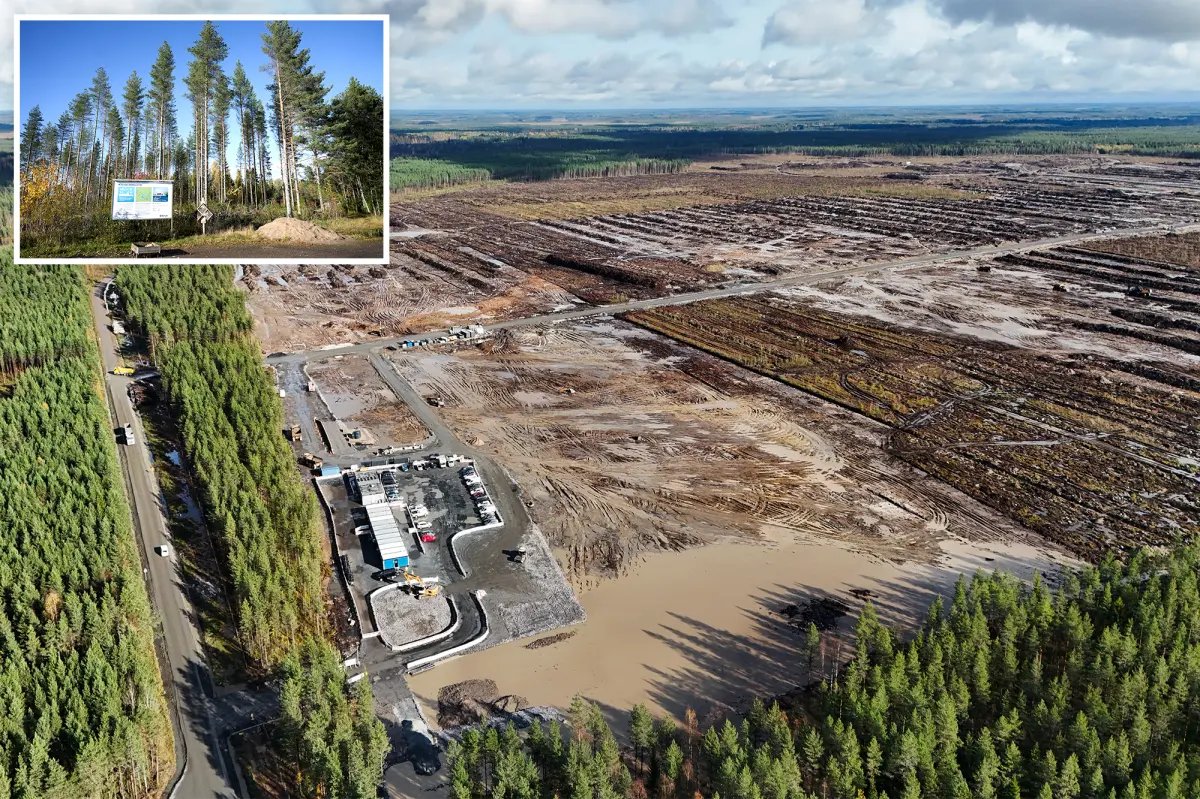
Google has been accused of illegally clearing an estimated 250,000 trees in Northern Finland to pave the way for a new data center, leading to significant environmental and community concerns. The company reportedly removed forested land across 816 acres near the rural town of Muhos before securing the necessary Environmental Impact Assessment, a requirement under Finnish law.
Consequently, local authorities halted development at two of Google’s planned data center sites to evaluate the environmental consequences of the operation. The aftermath of the deforestation has created a barren landscape filled with mud and debris, disturbing the local wildlife. Residents have noted that wolves are now venturing into nearby towns in search of food, as their natural habitat has been destroyed.
Community members express frustration with Google’s approach, which they describe as disrespectful and hasty. Many residents fear the increased noise and environmental degradation associated with the data center construction. Some locals are also concerned about potential geopolitical threats, given the rising tensions in Europe.
Google’s Finnish operations chief stated the company believed it had the necessary legislative approval to commence the tree removal, a claim that has been met with skepticism and anger from local conservation groups. Following the backlash, Google expressed intent to protect local water sources and plans to replant trees on approximately 321 acres.
Officials from the Finnish Licensing and Supervision Authority emphasized the need to assess the ecological impacts of the prepared sites and stressed that actions taken thus far could lead to significant environmental changes.
Why this story matters
- Highlights the consequences of large-scale developments on local ecosystems and communities.
Key takeaway
- There is an ongoing tension between technological expansion and environmental preservation in Finland.
Opposing viewpoint
- Some community members argue that Google’s actions reflect a broader trend of prioritizing rapid industry progression over ecological considerations.