

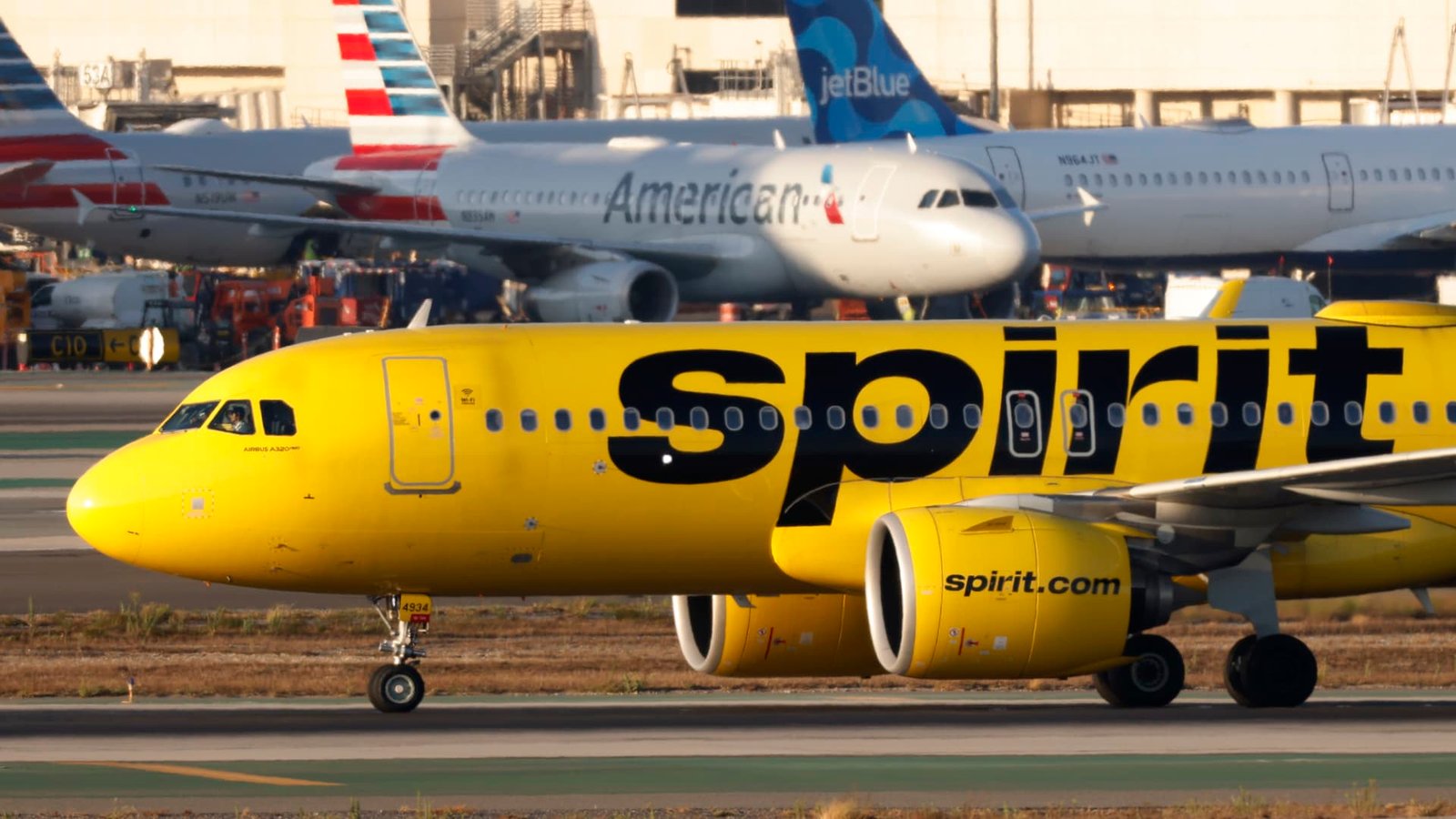
President Donald Trump has indicated that the government may consider a bail-out for Spirit Airlines as the financially struggling low-cost carrier explores potential agreements with its lenders. During a press briefing in the Oval Office, Trump expressed a desire to support both the airline and its employees, stating, “I’d love to be able to save those jobs. I like having a lot of airlines, so it’s competitive.”
This development comes as Spirit Airlines faces severe financial difficulties, highlighted by a nearly $28.3 million operating loss in February, predating a surge in jet fuel costs. Following the onset of COVID-19, Spirit’s operations were further impacted by changing consumer preferences towards more premium services and international flights, forcing the airline to reduce costs significantly and shrink its network. The airline’s operations dramatically decreased from 19,575 flights in May 2022 to just 9,353 in the same month this year.
The Biden administration previously blocked a merger between Spirit and JetBlue Airways, a decision the Trump administration has criticized, claiming it weakened Spirit financially. Discussions among industry stakeholders suggest that other airlines may seek similar governmental assistance in light of rising operational costs.
A proposed $500 million loan could grant the U.S. government a 90% stake in Spirit and allow it to appoint a board member. Bankruptcy proceedings may commence soon to address these developments, while Spirit’s labor unions have voiced support for a deal, emphasizing the potential harm of liquidation. Analysts remain skeptical about the sufficiency of the proposed funding in ensuring the airline’s long-term viability.
Why this story matters
- Highlights the precarious state of low-cost airlines amid rising costs.
Key takeaway
- Government intervention in Spirit Airlines could set a precedent for assistance to other struggling carriers.
Opposing viewpoint
- Critics argue against the rationale of bailing out a single company, suggesting it may not be the best use of taxpayer resources.