

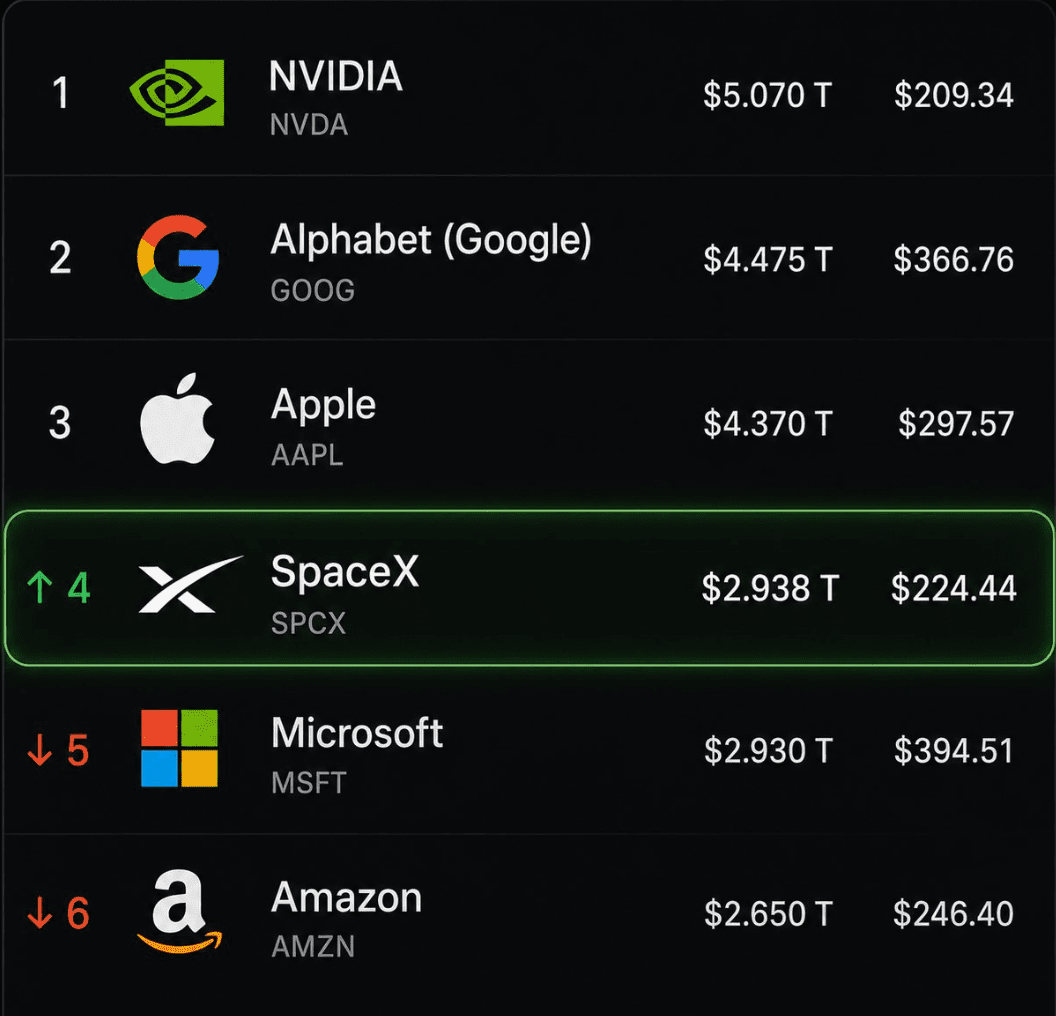
SpaceX has experienced a significant surge in its stock value following its recent initial public offering (IPO), reaching a market capitalization that briefly surpassed both Amazon and Microsoft, reaching approximately $2.9 trillion at its peak. This remarkable performance positions SpaceX as the fourth largest company in the world by market value, trailing only Nvidia, Alphabet (Google), and Apple.
In the days following its IPO, SpaceX shares rose between 10% and 14%, indicating strong investor interest and confidence in the company’s future prospects. The company is now publicly traded just a few days, but its stock rally has already made a noticeable impact on the markets. Elon Musk, as a major shareholder, has also seen a substantial increase in his personal wealth due to this surge in stock prices.
The impressive market debut and subsequent growth of SpaceX could signify a growing recognition of the potential of private aerospace companies in the market.
Why this story matters
- The rise of SpaceX illustrates the increasing value placed on private aerospace ventures.
Key takeaway
- SpaceX’s stock performance post-IPO underscores strong investor confidence in the company’s future growth and innovation.
Opposing viewpoint
- Critics may argue that the high valuation could be unsustainable and driven by market speculation rather than fundamentals.