

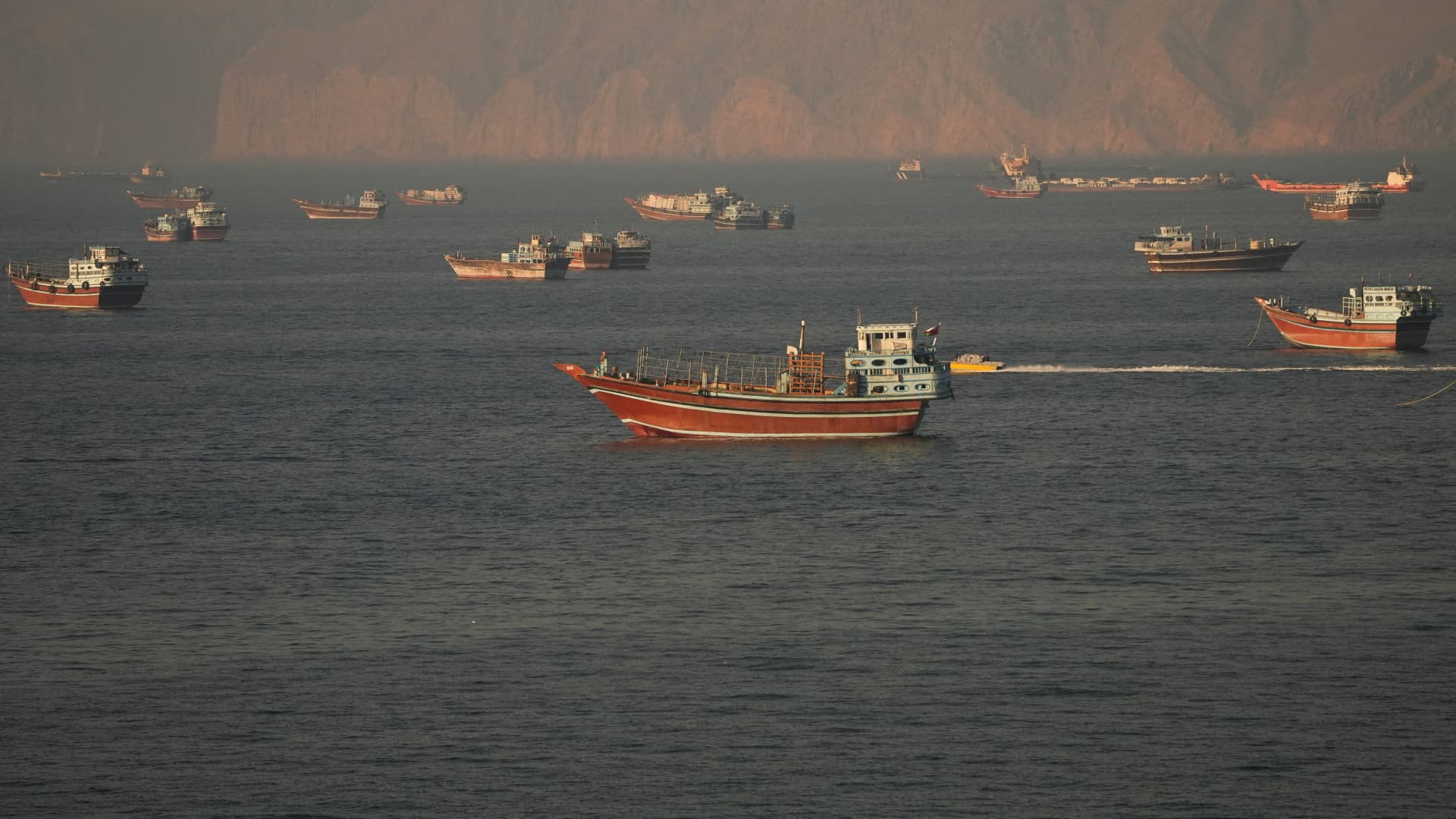
Iran announced the closure of the Strait of Hormuz on Saturday, advising vessels to avoid the crucial shipping route. The U.S. promptly countered this claim, asserting that the waterway was still open. U.S. Vice President JD Vance departed for Switzerland to engage in further negotiations with Iran, set to commence on Sunday. This tension arises just days after the two nations reached an interim agreement aimed at reducing hostilities in the region.
Iran’s military stated that the decision to close the strait was a response to ongoing Israeli military actions in Lebanon and a perceived failure by the U.S. to uphold commitments under the truce framework. Iranian state media indicated that additional measures could follow if aggressive actions continued. The situation was further complicated by recent Israeli airstrikes in southern Lebanon, which reportedly resulted in civilian casualties.
Despite Iran’s announcement, the U.S. Central Command emphasized that traffic through the Strait of Hormuz was uninterrupted and that U.S. forces were actively monitoring the situation. President Donald Trump indicated that the strait would remain open for 60 days, during which no tolls would be imposed unless an agreement was not finalized.
As Vice President Vance prepared for the negotiations, he expressed optimism about advancing discussions on both nuclear issues and a ceasefire in Lebanon. He noted that oil tanker traffic had significantly increased, reflecting a positive trend since the ceasefire agreement. Vance emphasized the necessity of managing the evolving situation for the safety and security of both Israel and Lebanon.
Why this story matters
- Impacts global oil supply and geopolitical stability.
Key takeaway
- Ongoing negotiations may hinge on the status of the Strait of Hormuz amid regional tensions.
Opposing viewpoint
- Iran argues that U.S. actions are undermining the truce and escalating conflict.