

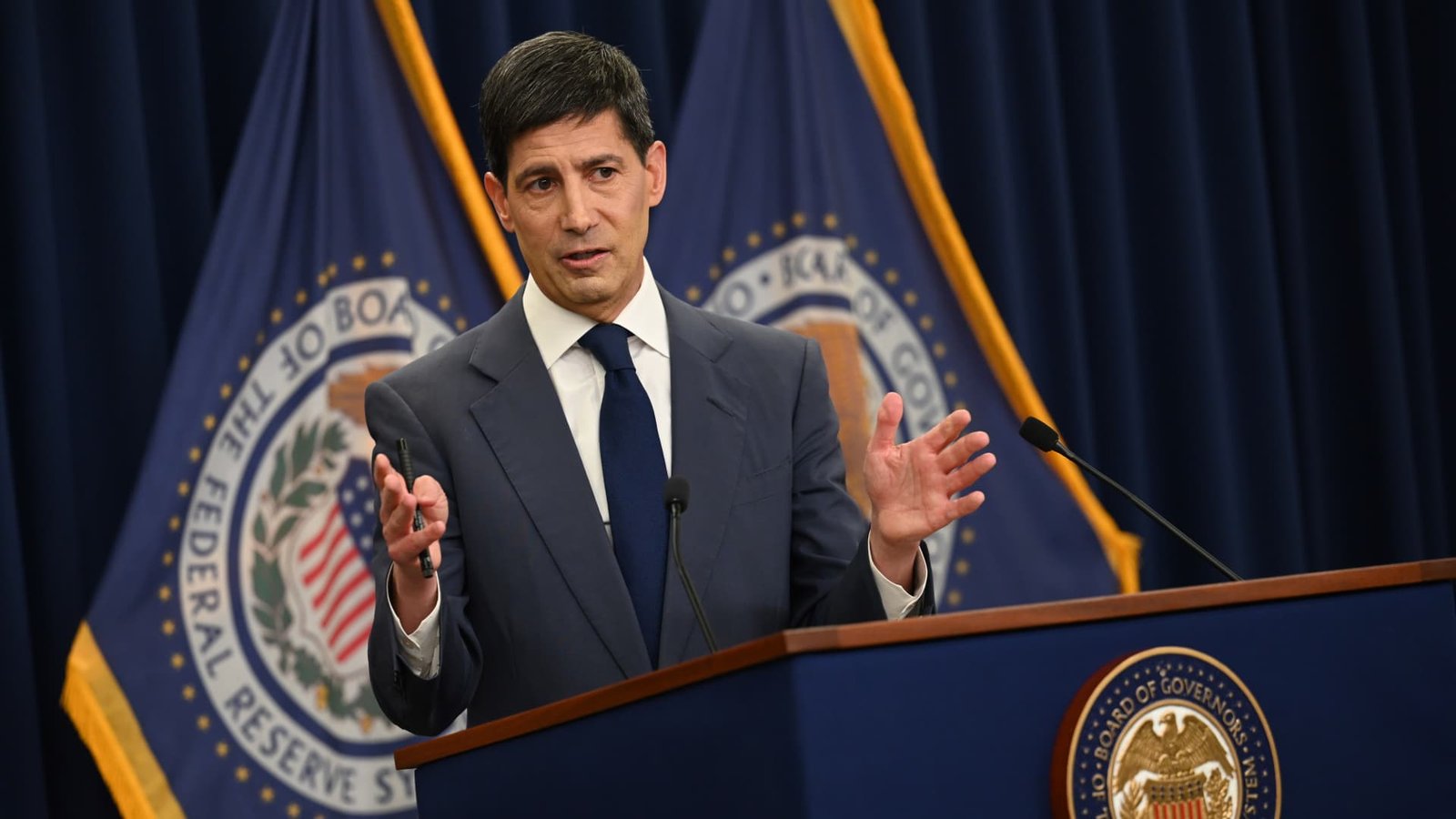
Federal Reserve Chairman Kevin Warsh’s recent comments on inflation have stirred significant activity in financial markets, with expectations that the central bank may begin raising interest rates within the next few months. Appointed by former President Donald Trump, who has favored lower rates, Warsh emphasized a commitment to combating inflation, which has exceeded the Fed’s 2% target for five consecutive years. During a news briefing, Warsh stated, "Persistently high prices are a burden for the American people," and assured that the Federal Open Market Committee (FOMC) is united in its goal of achieving price stability.
Market responses to Warsh’s declarations were immediate. The yield on the 2-year Treasury note, often viewed as a barometer for Fed policy changes, surged as traders began to anticipate potential rate hikes. By Thursday, the likelihood of an interest rate increase at the late July FOMC meeting rose to roughly one in three, while the chance of a rate increase in September soared to 67%.
Analysts initially perceived Warsh as a proponent of loosening monetary policy; however, his strong focus on inflation reversed that narrative. Veteran market analyst Ed Yardeni expressed surprise at Warsh’s orthodox stance, contrasting it with earlier beliefs about his dovish leanings. Despite the initial shock that led to declines in stock averages and rising Treasury yields, Wall Street quickly reassessed the situation amid broader economic considerations.
Looking ahead, some experts believe the Fed may hold off on rate hikes for the remainder of the year, citing upcoming elections and current inflation metrics that suggest easing pressures. Prices for commodities have also shown signs of stabilization, adding further complexity to the Fed’s policy outlook.
Bold Points:
- Why this story matters: It highlights potential shifts in monetary policy impacting economic stability and market forecasts.
- Key takeaway: Warsh’s firm stance on inflation contradicts prior assumptions of a softer monetary policy approach.
- Opposing viewpoint: Some analysts argue that the Fed may refrain from raising interest rates this year due to the complex political landscape and shifting inflation dynamics.