


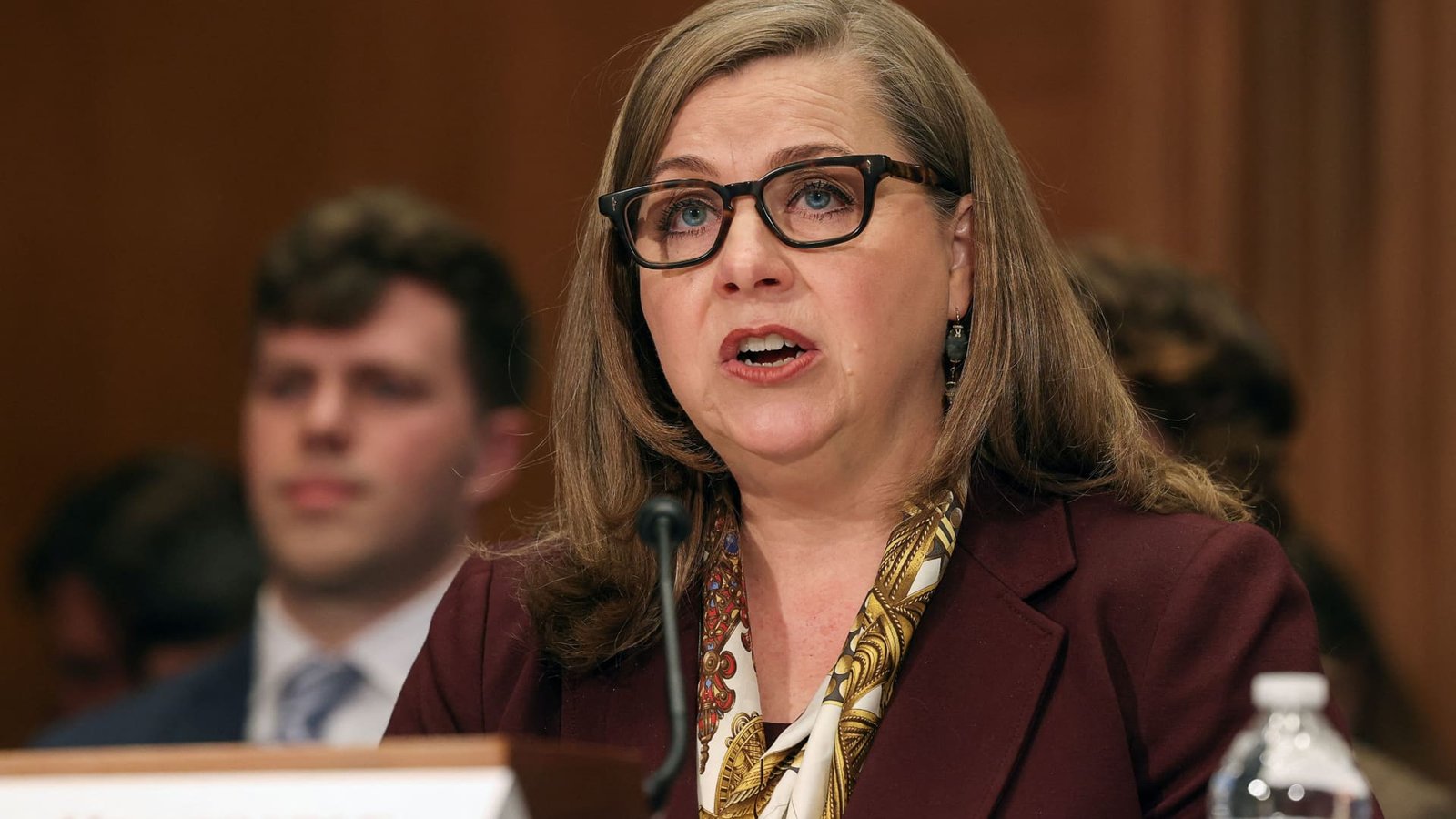
Federal Reserve Board Governor Michelle Bowman recently testified at a Senate Banking, Housing, and Urban Affairs Committee hearing regarding her nomination as Federal Reserve vice chair for supervision. During this event, the Federal Reserve disclosed that the largest U.S. banks would be capable of absorbing over $708 billion in losses in the event of a severe global recession, while still maintaining their lending activities for households and businesses.
The Fed’s annual stress test assessed all 32 banks, confirming that they remained above the required capital thresholds even under severe hypothetical conditions, which included a 10% unemployment rate, a 39% drop in commercial real estate prices, and a 30% decline in home values. Although the collective common equity tier 1 capital ratio decreased by 1.6 percentage points during this stress test, it still exceeded the mandatory minimum requirements.
Bowman stated that the results highlight the resilience of the banking system. Unlike previous years, the results of this particular stress test will not impact the capital requirements for large banks because the Federal Reserve previously announced its decision to maintain current capital buffers until 2027. This decision is part of a broader reassessment of regulatory methodologies, responding to industry concerns.
Analysts from KBW characterized this year’s exercise as somewhat routine, noting that banks are likely to focus on the impending Basel III Endgame proposal rather than the current stress test outcomes. If this year’s results had influenced capital requirements, firms such as Morgan Stanley, Citigroup, Citizens Financial, and KeyCorp could have faced significant reductions to their capital buffers.
Why this story matters
Key takeaway
Opposing viewpoint