



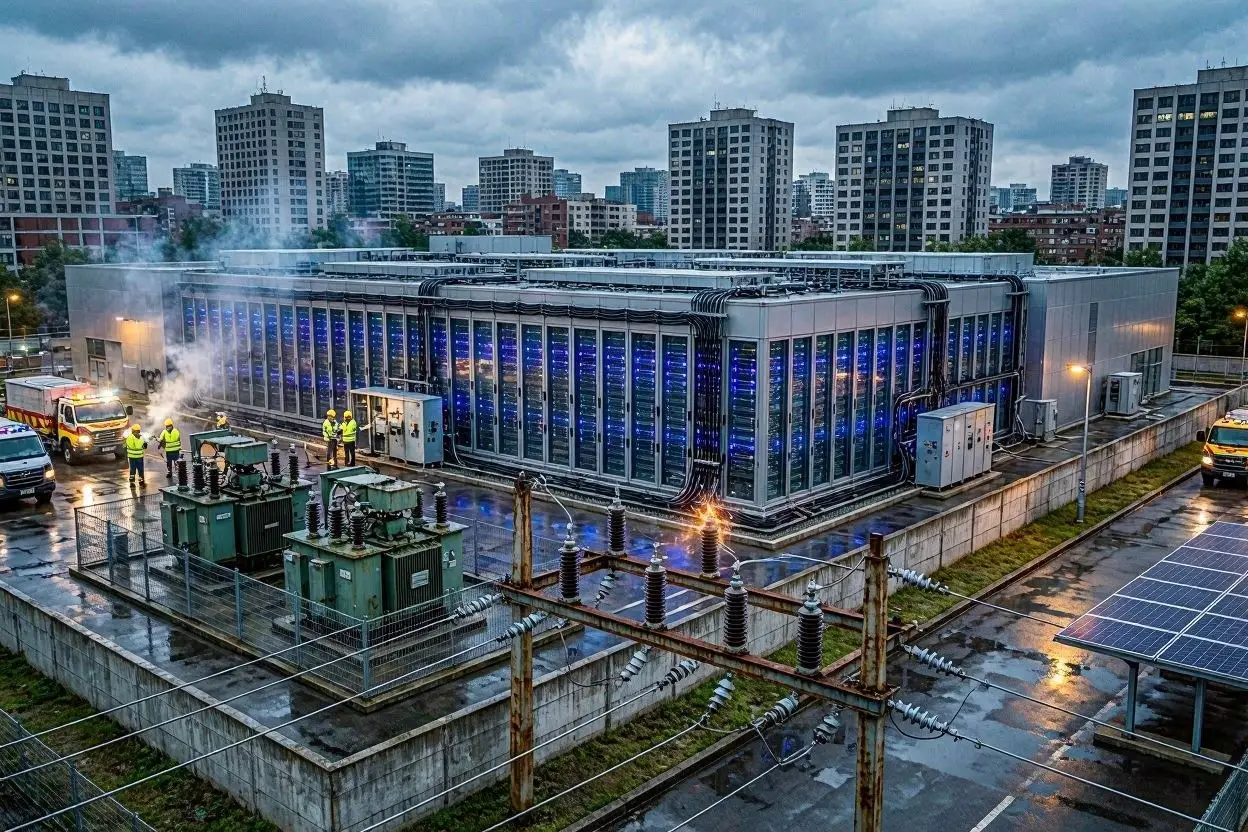
The rapid expansion of artificial intelligence (AI) systems in the United States is significantly increasing the demand for electricity, raising concerns about the capacity of the existing power grid to support this growth. Data compiled by Epoch AI indicates that the power consumption of large AI-focused data centers in the U.S. currently stands at approximately 10.3 gigawatts (GW), sufficient to power millions of homes. This demand is projected to surge to around 35 GW by the end of the decade, with an estimated tripling of power needs by 2028.
This surge in energy requirements underscores a critical challenge: while major companies like Microsoft, Amazon, Google, and Meta are investing vast sums—totaling hundreds of billions of dollars—in AI infrastructure, the capacity to deliver this power is lagging. Analysts predict that only 50% to 60% of planned data centers will become operational as scheduled over the next couple of years due to delays related to power supply and utility infrastructure.
A recent study from PJM, the nation’s largest grid operator, notes that projects taking shape for a 2025 launch are experiencing an average wait of eight years to connect to the grid. Moreover, about two-thirds of future AI data centers are in locations where no existing power infrastructure is present, meaning construction may be complete, but operations cannot commence until additional power connections are established.
As the demand for AI capabilities continues to grow, the race is shifting focus from technological development to the establishment of robust physical infrastructure. Past successes in overcoming similar infrastructure challenges will be crucial in addressing the current bottleneck.
Why this story matters:
- Highlights the urgent need for upgrades to the U.S. electrical infrastructure to support AI growth.
Key takeaway:
- A significant increase in AI data centers is straining the power grid, risking delays in operational readiness.
Opposing viewpoint:
- Some experts argue that advancements in energy technology may mitigate these infrastructure challenges more swiftly than anticipated.