


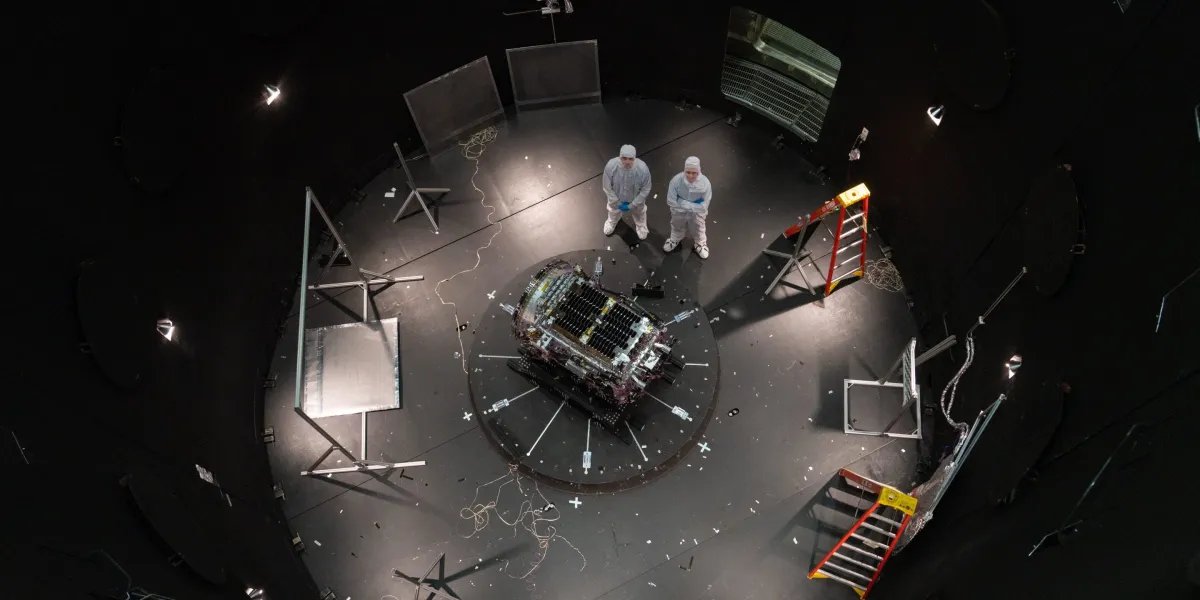
NASA is initiating a critical mission to rescue the Swift Observatory, an aging telescope at risk of re-entering Earth’s atmosphere. The $30 million operation, involving a robotic spacecraft developed by startup Katalyst Space Technologies, is set to commence soon, with a launch possible as early as this week.
The mission aims to elevate Swift to a more stable orbit following increased solar activity that has caused its altitude to decrease rapidly since its launch in 2004. The autonomous spacecraft, named Link, is designed to reach Swift after launch from the Marshall Islands and will take approximately a month to catch up with the observatory. The goal is to raise Swift’s orbit from its current altitude of 224 miles (360 kilometers) to 373 miles (600 kilometers) before it reaches a critical low point expected in October.
NASA has emphasized the importance of this mission, as rescuing Swift could preserve valuable scientific capabilities. Swift plays a vital role in detecting astronomical events such as gamma-ray bursts, and its loss would significantly impact ongoing research efforts. Plans to potentially rescue the Hubble Space Telescope, which is also facing altitude challenges, are being discussed for the future.
While China has successfully executed a similar mission in the past, this operation marks the first American endeavor to utilize a robotic spacecraft for such a purpose. Katalyst aims to establish a new industry in space repair and maintenance, envisioning a future where robotic systems will service satellites and support other space infrastructure.
Why this story matters:
- Protects critical astronomical capabilities and ongoing research.
- Represents a new frontier in space industry with potential for future repairs.
Key takeaway:
- The mission to rescue Swift could pave the way for the future of robotic satellite servicing.
Opposing viewpoint:
- Critics may question the feasibility and high costs associated with such innovative space missions.