



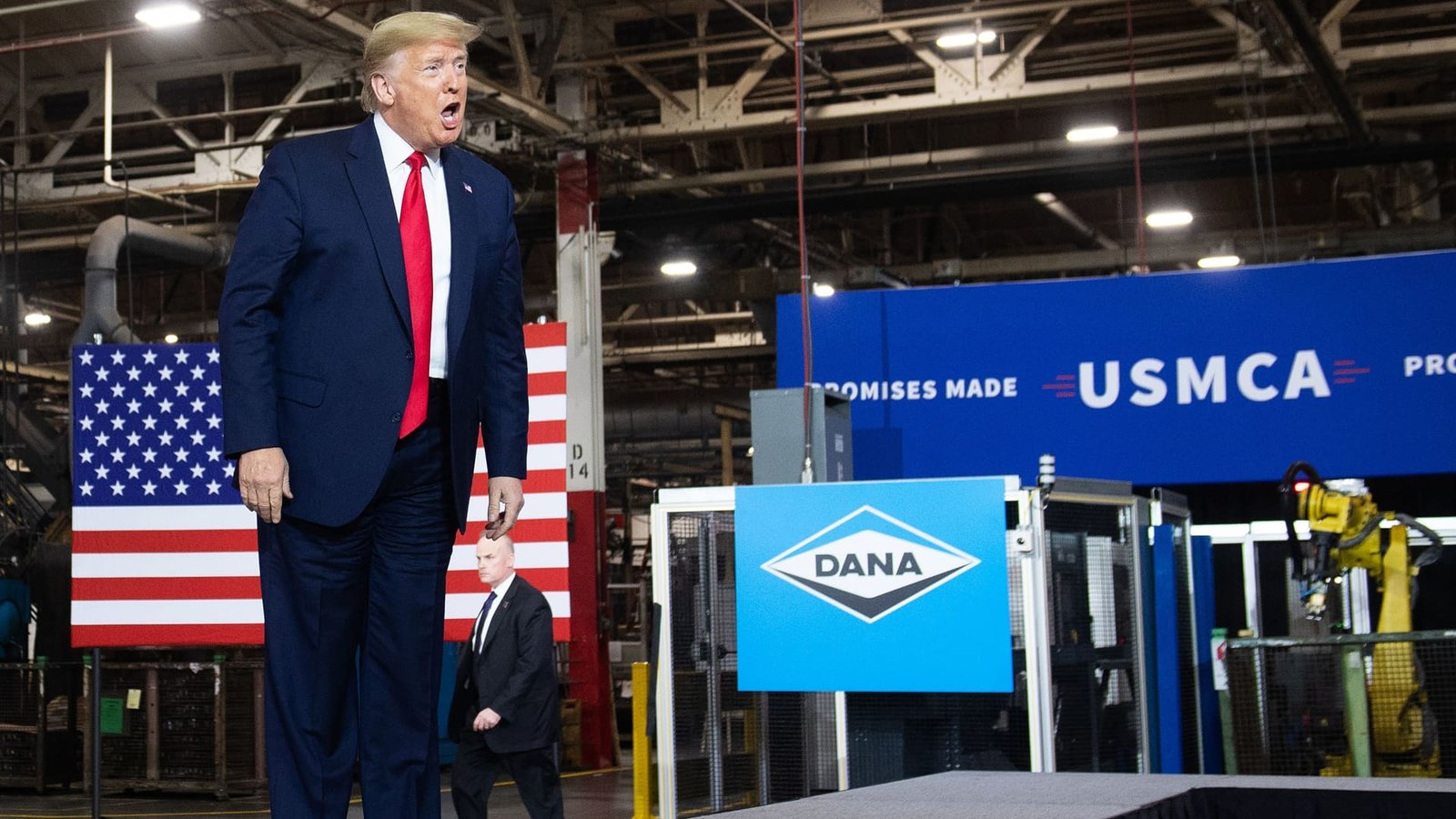
The U.S. automotive industry faces significant uncertainty following the Trump administration’s decision not to extend the United States-Mexico-Canada Agreement (USMCA) by the designated deadline. Established in 2020 to replace the North American Free Trade Agreement (NAFTA), the USMCA facilitates approximately $2 trillion in goods and services traded annually among the three nations. The auto sector, accounting for 18% of this trade, is particularly concerned that renegotiating the agreement may lead to decreased investments and lost jobs.
Industry experts warn that a prolonged review process could be detrimental, potentially contributing to trade instability. Diego Marroquín Bitar from the Center for Strategic and International Studies noted that the expanded discussions around nontrade issues, such as immigration and crime, could further complicate negotiations. As the U.S. seeks to bolster domestic manufacturing through increased rules of origin, automakers emphasize the importance of maintaining a trilateral agreement that enhances, rather than fragments, regional trade.
Currently, USMCA mandates that 75% of a vehicle’s regional value must be sourced from North America, with proposals suggesting an increase to 82%, 50% of which would need to be produced in the U.S. Automotive leaders caution that overly stringent requirements could inadvertently lead to reduced domestic production as companies might shift toward sourcing less expensive parts from abroad to mitigate costs. They advocate for a balanced approach that encourages both competitiveness with China and a robust North American supply chain.
Optimism exists among Canadian officials about reaching a satisfactory agreement before fall. However, substantial challenges remain as the industry navigates this complicated landscape.
Why this story matters: It highlights the complexities and potential ramifications of trade negotiations on the vital automotive sector.
Key takeaway: Revising the USMCA could impact investment and employment in the U.S. auto industry, with calls for a balanced approach to negotiations.
Opposing viewpoint: Some argue that stringent rules could force automakers to shift production strategies, potentially undermining the goal of increasing American content in vehicles.