



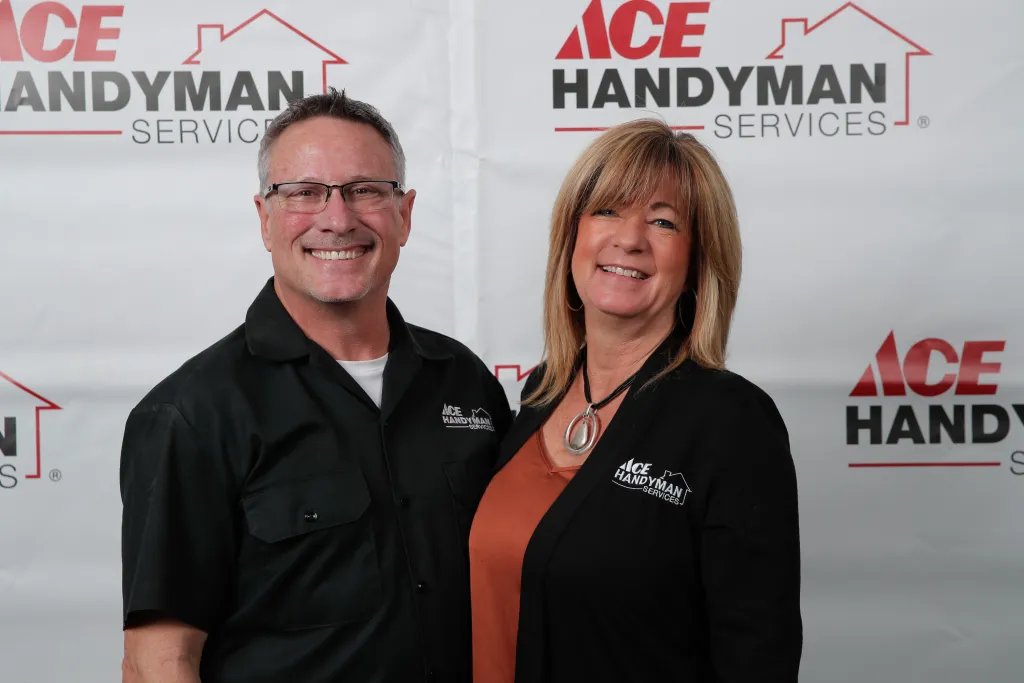
Colette and Andy Bell launched a handyman business in Denver, Colorado, in 1998 to address a gap in the market. They observed that larger contracting companies were often unwilling to undertake small home projects, leading to difficulties for homeowners seeking reliable services for minor repairs. “We found that homeowners had a really hard time finding somebody professional and reliable for small projects,” Colette stated in a recent interview.
Their business model quickly gained traction, resulting in significant growth in its first year. In 2001, they began franchising under the name Handyman Matters, with Andy serving as CEO and Colette in various leadership roles. After connecting with Ace Hardware in 2018, their company was acquired in 2019, enabling further expansion.
Currently, Colette serves as vice president of franchise development at Ace Handyman Services, helping to increase the company’s footprint from 119 to 383 territories over four years. The business saw a 12% growth in sales from 2024 to 2025, surpassing $113 million.
The Bells attribute their success to a focus on punctuality, professionalism, and exceptional customer service. By implementing a time-and-materials billing model, they adapted to diverse market conditions while ensuring franchise owners had a competitive edge through protected territories defined by ZIP codes. This model fosters localized management and customer relations.
Looking ahead, Colette envisions Ace Handyman Services expanding substantially across the U.S. and cultivating generational ownership among franchisees to ensure the longevity and success of the brand.
Why this story matters: The Bells’ approach highlights a successful model for addressing underserved markets in home services.
Key takeaway: Strong leadership and customer service are critical to the franchise’s growth and sustainability.
Opposing viewpoint: Critics may argue that the reliance on franchising could lead to inconsistencies in service quality across different regions.