

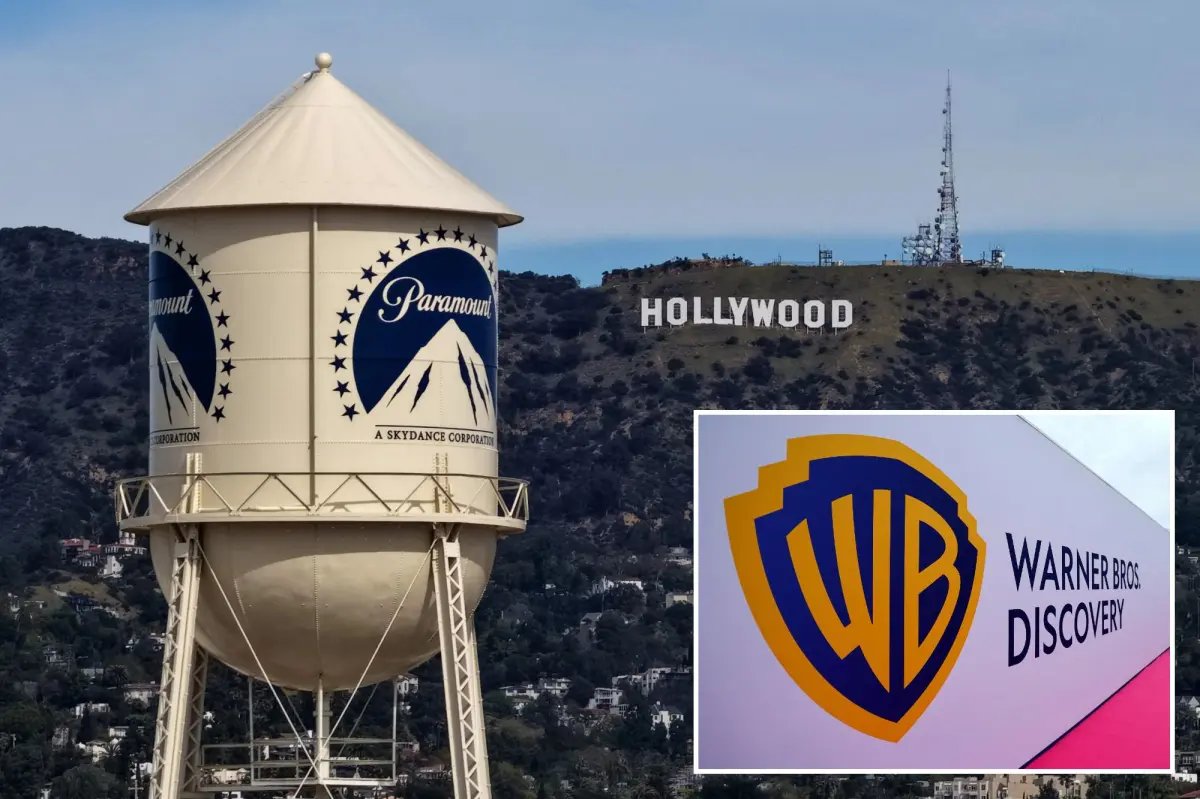
Paramount Skydance announced on Friday that it will pause its merger with Warner Bros. Discovery until at least next June while a judge reviews a lawsuit from several state attorneys general aimed at blocking the $110 billion deal. This delay is part of an ongoing legal battle over antitrust concerns related to the proposed merger, which could significantly alter the landscape of Hollywood by combining Paramount Pictures with Warner Bros. Studios.
In a joint legal filing, Paramount and the coalition of state attorneys general, which includes California, New York, Connecticut, Oregon, and Arizona, agreed to freeze the merger process during the court proceedings. This extension builds upon an earlier pause mandated by a federal judge in California. The merger is subject to expiration on June 4, 2027, if it does not close by that date.
A spokesperson for Paramount characterized the agreement as a “significant win” that paves the way for a trial to demonstrate the proposed merger’s benefits for competition, consumers, and creators. They argued that the challenges to the merger do not accurately reflect the current market conditions.
Should the merger proceed, it would merge not only the movie studios but also the streaming services Paramount+ and HBO Max, as well as the networks CBS and CNN. However, the uncertainty surrounding the legal proceedings may have financial implications for Paramount, as it has agreed to pay Warner Bros. Discovery shareholders $650 million for each quarter the merger remains unclosed, starting in October.
Following the announcement, shares of Paramount Skydance dropped by just over 3%, with Warner Bros. Discovery shares declining nearly 1%.
Why this story matters:
- The merger could reshape the entertainment industry landscape.
Key takeaway: - Legal challenges may delay large corporate mergers, impacting financial agreements between companies.
Opposing viewpoint: - Critics argue the merger poses risks to competition and may harm workers and consumers in the entertainment sector.