


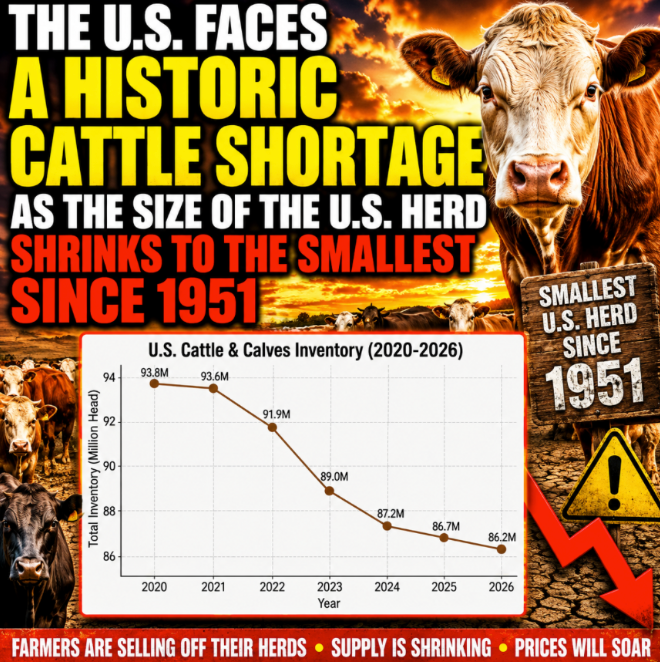
A notable decline in the U.S. cattle population has led to unprecedented increases in beef prices, with ground beef prices surpassing the federal minimum wage in some areas. As of early 2026, the national cattle herd stands at 86.2 million head, the smallest since 1951, a significant reduction from approximately 94.7 million in 2019. This decline has disrupted the supply chain, forcing major meatpackers like Tyson Foods to close facilities in Illinois and Utah due to supply constraints driven by the cattle shortage.
Drought conditions across the Midwest and Southwest have been the primary factors contributing to this crisis. Ranchers have been unable to sustain their herds due to decreased pasture conditions, exacerbated by years of dry weather. Current USDA data indicates that states like Nebraska, Colorado, and Wyoming have vast areas of pasture rated in very poor to poor condition, which has forced ranchers to sell cattle prematurely.
The impact of the cattle shortage is evident at grocery stores, with the average price of ground beef rising over 50% since 2021. Some reports indicate that ground beef prices may even exceed the federally mandated minimum wage, creating financial difficulties for consumers. Additionally, global food prices are projected to rise significantly due to factors including severe weather patterns and fertilizer shortages, raising concerns about food security.
Experts suggest that the cumulative effects of these challenges could lead to heightened global hunger levels, which currently affects approximately 733 million people worldwide.
Bold Points:
- Why this story matters: The cattle shortage affects food prices and security for millions of consumers.
- Key takeaway: The U.S. cattle herd is at its lowest in over 75 years, significantly impacting beef prices.
- Opposing viewpoint: Some experts believe recovery of cattle populations and food prices may take longer than anticipated.