


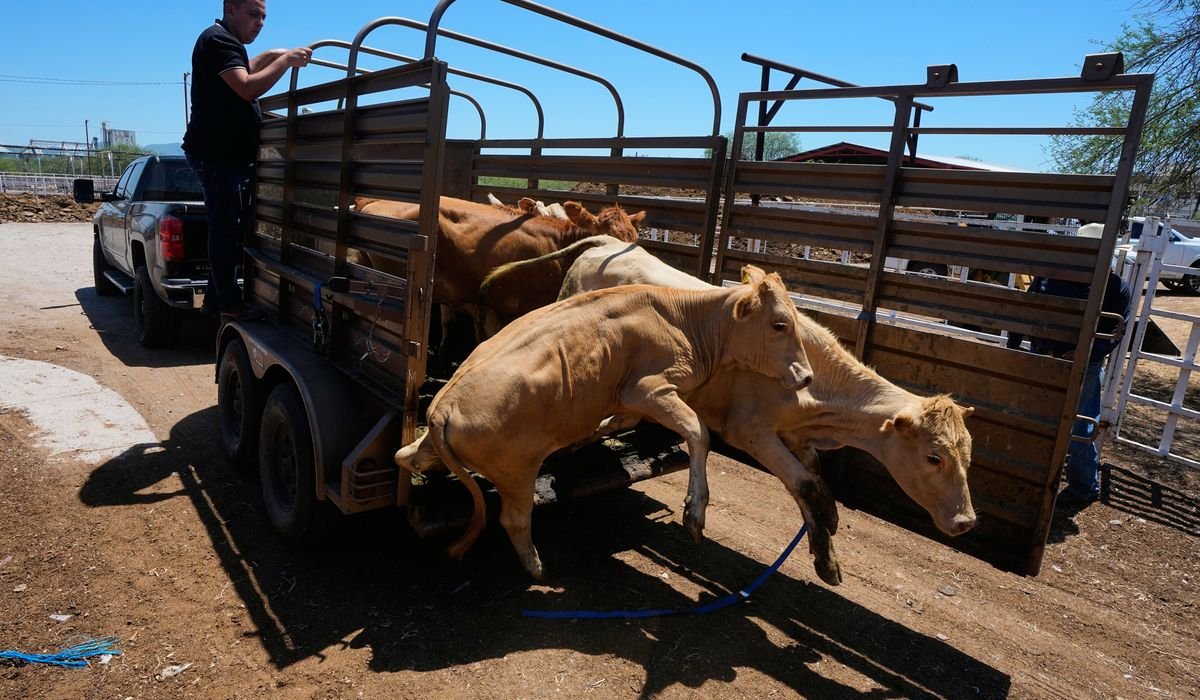
Cattle exports from Mexico to the United States resumed on Monday after a nearly two-year suspension due to restrictions following a screwworm outbreak. The Trump administration implemented these controls in response to the larvae of the Cochliomyia hominivorax fly, which can invade the wounds of warm-blooded animals, including humans.
The reopening of this trade route, which begins in the Mexican town of Agua Prieta in Sonora and crosses into Douglas, Arizona, provided a much-needed boost to Mexico’s ranching industry, struggling economically under the previous restrictions. Inspections conducted by both Mexican and U.S. authorities ensured that the cattle were free from infestation before crossing the border.
The screwworm, present in 30 of Mexico’s 32 states, has also been reported in parts of Texas and New Mexico. In light of this situation, Mexican President Claudia Sheinbaum welcomed the resumption of exports while outlining measures to prevent further outbreaks, such as enhanced cattle tracking systems and the dispersal of sterile flies in border regions.
To facilitate cattle exports, U.S. authorities approved new protocols, including the tagging of cattle with radio-frequency identification (RFID) devices to monitor their movement. Initially, crossings are limited to 700 head of cattle per day, with plans to gradually increase this limit in the coming weeks.
Despite the reopening, experts warn that the Trump-era regulations may hinder the recovery of the industry. Current U.S. cattle herds are at their lowest level in 75 years, contributing to rising beef prices.
Why this story matters
Key takeaway
Opposing viewpoint