


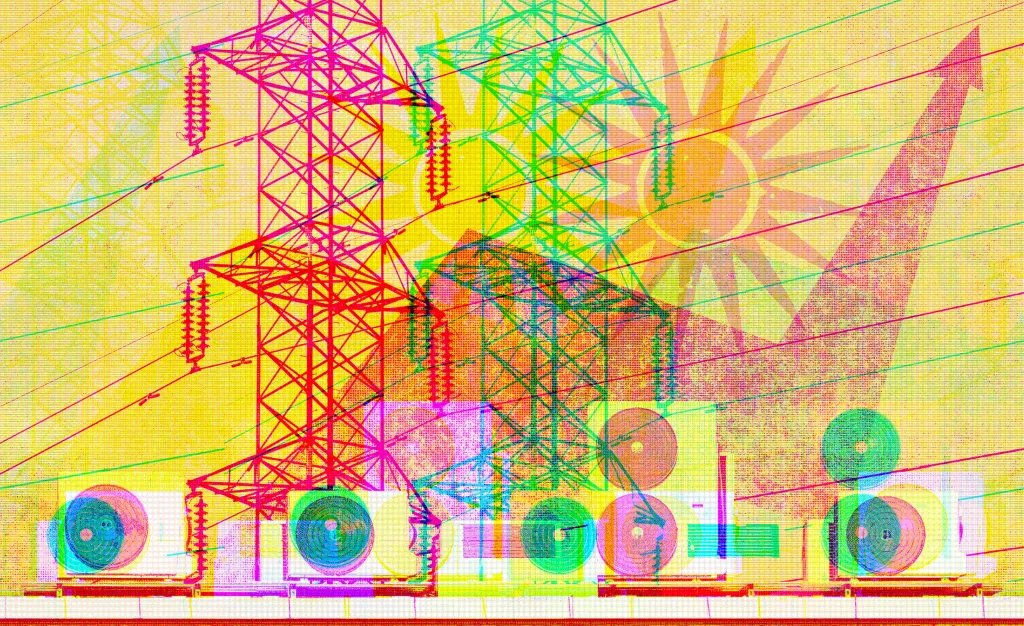
The increasing demand for electricity, driven by the growth of data centers, electric vehicle (EV) charging stations, and reshored manufacturing, is straining the U.S. power grid. Between 2020 and 2025, electricity consumption is projected to rise at an annual rate of 1.7%, much faster than the previous decade and a half. This surge poses significant challenges, particularly as much of the existing infrastructure was constructed between the 1950s and 1980s, designed for a less electrified economy.
For businesses involved in physical infrastructure, such as logistics and manufacturing, the reliability of the power grid is becoming a critical concern. Aging equipment is unable to accommodate the growing load, leading to issues such as sagging conductors and overheating transformers. A failure in key infrastructure, such as a transformer in a substation, can lead to extended outages, significantly impacting operations.
The current scenario necessitates a shift from reactive to preventive maintenance, where equipment is serviced on a proactive schedule to avoid failures that could disrupt operations. Advanced maintenance technologies, including drones and modular repair rigs, are being employed to expedite repairs and reduce downtime.
Furthermore, expansion plans for the grid must include smarter solutions. As renewable energy sources often require new transmission pathways, utilities face the dual task of expanding capacity and maintaining existing services.
The significance of reliability extends beyond operational stability; it also affects economic productivity, from impacting payroll to inventory management. Businesses are increasingly encouraged to evaluate not only the availability of power at potential sites but also the speed of restoration in the event of an outage.
Why this story matters
- The reliability of the power grid is essential for business operations and economic stability.
Key takeaway
- Proactive maintenance and advanced technologies are necessary to manage the aging infrastructure while meeting growing electricity demand.
Opposing viewpoint
- Some may argue that increased investment in renewable energy can alleviate pressure on the grid more effectively than updating existing infrastructure.