
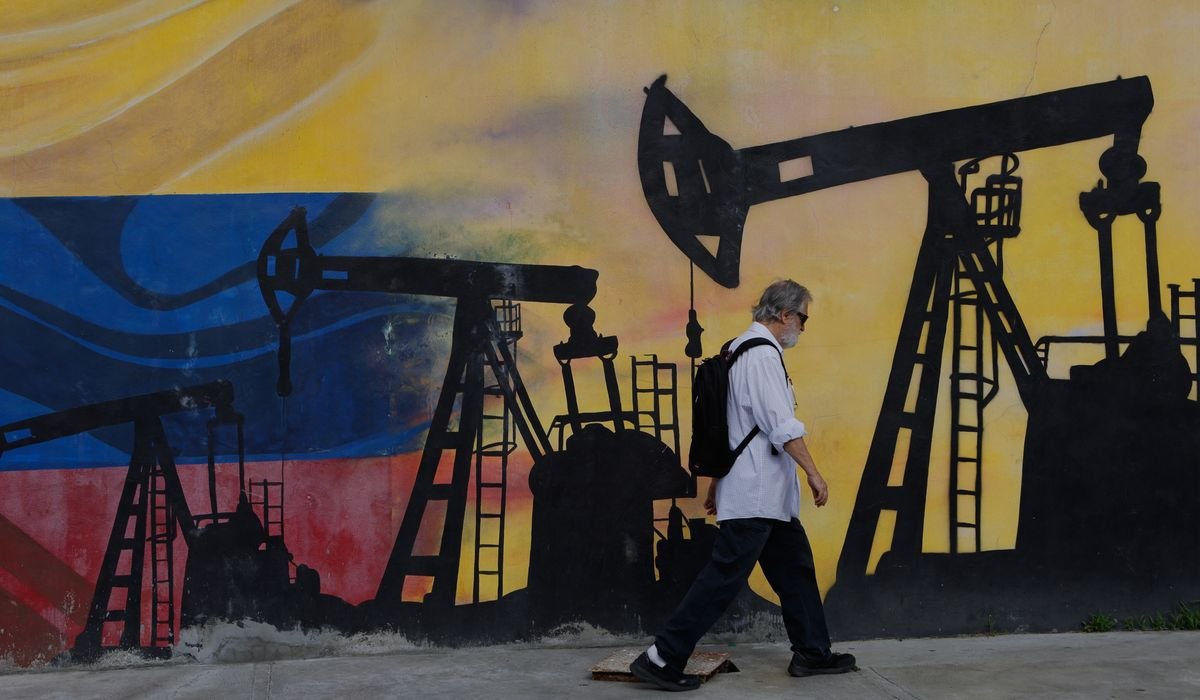
In a recent announcement, President Trump declared what he referred to as “THE BIGGEST OIL DEAL IN WORLD HISTORY” involving Venezuelan oil reserves. The agreement, which remains largely unspecified and lacks publicly available documentation, is said to allow the United States to gain a significant stake in Venezuela’s oil industry. This follows the January capture of Nicolás Maduro, the former Venezuelan president, who is facing federal drug trafficking charges in New York.
According to Venezuela’s acting president, Delcy Rodríguez, the deal aims to promote economic recovery and modernize the nation’s oil sector. The U.S. government, in collaboration with an unnamed private operator, has reportedly established a new company with rights to develop oil fields over the next century. Rodríguez highlighted that the deal could attract $100 billion in investments and generate over $209 billion in tax revenue for Venezuela.
Despite these promising projections, questions remain regarding the timeline for production and the financial responsibilities involved in restoring Venezuela’s aging infrastructure. Experts caution that significant improvements in oil production will take time, with some suggesting that immediate reductions in gas prices for American consumers are unlikely. The average gas price in the U.S. recently stood at about $4.08 per gallon.
Reactions from both American lawmakers and Venezuelans have been mixed. While Trump allies view the agreement as a victory, critics argue it reinforces the notion of U.S. interests exploiting Venezuelan resources for political gain. Prominent voices, including Harvard University’s Ricardo Hausmann, have labeled the deal as illegitimate and detrimental to Venezuelan sovereignty.
Why this story matters
- The agreement could reshape U.S.-Venezuela relations and impact global oil markets.
Key takeaway
- The deal promises significant investments but leaves many questions about implementation and legitimacy unanswered.
Opposing viewpoint
- Critics argue that the deal prioritizes U.S. interests over the welfare of the Venezuelan people and lacks potential for immediate benefits.