

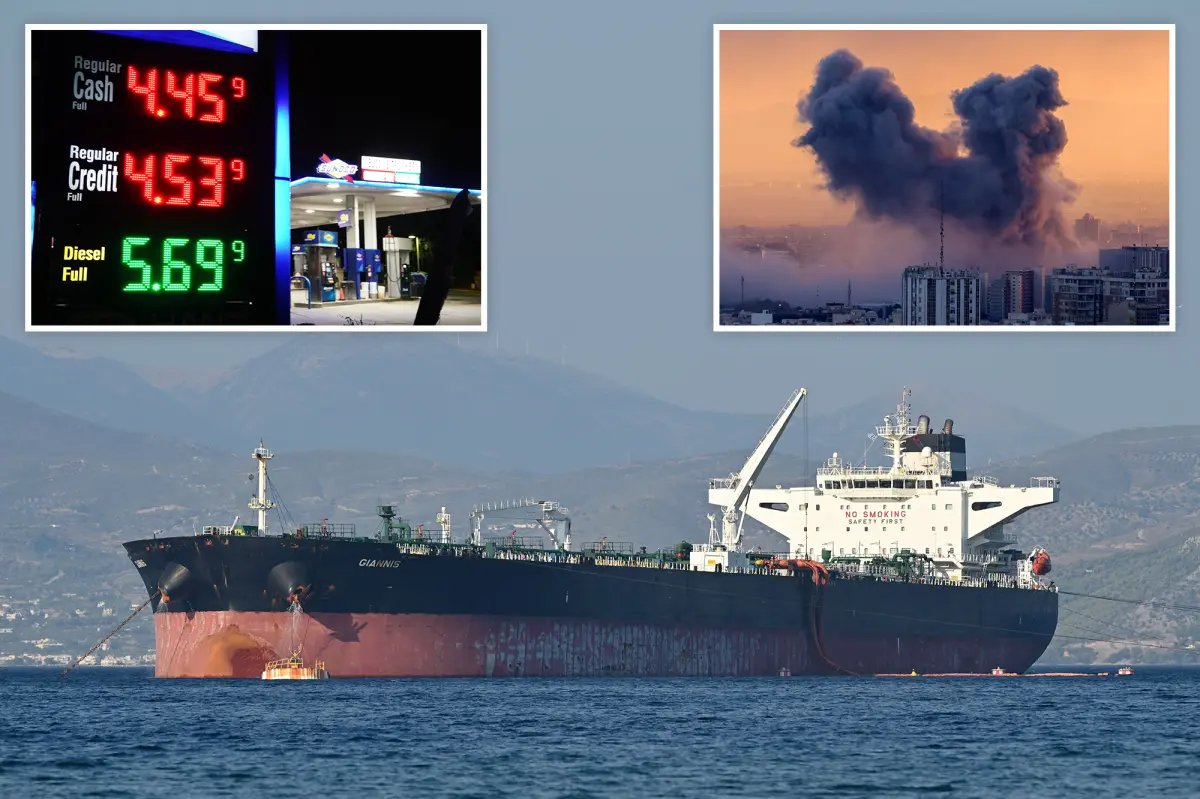
Oil prices surged over 3% on Monday, with Brent crude exceeding $90 a barrel, following recent military exchanges between the United States and Iran. By approximately 9:20 a.m. ET, Brent futures reached $90.29 a barrel, while West Texas Intermediate rose to $85.65. The national average for gasoline remained above $4 per gallon, as reported by AAA.
The escalation began when the U.S. conducted strikes on Iran’s Larak Island on Sunday. These strikes were reportedly in response to actions by Iran’s Islamic Revolutionary Guard Corps, which were accused of preparing to deploy underwater mines in the strategically important Strait of Hormuz. U.S. Central Command confirmed that two Iranian launchers were targeted after observing preparations for rocket launches.
In retaliation, Iran aimed missiles at U.S. forces stationed in Jordan, though most were intercepted, resulting in minimal impact. Former President Trump also escalated rhetoric surrounding the conflict, suggesting increased military action in a post accompanied by an AI-generated video depicting destruction of Iran’s Kharg Island.
Despite this volatility, some analysts had predicted a recovery in oil supply from the Persian Gulf, recently observing total exports climbing back to 15-16 million barrels a day. This improvement reflects a significant rebound from earlier lows, though it remains 7-8 million barrels below pre-war levels. The impact of these military tensions on oil prices and supply recovery remains uncertain, amid concerns regarding U.S. Strategic Petroleum Reserve levels, which have hit a 40-year low.
The Islamic Revolutionary Guard Corps vowed retaliation against the U.S. for the strikes, indicating potential further escalations in hostilities.
Why this story matters
Key takeaway
Opposing viewpoint