



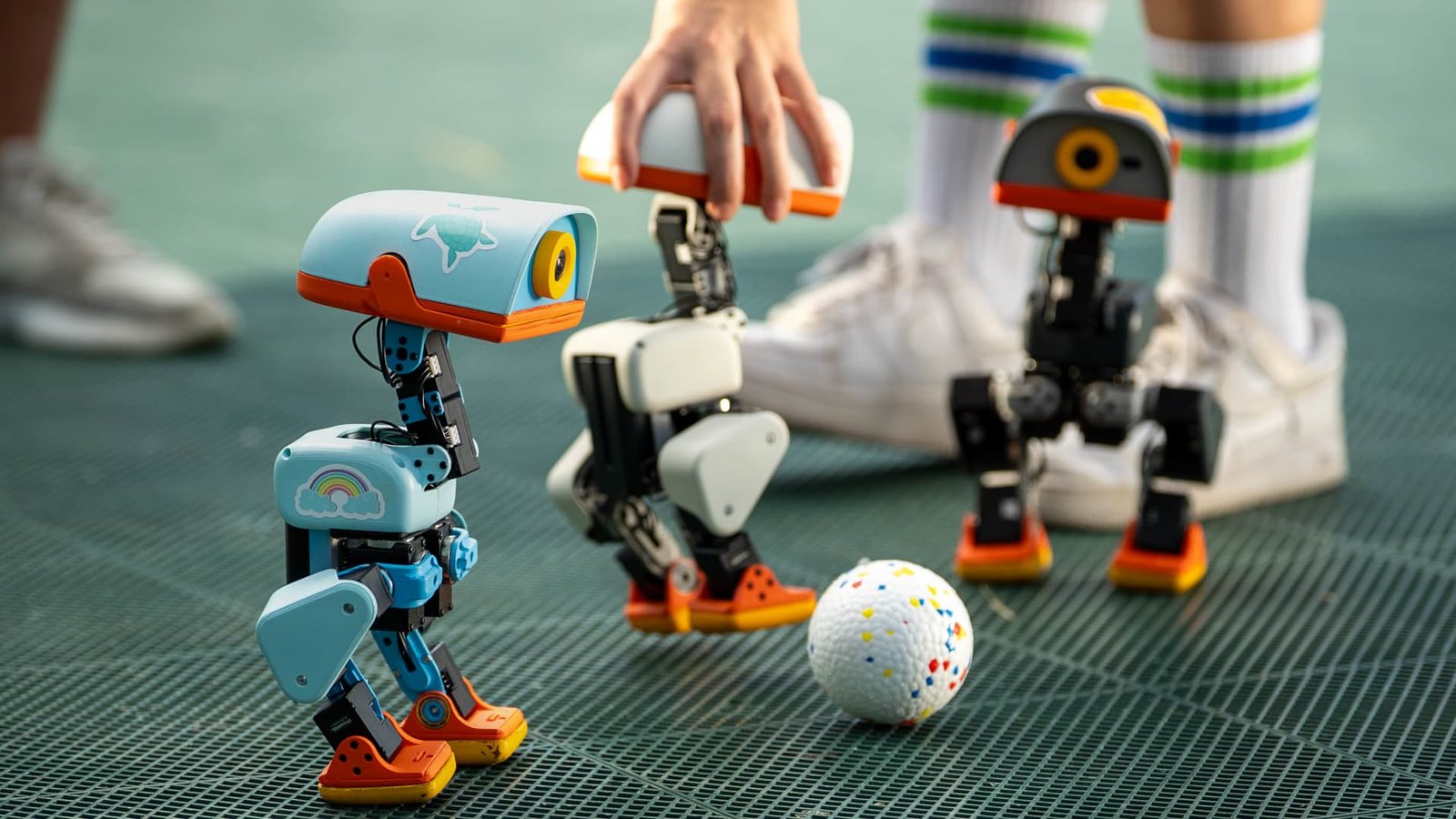
The Microduck robot, developed by Hugging Face’s French subsidiary Pollen Robotics, has quickly gained popularity, with over 10,000 units sold and revenue exceeding $5 million since its launch on Thursday. Priced at $399, the duck-shaped robot features an array of pre-installed actions and advanced technology, including a chip from Shanghai-listed Rockchip that utilizes ARM technology. This highlights the complexity of global tech supply chains.
The Microduck incorporates Rockchip’s RK3566 chip, which is equipped with sensors, motors, and on-device computing capabilities crucial for artificial intelligence applications like machine vision. Analyst Lian Jye Su noted that while Rockchip is a significant player in AI for edge devices, its chips may not be ideal for complex AI needs due to limited computing resources.
In the first half of the year, Rockchip reported a 40% increase in operating revenue to approximately $428 million, alongside a net profit surge of over 60%. The Microduck serves both as an interactive consumer toy and a development platform, allowing for open-source learning through virtual simulations.
Pollen Robotics, acquired by Hugging Face last year, aims to continue innovating in the personal robotics space. The company’s previous robot also sold over 10,000 units shortly after its release. Meanwhile, other firms, such as Zeroth and Mondo Robotics, are entering the market with competitive offerings, indicating a growing trend in the consumer robotics sector.
Why this story matters
- It underscores the interconnections within global tech supply chains and highlights rapid consumer interest in personal robotics.
Key takeaway
- The Microduck’s successful launch illustrates the strong demand for programmable robots and their potential role in machine learning applications.
Opposing viewpoint
- While the Microduck presents innovative technology, concerns may arise regarding the limitations of its hardware for sophisticated AI tasks compared to competitors like Nvidia’s advanced offerings.