


Last year, China hosted the inaugural World Humanoid Robot Games in Beijing, showcasing hundreds of humanoid robots. Initial performances were characterized by amusing mishaps, including robots stumbling and crashing. Despite this humorous beginning, the underlying objective was serious—providing companies and researchers an opportunity to enhance their designs through competition and trial.
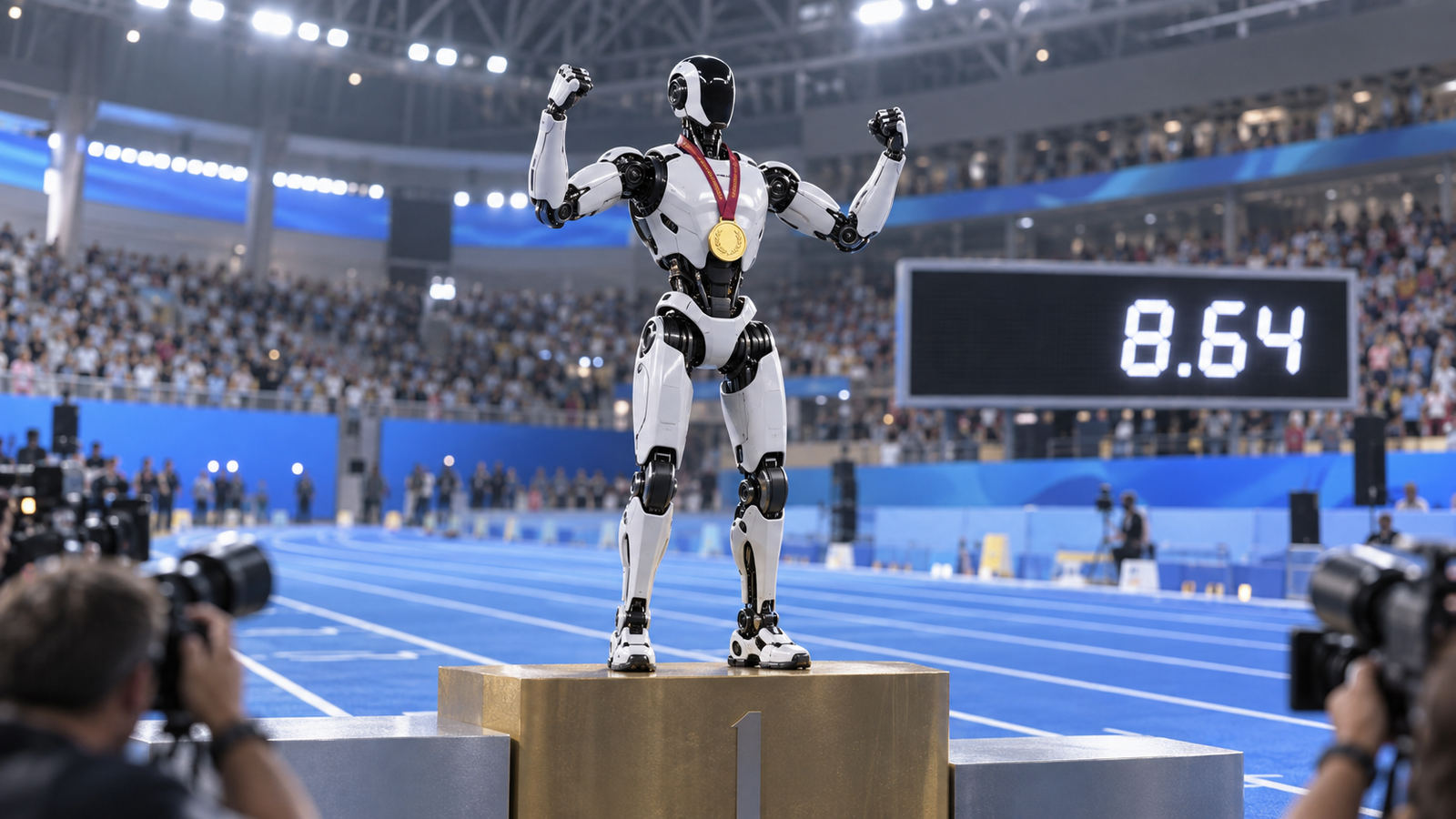
In a recent edition of the games, a notable highlight was the performance of Tiangong Ultra, which completed the 100-meter dash in an impressive 8.64 seconds, surpassing Usain Bolt’s human world record of 9.58 seconds. Tiangong’s improvement of nearly 60% in speed since the last year underscores significant advancements in robotics. Alongside its record, robots successfully outperformed human records in the 400 meters, 1,500 meters, and high jump.
The games expanded this year, featuring 2,056 robots from 666 teams participating in a total of 51 events, many of which evaluated practical skills needed for various industries. While challenges like soccer and dancing attracted attention, half of the events targeted tasks for real-world applications, such as plugging a charging cable into an electric vehicle—demonstrating the complexity of automation.
Though humanoid robots are not yet prevalent in everyday operations, with only about 12,000 sold in the past year, the rapid advancement shown at the games marks a potential shift. Companies are investing heavily in robotics and artificial intelligence, exemplified by XPeng’s recent fundraising efforts to enhance production capabilities and real-world applications.
The progress seen at these games indicates that humanoid robots could soon transition from testing environments to practical use in various sectors, hinting at a transformative future for robotics in the workplace.
Why this story matters: Illustrates significant advancements in humanoid robotics and their potential societal impact.
Key takeaway: Robots are rapidly improving, as demonstrated by record-breaking performances, and may soon be integrated into various industries.
Opposing viewpoint: Some skepticism remains regarding the practical deployment of humanoid robots, given their current limited market penetration.