



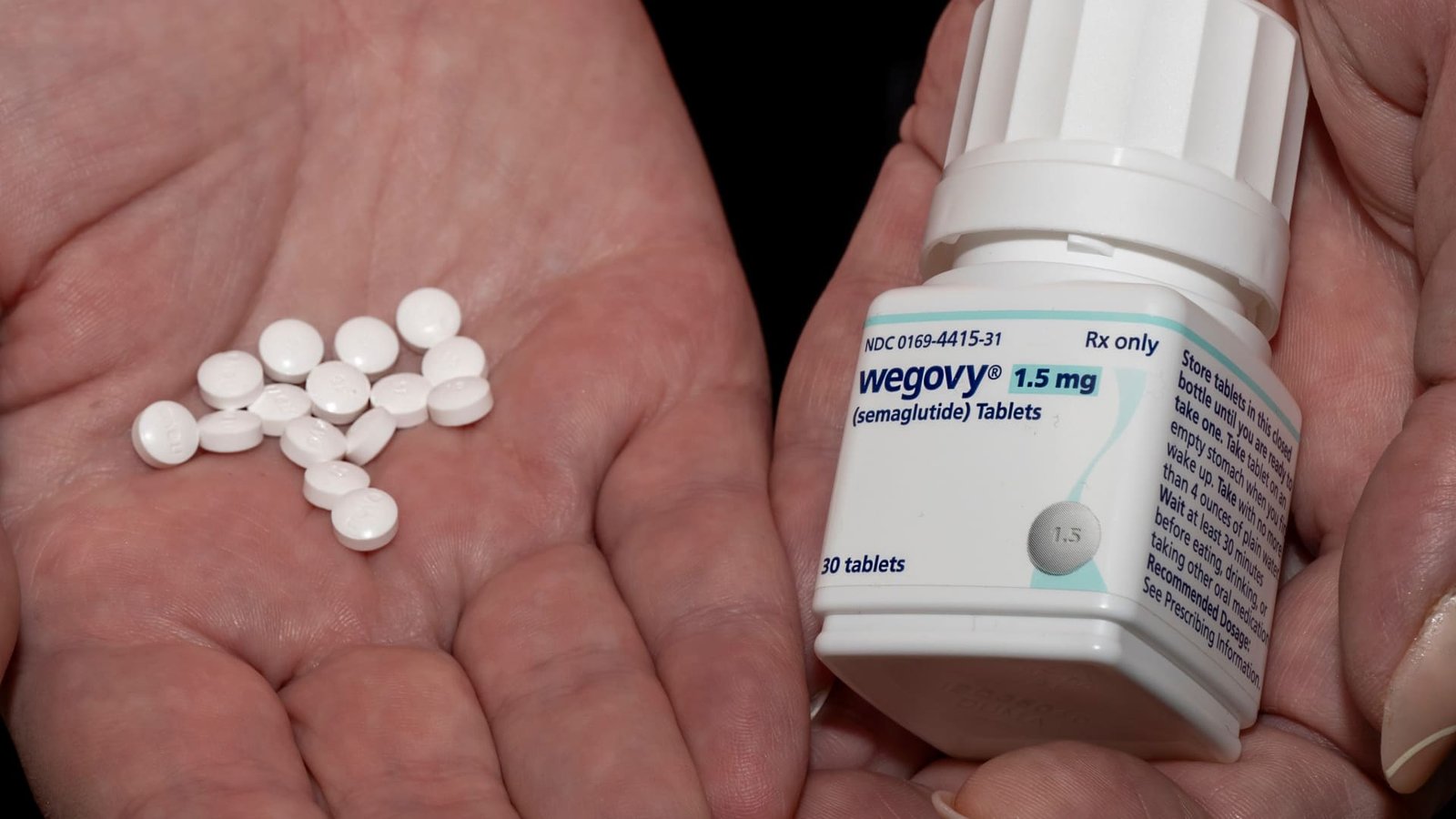
Novo Nordisk’s recent analysis highlights promising data regarding the effectiveness of its new oral weight loss medication, Wegovy, for individuals transitioning from obesity injections. Presented on Wednesday, the analysis examines the real-world experiences of 194 patients, predominantly female, who were either obese or overweight. These patients initially received either Wegovy or Eli Lilly’s Zepbound injections.
Three months after switching to the oral formulation of Wegovy, participants exhibited an average weight loss of approximately 4%, or about 8.8 pounds. Notably, 40% of these patients achieved at least a 5% reduction in weight, and the number of individuals classified as obese, based on body mass index measurement, decreased by more than 21%.
Martin Holst Lange, Novo’s chief scientific officer, emphasized the convenience of the pill over injections, particularly for individuals who travel frequently. The data suggests that the oral formulation offers a comparable profile for tolerability and safety as its injectable counterpart, with added weight loss benefits.
Furthermore, around 82% of participants reported improvements during their treatment, with many noting better-fitting clothes and healthier eating habits. Satisfaction with the switch to the oral treatment stood at 75%. Despite the encouraging results, Novo cautioned that the study has limitations, such as reliance on self-reported data and potential biases.
Additionally, Novo unveiled findings on CagriSema, a new experimental obesity drug combining semaglutide and cagrilintide, which shows promise in reducing obesity-related symptoms and improving organ health.
Why this story matters:
- It highlights advancements in obesity treatment options, emphasizing patient convenience and satisfaction.
Key takeaway:
- The transition from injection to oral medication may enhance weight loss outcomes for patients.
Opposing viewpoint:
- Critics may point to the study’s limitations, suggesting that the self-reported data could introduce bias, and that results may not be applicable to the general population.