

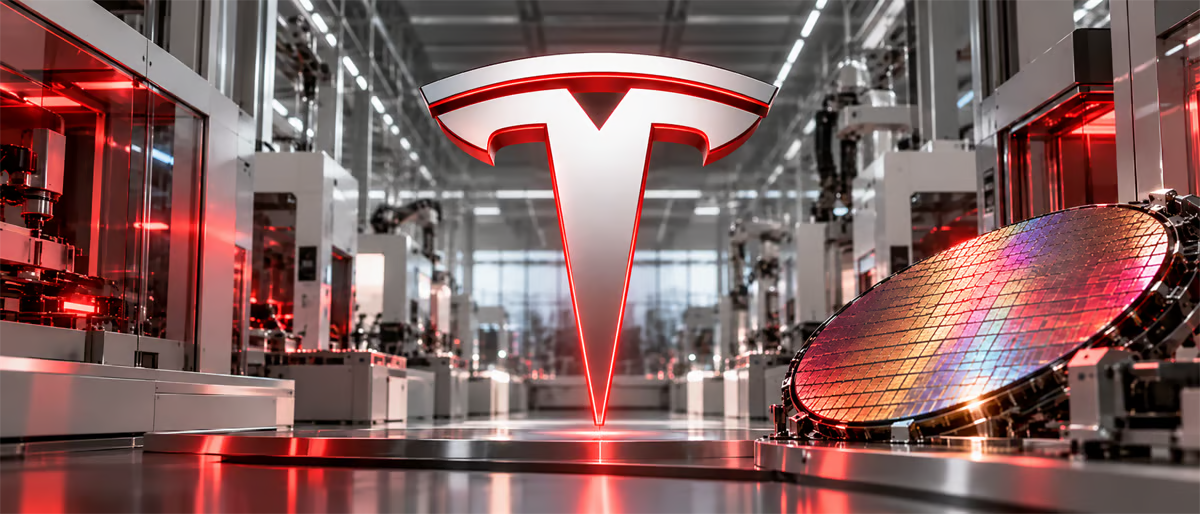
Elon Musk is pursuing an ambitious plan for Tesla Inc. that involves not just designing its own chips but also constructing and operating a semiconductor manufacturing facility, known as Terafab. This initiative represents a shift in Tesla’s identity from a car manufacturer to a company focused on artificial intelligence and robotics.
Tesla’s stock has recently seen a positive upturn, climbing around 25% since the end of July to reach nearly $375. However, the stock is still down roughly 19% for the year and faces long-term uncertainties. Musk reaffirmed his commitment to the Terafab project earlier this month, insisting that the company, along with SpaceX, would manage the factory independently, rather than outsourcing to established chipmakers like Taiwan Semiconductor Manufacturing Company (TSMC).
The rationale behind in-house chip production lies in the opportunity for Tesla to customize its chips to fit specific needs for its products, including Full Self-Driving capabilities. This move could enhance efficiency and reduce dependency on external suppliers. However, there are significant challenges. Running a semiconductor fab requires specialized skills that Tesla does not currently possess, and the development timeline is lengthy, often extending several years.
The upcoming earnings report on October 21 is anticipated to clarify the financial implications of this ambitious project, as well as gauge investor sentiment on Tesla’s strategy moving forward. While some analysts are optimistic about Musk’s ventures, skepticism remains, particularly regarding the practical execution of such an advanced manufacturing facility amid growing capital expenditures.
Why this story matters:
- The outcome could redefine Tesla’s market position and influence its future as a technology-centric company.
Key takeaway:
- Tesla is attempting to vertically integrate its semiconductor manufacturing to enhance its automotive AI initiatives, posing both potential rewards and significant risks.
Opposing viewpoint:
- Critics argue that the company’s focus on chip manufacturing could distract from its core automotive business, risking costly missteps in execution.