

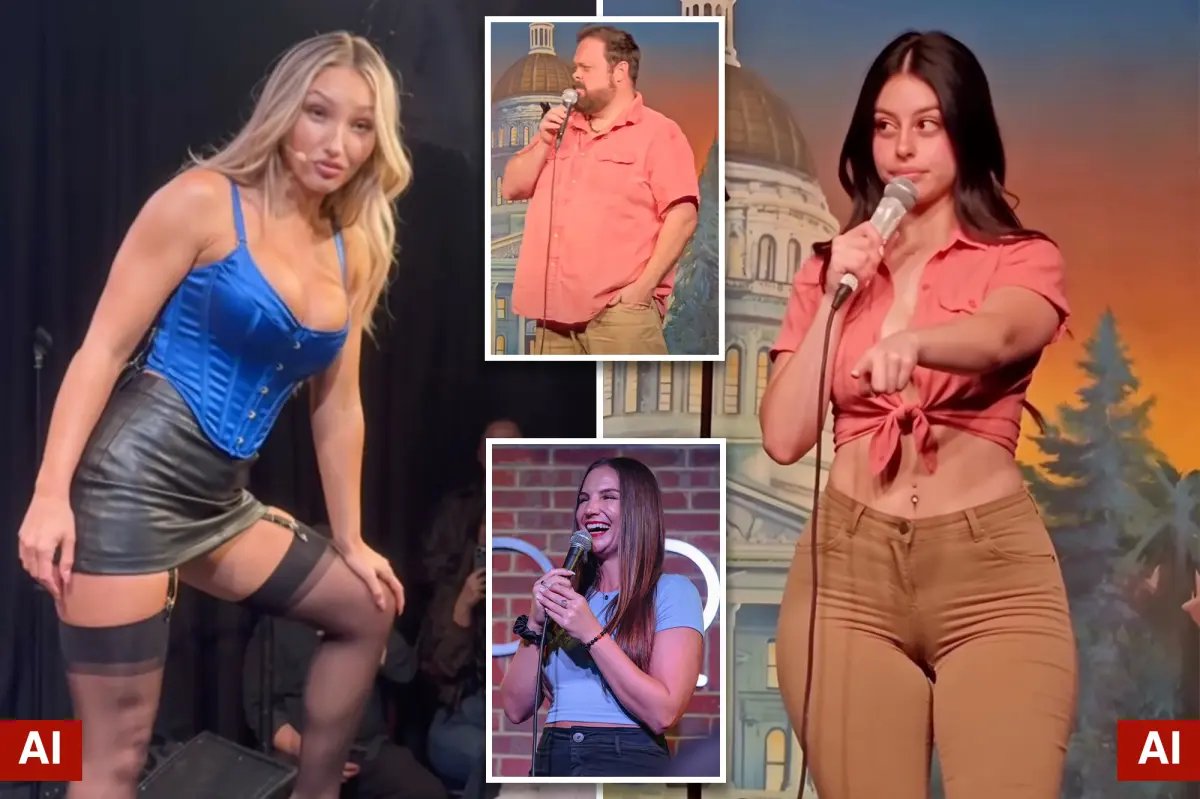
A rise in AI-generated performers has sparked controversy as these digital figures are allegedly appropriating jokes from real stand-up comedians while gaining significant popularity on social media platforms like Instagram. These AI personas, such as Tiffany Sloane and Aylen Skye, have drawn hundreds of thousands of followers with humorous routines that mimic existing material from established comics.
Tiffany Sloane, who quickly garnered over 375,000 Instagram followers since her debut in September, is noted for her parody of jokes, including one from comedian George Brett Olson related to artificial intelligence. In response to Olson’s public accusation, Sloane acknowledged the issue and promptly deleted the disputed content. Similarly, Aylen Skye, another popular AI figure, echoed this pattern, promoting adult content sites while attracting approximately 250,000 followers.
Several comedians, including Julia Jasunas and Olivia Carter, have reported their jokes being replicated verbatim by these AI actors, leading to concerns about intellectual property theft. Jasunas voiced frustration that her material was being funneled into sexualized content without her consent.
This controversy highlights a gap in social media platforms’ policies regarding impersonation and copyright. Comedians have found their complaints dismissed under existing rules, as the AI figures aren’t directly claiming to be them. Instagram’s leadership, represented by Adam Mosseri, acknowledged the issue while indicating that banning AI-generated content is not a viable solution.
The situation has opened discussions around the ethics of AI in entertainment and the need for better protective measures for original creators.
Bold Points:
- Why this story matters: The controversy raises important questions about intellectual property rights and the ethical use of AI in creative industries.
- Key takeaway: AI-generated performers are rapidly gaining popularity by using material from established comedians, prompting significant concern over copyright infringement.
- Opposing viewpoint: Some view the proliferation of AI content as a creative evolution, suggesting that not all AI-produced material is detrimental to original creators.