


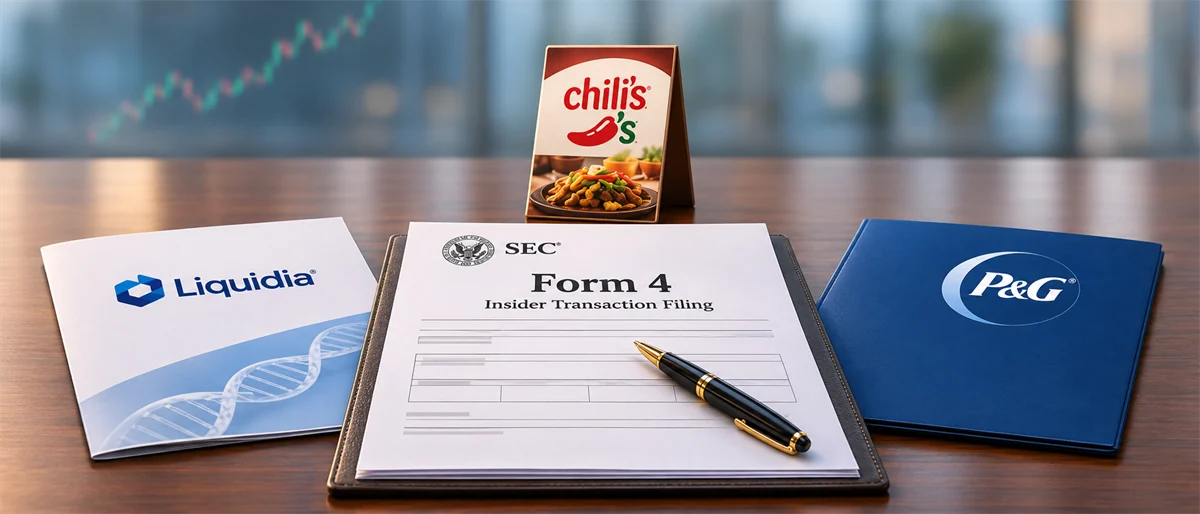
Insider trading activities point to varied signals within three notable companies: Liquidia, Brinker International, and Procter & Gamble. Each company’s recent share sales by executives interact differently with overall market performance and investor sentiment.
Liquidia, a biopharmaceutical firm, experienced significant insider selling following a challenging September patent ruling regarding its primary drug, YUTREPIA. An October settlement with United Therapeutics allowed Liquidia to maintain sales but required substantial financial commitments. Despite a 31% increase in YUTREPIA sales during Q3, insider sales among top executives raised concerns, especially as price targets set by analysts have declined.
Conversely, Brinker International, the parent company of Chili’s, recently saw extensive insider selling amidst a successful turnaround strategy that has driven strong sales growth and margin improvements. Analysts remain optimistic about Brinker’s performance, with price targets reflecting an increase of over 50% in the past year. Institutional buying has also been strong, indicating a positive outlook despite recent insider activities.
Lastly, Procter & Gamble’s insider sales appear routine, linked to prearranged trading plans aimed at managing stock-based compensation. Analysts are generally optimistic about the company due to its solid cash flow and diverse product portfolio, although rising costs pose challenges.
Overall, despite the irregular nature of insider trading, understanding the context behind these transactions is crucial for investors navigating market perceptions and company prospects.
Why this story matters
- Insights into insider trading reflect confidence and market sentiment about company growth prospects.
Key takeaway
- Insider sales do not uniformly signify negative outlooks; context is essential in assessing their implications for a company’s future.
Opposing viewpoint
- Some investors may view insider selling as a negative signal, indicating a lack of confidence by executives in the company’s future performance.