


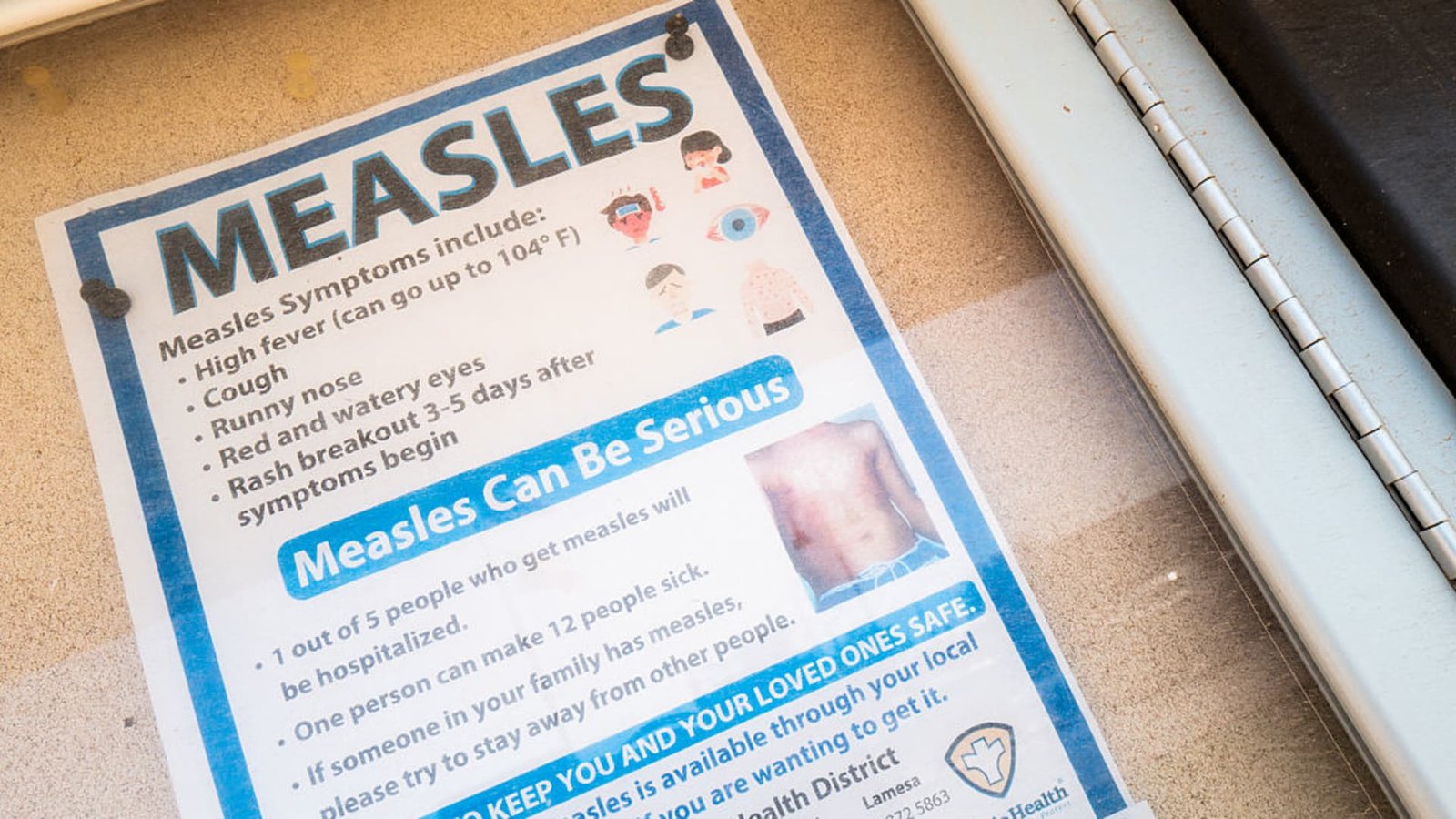
Measles outbreaks pose significant public health and economic challenges for the United States, with the country poised to lose its official measles elimination status due to rising cases. Currently, over 5,100 cases have been reported in 2026, marking the highest number in more than 30 years, and associated fatalities stand at eight. This surge in measles cases comes alongside estimates of nearly $83 million in economic costs, primarily stemming from public health responses and lost productivity.
A new tool developed by researchers at Johns Hopkins University provides insights into these costs, breaking them down into public health expenditures exceeding $56 million, nearly $25 million in productivity losses, and over $1.8 million in direct medical expenses. This year’s estimates indicate a stark increase in costs compared to the previous year’s outbreaks, which accounted for 2,289 cases and more than $37 million in economic impacts.
Public health responses to measles outbreaks can be extensive, requiring investigations, notifications to exposed individuals, coordination with healthcare facilities, and vaccination campaigns. These activities can strain health departments and detract from other public health priorities. For example, the 803 cases reported in Texas during 2025 were estimated to have incurred costs nearing $13 million.
The economic burden of measles also includes potential productivity losses when individuals need to quarantine or care for sick family members. Compounding this issue, research indicates that costs associated with outbreaks can escalate quickly due to the highly contagious nature of the disease.
As vaccination rates decline, public health experts warn that communities may face increasing financial burdens and heightened risks of further outbreaks.
Why this story matters: The resurgence of measles underscores vulnerabilities in public health systems and highlights the repercussions of declining vaccination rates.
Key takeaway: Economic costs from measles outbreaks can far exceed the expenses of preventative measures like vaccinations.
Opposing viewpoint: Some argue that the financial burden of outbreaks may not justify vaccination mandates, advocating for personal choice in vaccination decisions.