


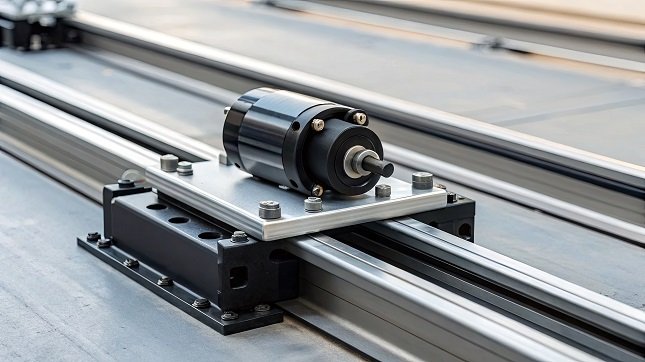
Linear motion systems equipped with motorized actuators on rails are integral to maintaining precision in industrial automation. Small businesses across various sectors rely on these systems for activities such as packaging, cutting, and assembly, where smooth and controlled movement enhances equipment efficiency.
A linear motion system functions by moving objects in a straight line. Central components include a motor for power, bearings for reducing friction, a drive mechanism, and guide rails that ensure proper alignment. This coordinated action is similar to how a 3D printer operates its print head. Common applications are found in food manufacturing and automated assembly lines, where maintaining accuracy and speed is crucial.
For small operations prioritizing precision, xy positioning stages utilize linear motion technology to execute detailed movements across two axes. These systems enable smaller businesses to achieve industrial-grade accuracy without the associated high costs.
Linear motion systems convert power into direct movement through various mechanisms, including ball screws, which are ideal for tasks demanding high precision, and belt-driven systems, which favor speed. When selecting a system, it is essential for businesses to consider factors like load capacity, speed, accuracy, and the operational environment. Systems that operate smoothly can reduce waste, enhance product quality, and lower maintenance costs.
Overall, automation is becoming increasingly accessible to smaller enterprises, making it possible to streamline processes without the need for significant upfront investment. The proper linear motion system can greatly improve workflow, thus enabling small businesses to remain competitive and capitalize on growth opportunities.
Why this story matters
- Linear motion systems can significantly boost efficiency for small businesses, helping them compete with larger firms.
Key takeaway
- Choosing the right linear motion setup supports productivity, precision, and quality in operations.
Opposing viewpoint
- Some may argue that the initial investment in automation technology could be a barrier for very small businesses.