


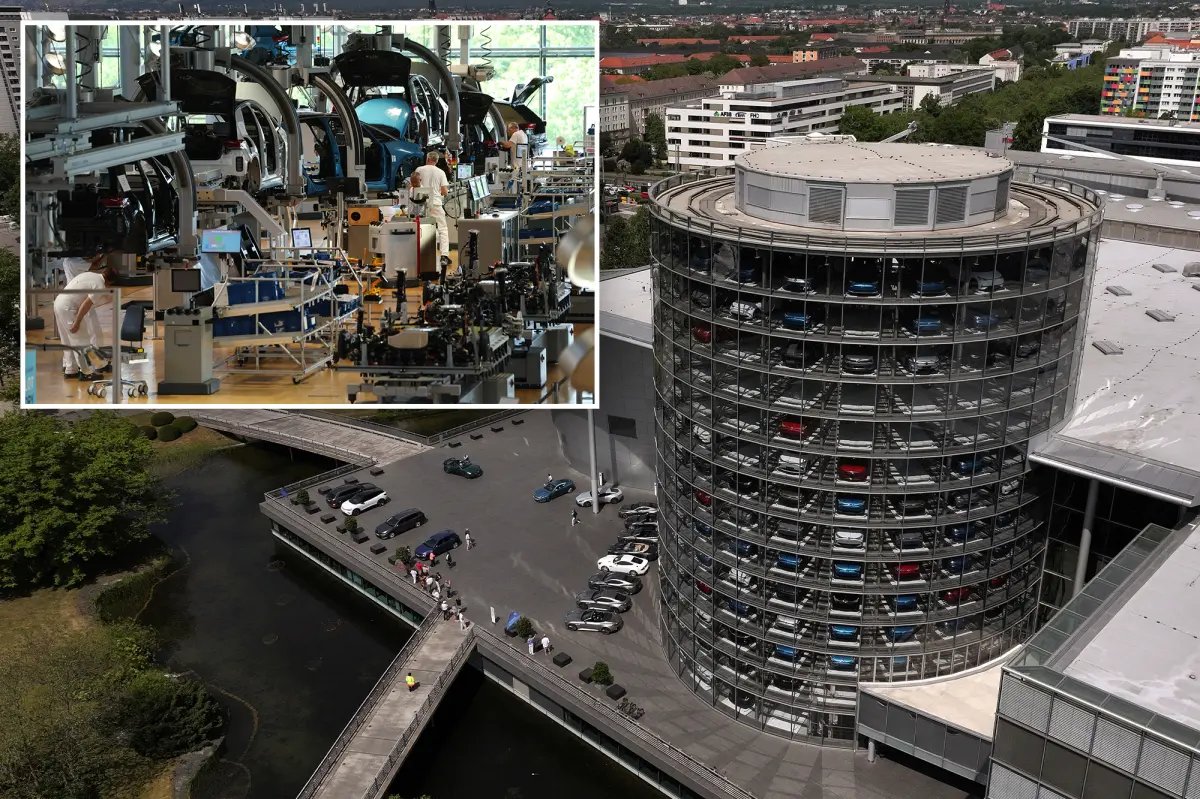
Volkswagen has officially ceased vehicle production at its Dresden factory, marking a significant milestone as it is the first time in the company’s 88-year history that it has closed a plant in Germany. This closure, which concluded on Tuesday, ends a 24-year production run that began in 2001 at the facility, famously known for its glass-walled architecture.
The decision to halt production comes in response to declining sales in Europe and China, compounded by tariffs imposed by the United States, a critical export market for the automaker. Volkswagen had previously indicated that production cuts were imminent due to these economic pressures.
Following the closure, the Dresden plant will be repurposed into a research center focusing on advanced technologies including artificial intelligence, robotics, and chip design. Volkswagen brand CEO Thomas Schäfer acknowledged the difficulty of the decision, stating that it was essential from an economic standpoint.
An agreement has been reached with the works council to support the plant’s remaining workforce of 230 employees, providing options for severance packages, early retirement, or transfers to other company locations within Germany. The last assembled vehicle, a red ID.3 GTX electric car, will be signed by workers and displayed at the site as a commemorative tribute.
The closure underscores the challenges faced by Volkswagen amid rising energy and labor costs and ongoing global market instability. Recent financial reports indicate that tariff-related expenses could reach $5 billion within the next year, contributing to significant losses and prompting a reevaluation of the company’s production strategy.
Why this story matters
Key takeaway
Opposing viewpoint