



The advancement of direct air capture (DAC) technology, designed to remove carbon dioxide from the atmosphere, faces significant economic and technical hurdles. Once viewed as a crucial element for achieving net-zero emissions, challenges surrounding cost reduction and scalability have raised concerns among stakeholders.
Organizations such as the Intergovernmental Panel on Climate Change (IPCC) and the International Energy Agency (IEA) assert that carbon removal technologies like DAC are vital to meet global climate targets. These entities highlight that emissions reductions alone may not suffice, especially from industries such as aviation, cement, and steel, which are anticipated to continue generating residual CO₂ emissions. The IPCC and IEA predict that large-scale carbon removal will be necessary this century to counteract these emissions and potentially reverse CO₂ overshoot in the atmosphere.
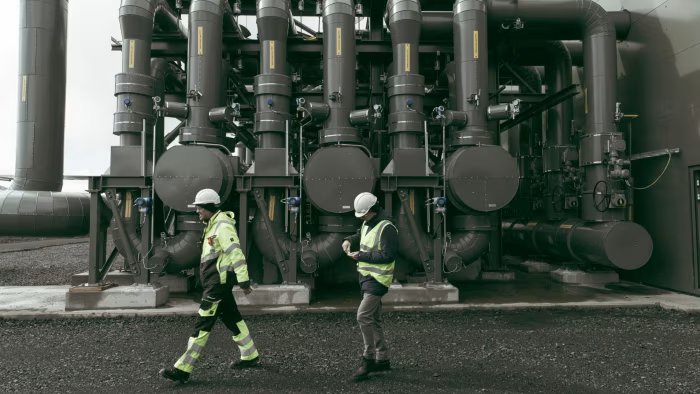
Currently, DAC technology has high capture costs, averaging around $900 per tonne, with expectations to lower this only to about $500 by 2030, according to Bloomberg NEF. Climeworks, a Swiss company operating the largest DAC facility in Iceland, recently acknowledged that its cost-reduction goals are not being met. Initial targets aimed to reduce costs from $600 to $100 per tonne within four years, but current projections suggest costs will only reach $250 to $350 per tonne by 2030.
Investors remain cautious due to high capital costs, uncertain scalability, and reliance on low-carbon energy sources. Furthermore, shifting government policies complicate the financial outlook, especially in light of changes seen in the US administration. Despite these challenges, optimism persists among major investors and energy companies as they form strategic partnerships to enhance infrastructure and access capital.
To realize the substantial market potential of DAC, it is clear that considerable investments and technological advancements are necessary.
Key points:
- Why this story matters: The feasibility of DAC technology is crucial for meeting global climate commitments.
- Key takeaway: Economical challenges deter DAC’s scalability, necessitating policy support and technological breakthroughs.
- Opposing viewpoint: Critics argue that investment in DAC diverts focus and resources from less costly and more mature carbon reduction strategies.