



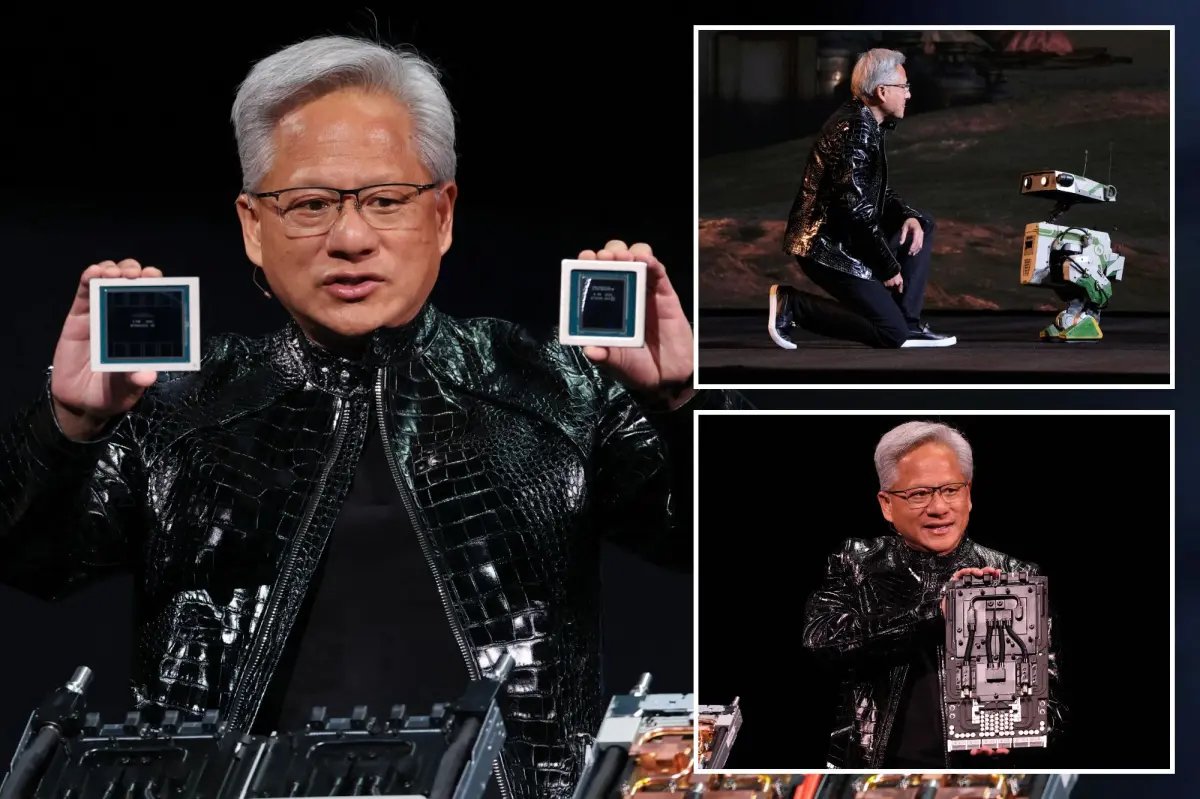
Nvidia CEO Jensen Huang announced that the company’s upcoming generation of chips is now in full production, capable of delivering five times the artificial intelligence computing power of its predecessors. During a speech at the Consumer Electronics Show in Las Vegas, Huang introduced the Vera Rubin platform, a suite consisting of six Nvidia chips, set to debut later this year. This platform includes a flagship device featuring 72 graphics units and 36 new central processors.
Huang emphasized that this performance leap is attributed to a proprietary data type that Nvidia hopes will gain wider industry acceptance. Though Nvidia remains a leader in AI model training, it is experiencing heightened competition from traditional contenders like Advanced Micro Devices and customers such as Alphabet’s Google, which is also developing its own AI chips.
A significant focus of Huang’s address was the chips’ enhanced capability for managing chatbot interactions, particularly through “context memory storage,” designed to allow for quicker responses during extended conversations with multiple users.
Additionally, Huang revealed advancements in networking technology, specifically co-packaged optics, which connect thousands of machines, and new software for self-driving cars, called Alpamayo. This software will aid in decision-making and transparency for engineers, as Nvidia intends to open-source both the models and the data used in their development.
Moreover, Nvidia recently acquired talent and technology from startup Groq, which has bolstered its competitive edge against Google, as the latter’s AI chips present a growing threat. The company is also positioning itself to demonstrate that its latest offerings significantly outperform its older chips, such as the H200, which are in demand in China.
Why this story matters: Nvidia’s advancements in AI chip technology showcase its commitment to maintaining a competitive edge in an increasingly crowded market.
Key takeaway: The new Vera Rubin platform is designed to enhance AI applications, particularly chatbots, while addressing new industry demands.
Opposing viewpoint: As competitors like Google develop their own chips, concerns emerge regarding Nvidia’s ability to sustain its dominance in the AI landscape.