



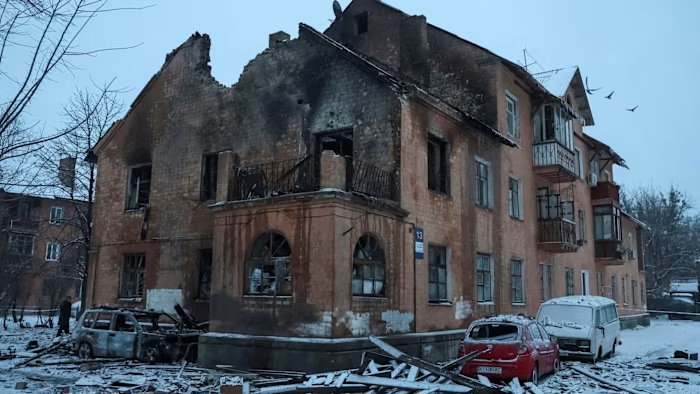
Russia conducted a missile strike on Ukraine on Thursday night, employing a hypersonic, nuclear-capable missile known as the “Oreshnik.” The missile was launched from the Kapustin Yar training ground and targeted infrastructure near Lviv, approximately 100 kilometers from the Polish border. This strike was part of a broader assault involving 242 drones, along with 36 ballistic and cruise missiles, confirmed by Ukraine’s air force.
Ukraine’s Foreign Minister Andriy Sybiha described the missile strike as a significant threat to security in Europe, prompting Kyiv to request an urgent meeting of the UN Security Council. Moscow cited the strike as retaliation for a purported Ukrainian drone attack on President Vladimir Putin’s residence, a claim that Ukraine has denied.
This missile, previously used only once before during the conflict in 2024, is designed to deliver either conventional or nuclear payloads, raising concerns regarding its potential implications for regional stability. Following this incident, Russia dismissed a proposal to deploy British and French troops in Ukraine during a potential ceasefire, warning that such forces would be seen as military targets.
The overnight offensive also included drone strikes in Kyiv and surrounding areas, resulting in four fatalities and injuring at least 24 others. Kyiv’s mayor reported damages to critical infrastructure, leading to power and water outages. As the conflict continues, residents face harsh winter conditions, with temperatures predicted to drop as low as minus 20 degrees Celsius.
Why this story matters
- The use of hypersonic missiles escalates tensions in Europe and poses new security challenges.
Key takeaway
- The missile strike underscores the ongoing volatility of the conflict and implications for international relations.
Opposing viewpoint
- Russia contends the attack was justified as a response to an alleged Ukrainian provocation, maintaining a defensive posture in the conflict.