


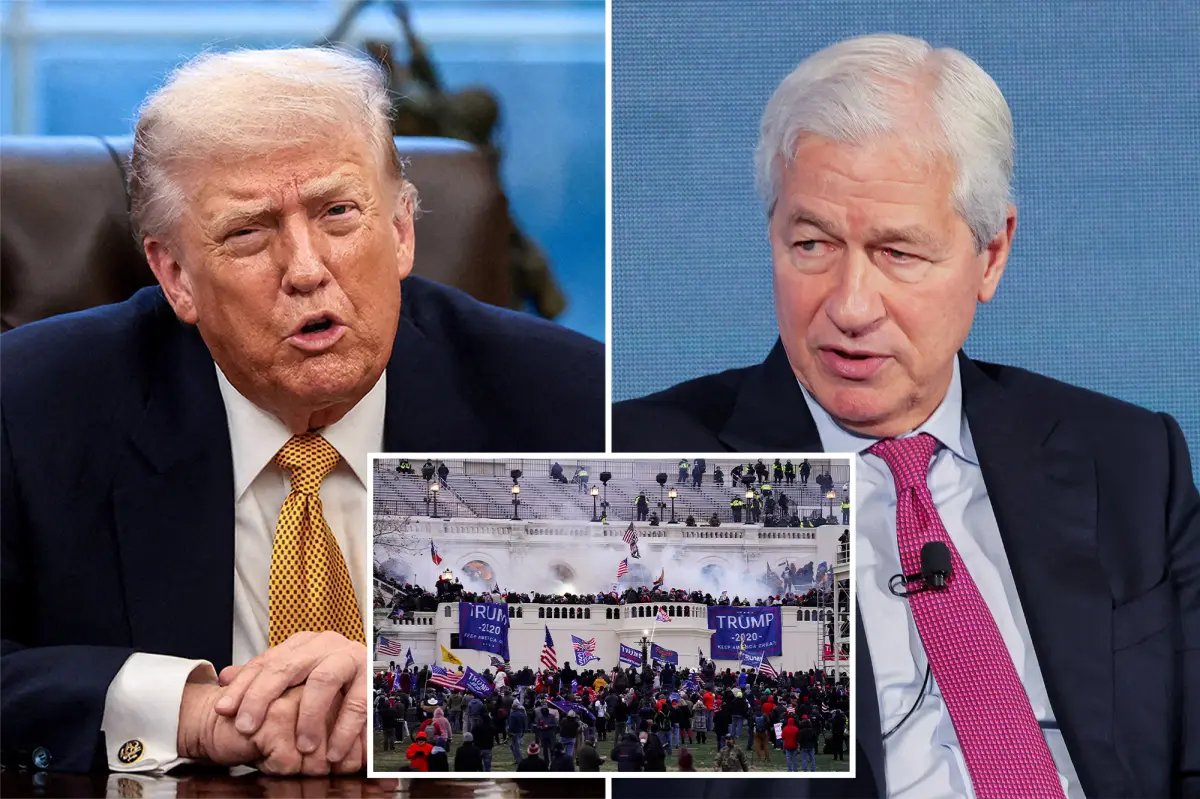
President Donald Trump has intensified his dispute with JPMorgan Chase, announcing on Saturday his intention to pursue legal action against the bank for closing his accounts following the January 6 Capitol riots. Trump has characterized the bank’s decision as “incorrectly and inappropriately debanking” him, suggesting that political pressure from the Biden administration influenced the move.
JPMorgan’s decision to sever ties with Trump came after decades of business relationships, during which he reportedly had just 20 days to transfer hundreds of millions of dollars. This development follows JPMorgan’s critical stance on the Trump Justice Department’s investigation into Federal Reserve Chair Jerome Powell, with CEO Jamie Dimon cautioning that jeopardizing the Fed’s independence might lead to negative economic consequences.
At the same time, the Biden administration is targeting banking profits by proposing a cap on credit card interest rates at 10% for a year, a measure that JPMorgan executives warn could limit credit access and negatively affect consumers. Trump’s threat of legal action brings to light his long-standing grievance regarding his abrupt removal from JPMorgan after leaving office in 2021, which he perceives as a politically motivated act.
According to sources, both JPMorgan and Bank of America chose to terminate their relationships with Trump under pressure from federal banking regulators, who suggested that maintaining ties with controversial figures might attract increased scrutiny due to reputational risk. While JPMorgan maintains it does not close accounts for political reasons, the role of reputational risk was acknowledged.
In addition, Trump has refuted a Wall Street Journal report claiming he offered Jamie Dimon the position of Federal Reserve chair, insisting it is “totally untrue.”
Why this story matters:
- The conflict raises questions about the intersection of politics and business in banking.
Key takeaway:
- Trump’s legal threat underscores ongoing tensions between political figures and financial institutions responding to public sentiment.
Opposing viewpoint:
- JPMorgan asserts its actions were based on reputational risk rather than political motivations.