



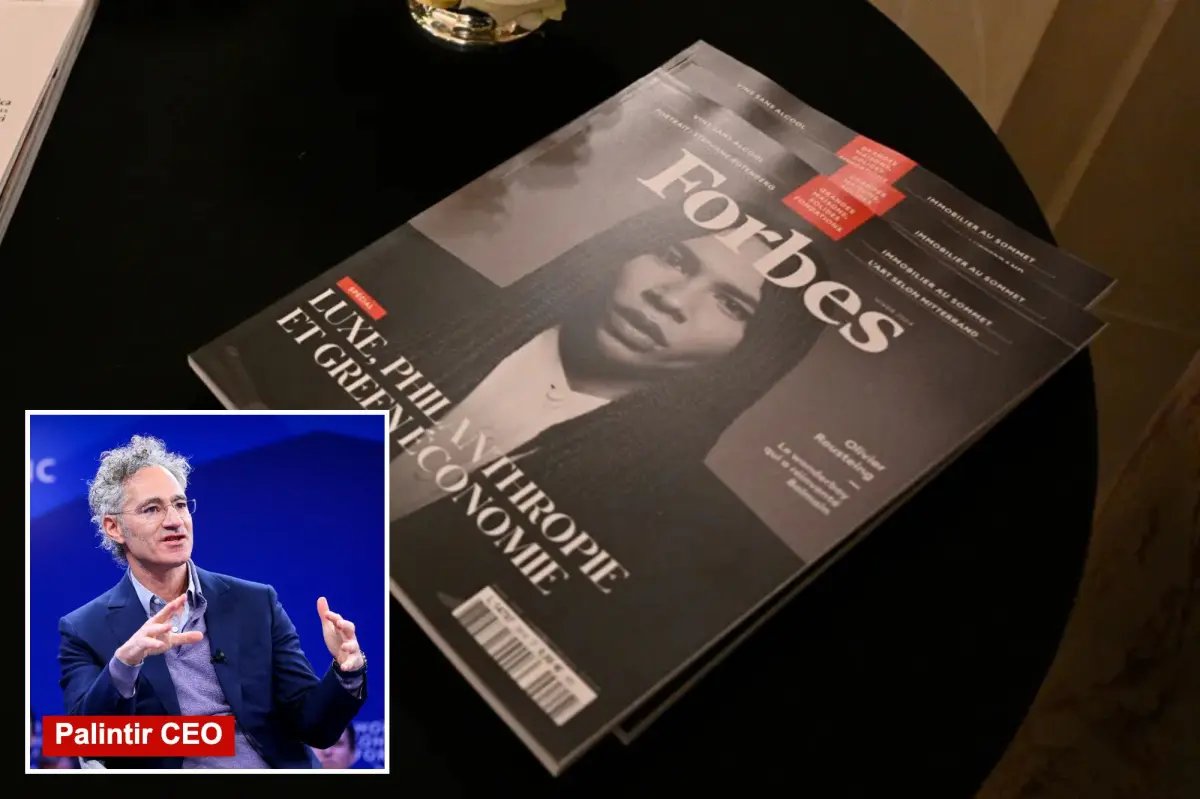
Forbes recently removed a profile of three female leaders at Palantir Technologies shortly after its publication, reportedly due to the company’s ties with Immigration and Customs Enforcement (ICE). The article, titled “Inside Palantir’s AI Braintrust: Meet The Women Transforming Retail, Government And Defense,” showcased executives Anita Beveridge, Lauren Penneys, and Shannon Clark as influential figures in various sectors.
Sources indicated that Forbes required additional context regarding Palantir’s contracts with ICE in order to justify the story’s publication. Following inquiries from Palantir about the piece’s removal, Forbes stated that the story was deemed “too positive” and needed to address the company’s controversial business dealings.
Upon its return to the Forbes website, the article was amended to include commentary on Palantir’s relationship with ICE, mentioning the company’s high-profile contracts and the associated public scrutiny. The update included a statement highlighting the controversy surrounding Palantir’s work with immigration enforcement and issues related to privacy and human rights raised by various advocacy groups.
A Forbes spokesperson confirmed that the article was re-edited for sourcing and context and emphasized the publication’s ongoing coverage of Palantir, noting previous features, including one on CEO Alex Karp.
Palantir has been providing data analytics tools to ICE since 2013 and recently secured a $30 million contract to develop an AI-powered surveillance platform aimed at enhancing immigration enforcement efforts.
Why this story matters
- The discussion underscores the intersection of technology, ethics, and women’s leadership in controversial sectors.
Key takeaway
- The framing of women’s leadership can be influenced by broader political controversies, raising questions about the narratives surrounding such achievements.
Opposing viewpoint
- Some argue that acknowledging the context of a company’s controversial practices is essential for responsible journalism.