



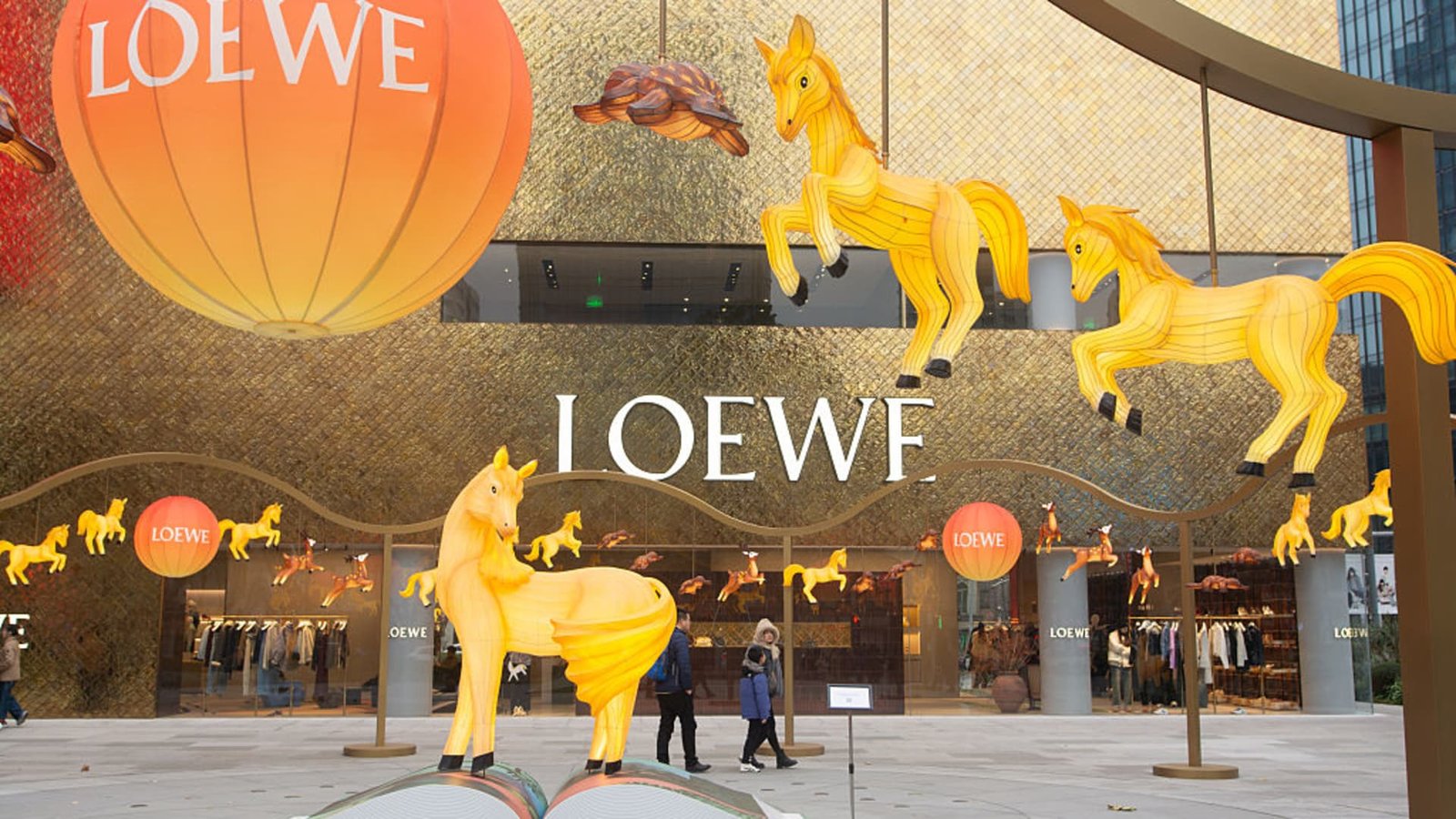
Luxury brands are increasingly investing in Lunar New Year collections to connect with Chinese consumers ahead of the Year of the Horse, which begins on Tuesday. Notable releases include Harry Winston’s limited-edition rose gold watch priced at $81,500 and Chloé’s capsule collection featuring items such as $250 silk scarves and a $5,300 snakeskin and leather shoulder bag. Various other brands, including Loewe and Gucci, have introduced horse-themed accessories.
The Lunar New Year arrives amid cautious optimism for the luxury sector as it potentially signals a recovery for a market that has seen a decline due to China’s slowing economy and depressed housing values. According to estimates from Bain, the Chinese luxury market was valued at approximately 350 billion RMB (or about $50 billion) in 2024, although it contracted by 3% to 5% in the previous year. Analysts, however, anticipate a rebound, projecting mid-single-digit growth by 2026.
Despite these positive signals, the competitive landscape has changed significantly. Bernstein’s senior analyst Luca Solca noted that before the pandemic, Chinese consumers made up one-third of the global luxury market, a figure that has now decreased to around 23%. He emphasized that to engage Chinese luxury buyers effectively, brands need to go beyond superficial cultural interpretations and present modern, sophisticated offerings that resonate authentically with consumers.
Younger Chinese shoppers seek contemporary narratives that connect heritage with modernity, as emphasized by Veronique Yang from BCG. Brands are encouraged to create immersive experiences rather than relying solely on traditional motifs, as illustrated by Valentino’s lantern festival in Shanghai.
Bold Points:
- Why this story matters: It highlights the evolving landscape of luxury consumption in China and the strategies brands adopt to appeal to discerning consumers.
- Key takeaway: Brands must connect with Chinese consumers through innovative and authentic narratives rather than relying on clichéd symbols.
- Opposing viewpoint: Some believe that traditional motifs and representations will continue to appeal to luxury buyers, despite changing consumer demographics.