


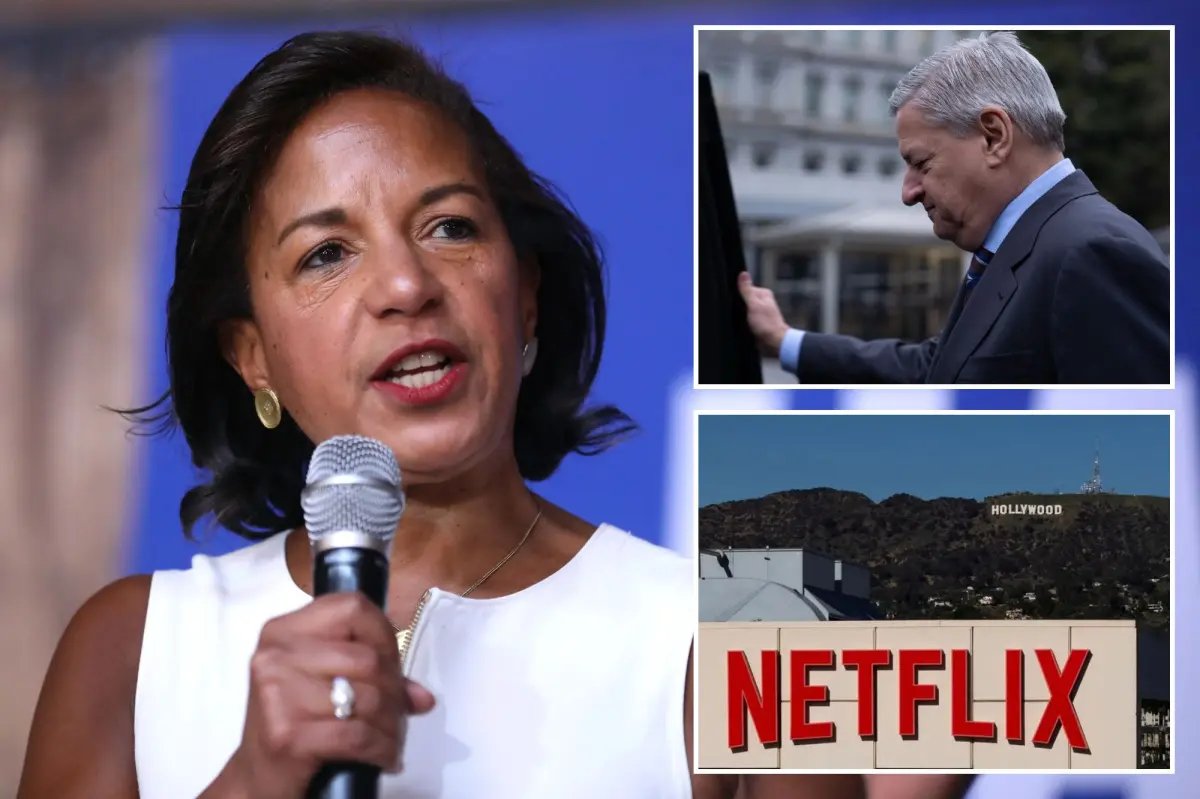
Netflix has withdrawn from the bidding for Warner Bros. Discovery amid escalating scrutiny from regulatory authorities and controversial remarks made by board member Susan Rice. Rice, who served as the national security adviser during the Obama administration, recently appeared on a podcast where she criticized corporations that align themselves with the Trump administration, suggesting they could face consequences if Democrats regain power.
Her comments drew sharp criticism, including a response from former President Donald Trump, who called for Netflix to dismiss Rice, labeling her views as “racist” and indicative of a “Trump Derangement.” The timing of her remarks coincided with the Department of Justice’s examination of Netflix’s nearly finalized $73 billion acquisition of Warner Bros. Discovery, focusing on potential antitrust implications surrounding the merger and its impact on market competition, notably against existing platforms like YouTube.
In light of these challenges, Netflix CEO Ted Sarandos initiated a lobbying effort aimed at mitigating concerns over pricing practices and regulatory compliance. Despite his attempts to engage with officials at the White House, the mounting pressure resulted in Netflix’s decision to back out of the bidding process, which allowed Paramount Skydance to increase its offer to $80.5 billion.
Officials close to the administration indicated that Rice’s statements complicated Sarandos’ position during his discussions with the DOJ, underscoring the sensitive interplay between corporate decisions and political sentiments.
Why this story matters
- The ramifications could reshape the competitive landscape of the streaming industry.
Key takeaway
- Netflix’s withdrawal illustrates how political commentary can influence corporate strategies and business decisions.
Opposing viewpoint
- Critics argue that corporate responsibility should involve balancing political engagement without fear of retribution or accountability.