

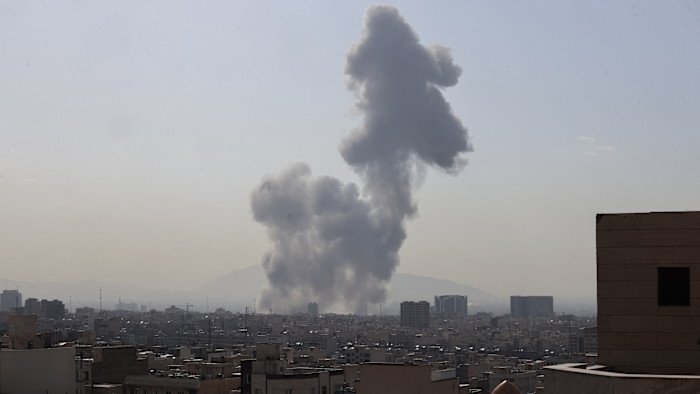
Iran’s state television has announced the death of Supreme Leader Ayatollah Ali Khamenei following airstrikes conducted by the United States and Israel. The strikes, which targeted key military officials and infrastructure in Iran, coincided with U.S. President Donald Trump’s comments promoting the idea of regime change in the country.
In a statement on social media, Trump characterized Khamenei’s death as a significant victory for both Iranians and Americans who deemed him a tyrant. He suggested that this moment presents a crucial opportunity for the Iranian population to reclaim control of their governance, citing reports of declining morale among Iranian security forces.
The early hours of the strikes resulted in extensive damage at Khamenei’s residence and the deaths of several senior Iranian defense officials. Trump indicated that military operations would persist until the region attains stability, emphasizing an ongoing campaign to dismantle Iran’s missile capabilities.
Israeli Prime Minister Benjamin Netanyahu announced that their military’s response would involve targeting numerous strategic sites in Iran to facilitate the Iranian people’s efforts towards liberation. Iranian officials reported significant casualties, including a missile attack that struck a school in Minab, which left 118 people dead.
The conflict has elicited swift retaliatory actions from Iran, including missile strikes, which raised concerns over a potential escalation throughout the Middle East. Nations including Qatar, UAE, and Saudi Arabia reported thwarted missile attacks emanating from Iran, highlighting the heightened tension in the region.
This military initiative, branded as Operation Epic Fury by the Pentagon, poses implications for global oil markets, with predictions of supply disruption due to increased hostilities, particularly in the strategically critical Strait of Hormuz.
Why this story matters
Key takeaway
Opposing viewpoint