


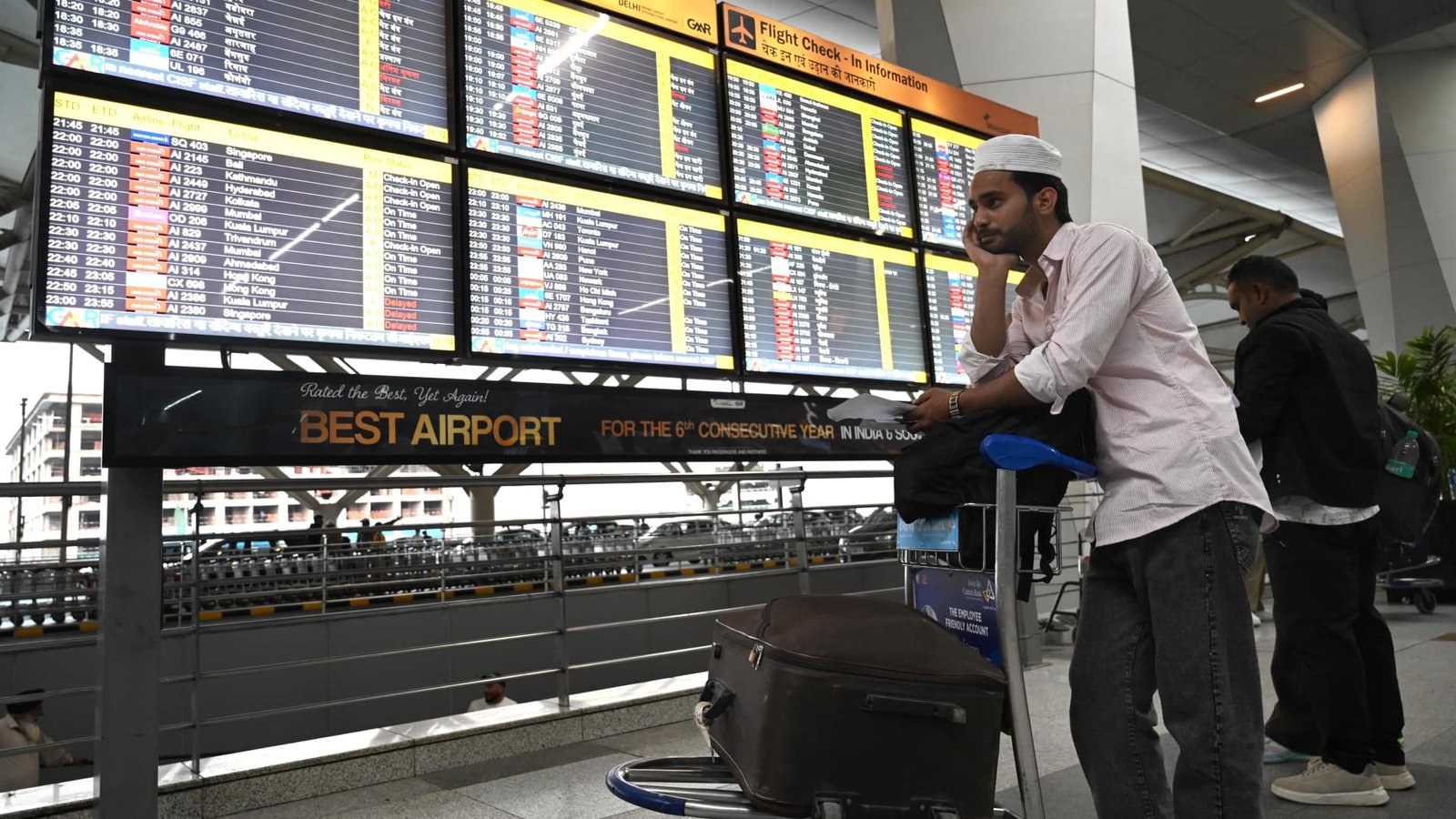
A flight scheduled for Kuwait was canceled at Delhi’s Terminal-3 due to airspace restrictions over Iran and parts of the Middle East. This incident occurred on March 1, 2026, leaving many passengers, including Mohd Umardaraz from Bijnor, Uttar Pradesh, stranded.
In the wake of escalating tensions following U.S. and Israeli attacks on Iran, air travel in the region faced significant disruptions, leading to thousands of flight cancellations. Emirates Airlines made a move to resume operations with its first flight from Dubai to Mumbai, receiving approval from local authorities. The flight, EK500, departed at 9:12 p.m. local time and was operated on an Airbus A380, the largest passenger aircraft globally.
Israeli airline El Al announced plans to potentially charter private jets to facilitate the return of stranded Israeli citizens. The rapid developments signal a possible resumption of air services as Dubai International Airport begins to allow a limited number of flights. However, travelers are urged to check with airlines for updates as operational changes unfold.
Emirates Airlines stated it would prioritize accommodating passengers with existing bookings but cautioned others not to head to the airport until receiving notification. Meanwhile, Etihad Airways has announced a temporary suspension of all commercial flights to and from Abu Dhabi, with exceptions for select cargo and repatriation flights governed by strict safety protocols.
Key points:
- Why this story matters: The situation highlights the impact of geopolitical conflicts on global air travel and passenger safety.
- Key takeaway: Airlines are cautiously resuming operations amid regional instability, emphasizing the need for travelers to remain informed.
- Opposing viewpoint: Some argue that airlines should prioritize passenger rights and improved communication during crises, rather than focusing solely on operational recovery.