

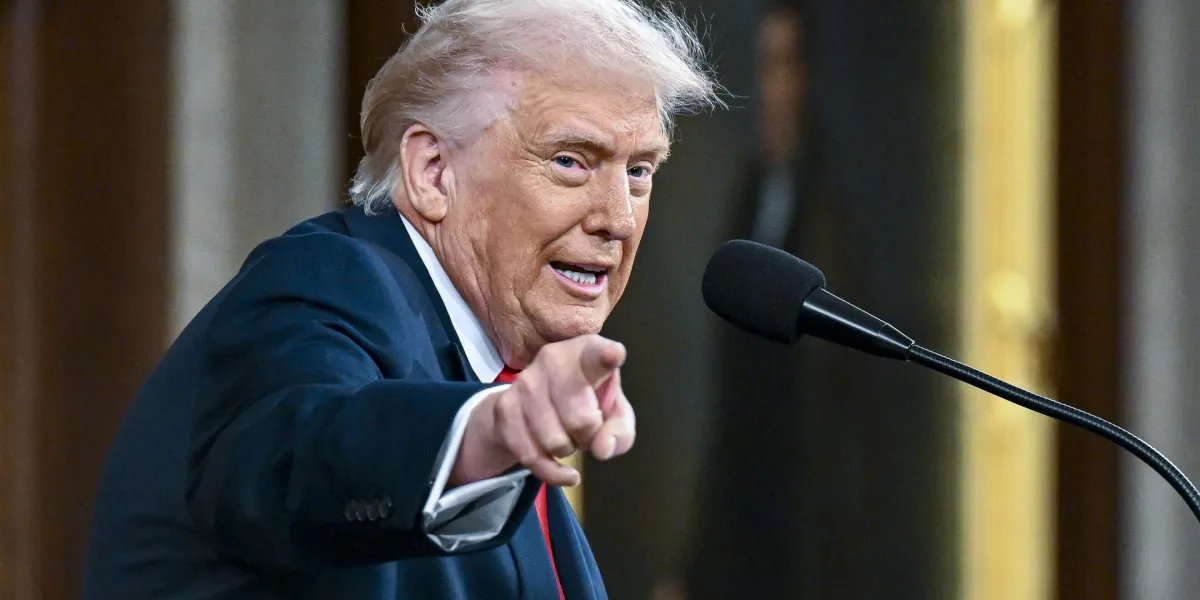
In his recent State of the Union address, President Donald Trump introduced a new 401(k) initiative aimed at assisting workers without employer-sponsored retirement plans. The proposal promises a federal match of up to $1,000 annually for these individuals. However, critics emphasize an essential concern: many potential beneficiaries lack even this modest sum to invest.
Data from Bank of America indicates that nearly 25% of U.S. households are living paycheck to paycheck. This precarious financial situation has led many to withdraw funds from their 401(k) accounts, with a recent Vanguard study reporting a rise in hardship withdrawals from 5% to 6% in just one year.
Despite Trump’s optimistic portrayal of the economy, many Americans continue to experience financial strain. Federal Reserve statistics reveal a growing wealth gap, with the top 1% now possessing close to $54 trillion in wealth, while middle-class families see a shrinking share of the income pie. Even with consistent saving efforts, many households struggle to improve their financial status, and inflation further complicates matters.
Vanguard’s research indicates a “K-shaped” recovery in retirement savings, highlighting a widening gap between high and low-income earners. While the number of retirement millionaires has risen to 665,000, mainly among long-term savers, younger generations and hourly wage laborers are less likely to benefit.
Despite the challenges, some individuals are experiencing growth in their retirement accounts, with averages increasing by 11% to $146,000 over the past year. Economist Teresa Ghilarducci observes a systemic exclusion of low-income earners from retirement benefits, leaving many skeptical of potential gains from 401(k) programs.
Why this story matters: Highlights the financial struggles facing many Americans amid rising wealth inequality.
Key takeaway: Disparities in retirement savings affect low-income earners disproportionately, even as some wealth accumulates in the top brackets.
Opposing viewpoint: While the economy is flourishing for some, low-income groups remain uncertain about the benefits of new retirement programs.