



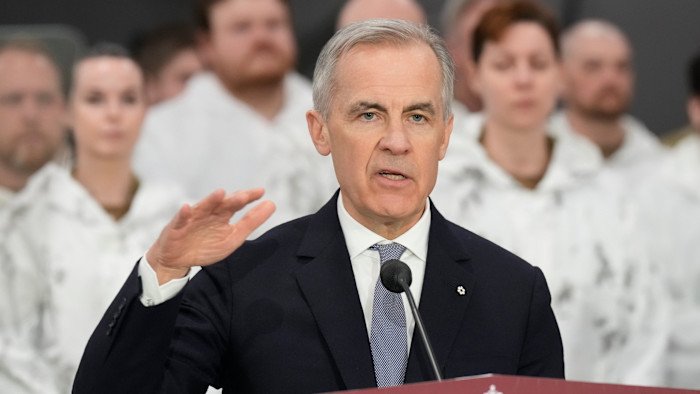
Canadian Prime Minister Mark Carney has unveiled a substantial investment initiative aimed at bolstering military facilities within the Arctic region, committing approximately C$35 billion (around $25.7 billion) as part of a broader strategy to enhance national defense by 2035. This funding will primarily focus on developing “forward operating bases” in key Arctic communities, including Yellowknife, Inuvik, and Iqaluit, empowering the Canadian Armed Forces to protect Arctic sovereignty independently.
The decision reflects heightened military priorities in response to geopolitical tensions, particularly threats posed by Russia and changing U.S. policies under former President Donald Trump. Carney emphasized the importance of Canada taking charge of its Arctic defense, stating, “Canada is taking full responsibility for defending our Arctic sovereignty.” The investment aligns with Canada’s contributions to the North American Aerospace Defense Command (NORAD), which has been operational with the U.S. since the 1950s.
The allocated funds will support enhancements to airfields, the construction of new military accommodations, and upgrades to necessary infrastructure such as ammunition storage and information technology systems. Carney characterized this investment as a significant and necessary endeavor after years of inadequate funding for the Arctic.
Additionally, the government has committed to increasing defense spending to 5 percent of GDP by 2035. A new defense industry strategy aims to direct 70 percent of military spending to local companies, fostering economic growth in the sector. Business leaders, including James Yurichuk, CEO of Wuxly, have welcomed this renewed focus, arguing it is vital for addressing existing capability gaps in the North.
Carney also intends to expedite the approval of the Mackenzie Valley highway, a crucial project for improving connectivity among remote Arctic communities.
Why this story matters
- The investment underlines Canada’s commitment to Arctic sovereignty amidst rising geopolitical tensions.
Key takeaway
- Canada plans significant military enhancements in its Arctic region to strengthen defense capabilities and economic growth.
Opposing viewpoint
- Critics may argue that prioritizing military spending could divert resources from social and environmental needs in the Arctic, home to predominantly Indigenous populations.