


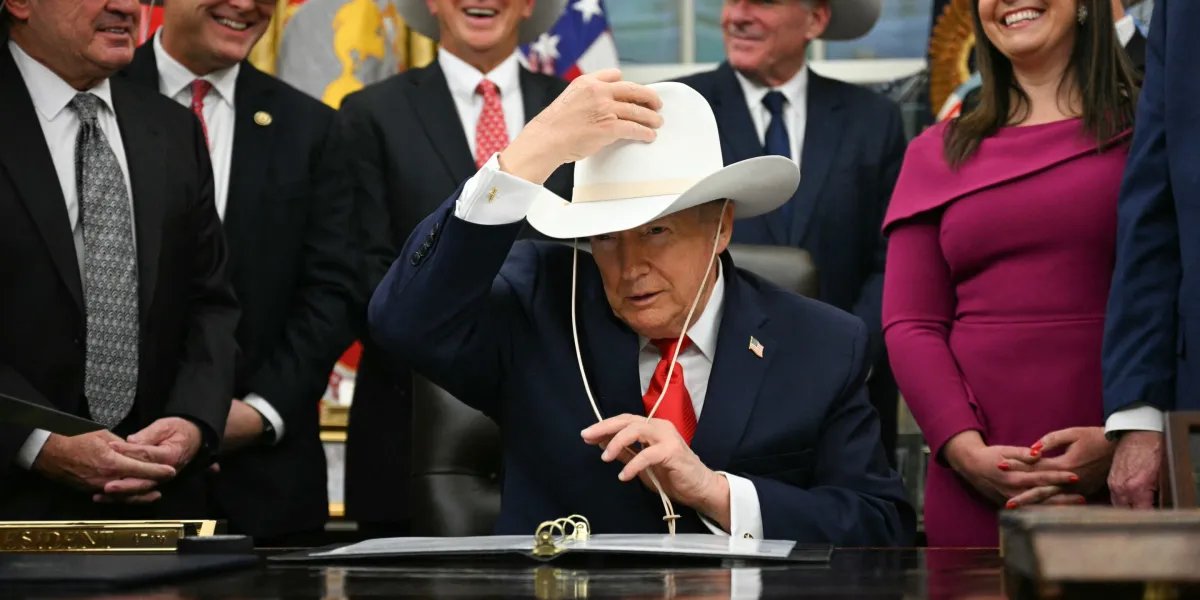
President Donald Trump hosted a significant gathering at the White House on Friday, welcoming over 800 farmers to the South Lawn, where he emphasized his administration’s support for the agricultural sector. During the event, he highlighted a $12 billion aid package from the USDA’s Farmer Bridge Assistance Program and called for further congressional relief.
However, questions have arisen regarding the distribution of this support, with reports indicating that a substantial portion benefits wealthier farmers. A recent article by the Cato Institute noted that the average income for U.S. farm households reached $159,334 in 2024, substantially higher than the national average and median incomes. Additionally, data revealed that the top 10% of farms receive a significant share of federal subsidies, challenging the narrative of struggling farmers. A Government Accountability Office (GAO) report indicated that over 1,300 farmers with adjusted gross incomes exceeding $900,000 have been beneficiaries of crop insurance subsidies.
Initially created in 1938 to aid the agricultural sector during the Great Depression, the federal crop insurance program has evolved to provide financial protection against various risks, covering over 120 commodities crucial to U.S. agriculture. Critics argue that this program has effectively transformed into a long-term financial support system for affluent agricultural businesses rather than a genuine safety net for struggling farmers.
As costs for inputs rise due to external factors, including international conflicts, the burden of the federal crop insurance program is projected to reach $14.7 billion by 2026. Although only a fraction of the overall federal expenditure, this spending is raising concerns about the program’s long-term sustainability and its skewed benefits.
– Why this story matters
The discussion highlights economic inequalities within the agricultural sector and raises questions about the efficacy of federal subsidies.
– Key takeaway
Critics assert that federal crop insurance disproportionately aids wealthier farms, challenging the idea that it serves as an effective safety net for struggling farmers.
– Opposing viewpoint
Proponents argue that crop insurance is essential for stabilizing the agricultural sector and protecting against widespread economic losses.