

Pokémon cards are increasingly being viewed as alternative assets, moving beyond their status as childhood collectibles. In recent years, especially during the pandemic and projected surges in 2025, trading card indexes tracking Pokémon sales have outperformed traditional benchmarks like the S&P 500, which has a long-term average annual return of 10% to 12%, according to Card Ladder, a trading card valuation tool.
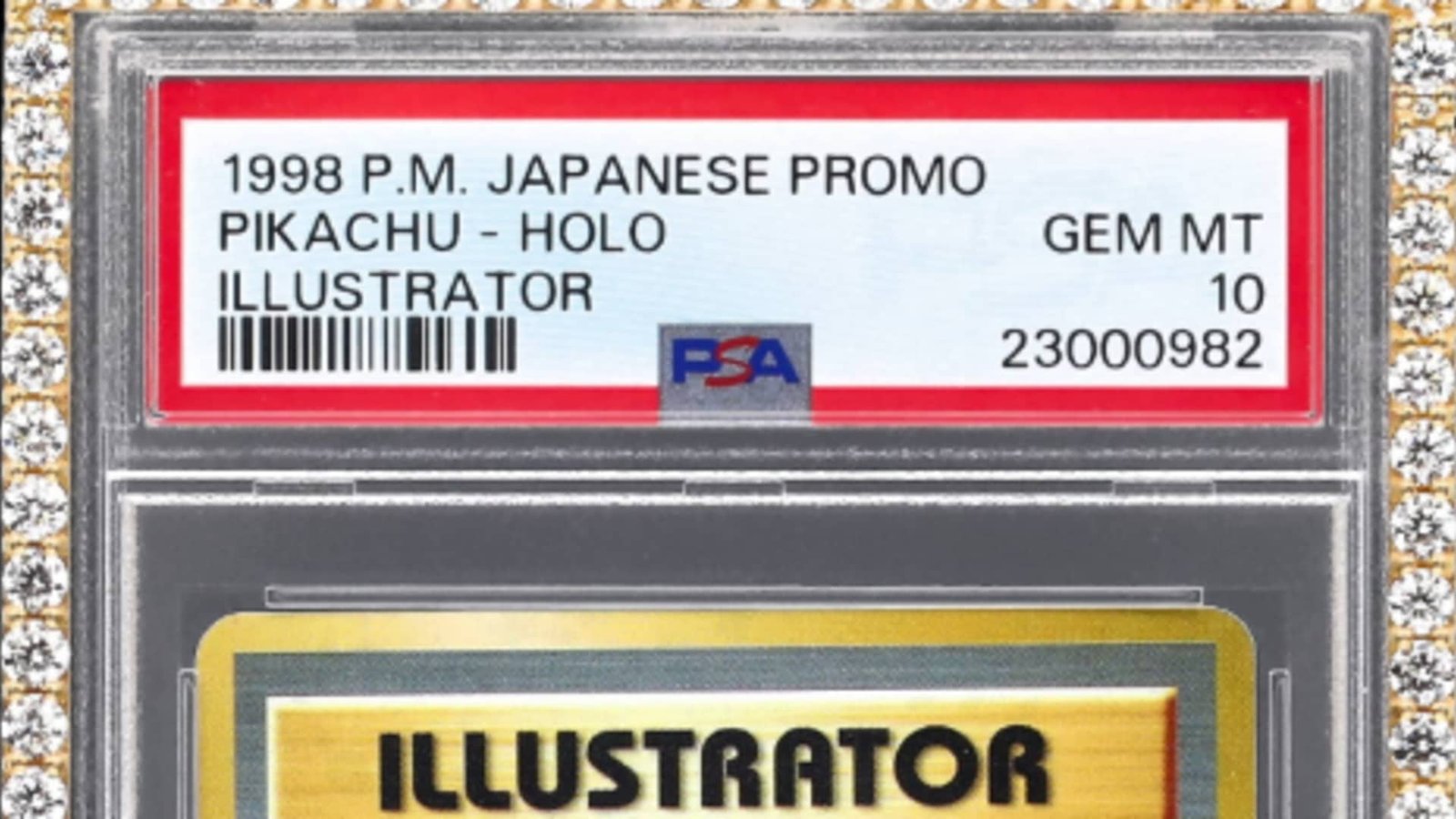
The growing interest in these cards is fueled by their scarcity and the increasing number of affluent buyers seeking rare items. For instance, a Pikachu Illustrator card, owned by influencer and wrestler Logan Paul, sold for over $16 million in February, setting a record for the most expensive trading card auctioned. Auctioneer Ken Goldin noted that a number of individuals are focused on acquiring the rarest, highest-graded cards, effectively removing them from the market for prolonged periods.
The rise in values is partially attributable to the condition of the cards. A card’s grade significantly influences its worth, and a perfect grade of 10 can command substantial premiums—sometimes costing a mere 1% of its value for lower grades. The market dynamics have led many collectors and retail investors to revisit their old collections, hoping to find valuable cards.
Following a 350% increase in spending on non-sports trading cards from 2020 to 2025, driven by factors such as stimulus funds and the participation of high-profile celebrities, the Pokémon trading card market has garnered significant attention. Despite this growth potential, experts caution that the market’s volatility, influenced by trends and hype, poses risks for investors.
Why this story matters:
- Reflects a shift in how collectibles are perceived and valued in financial markets.
Key takeaway:
- Rare Pokémon cards are emerging as significant assets, with some cards fetching millions at auction.
Opposing viewpoint:
- The market’s volatility and lack of historical stability make it a risky investment compared to traditional assets.