


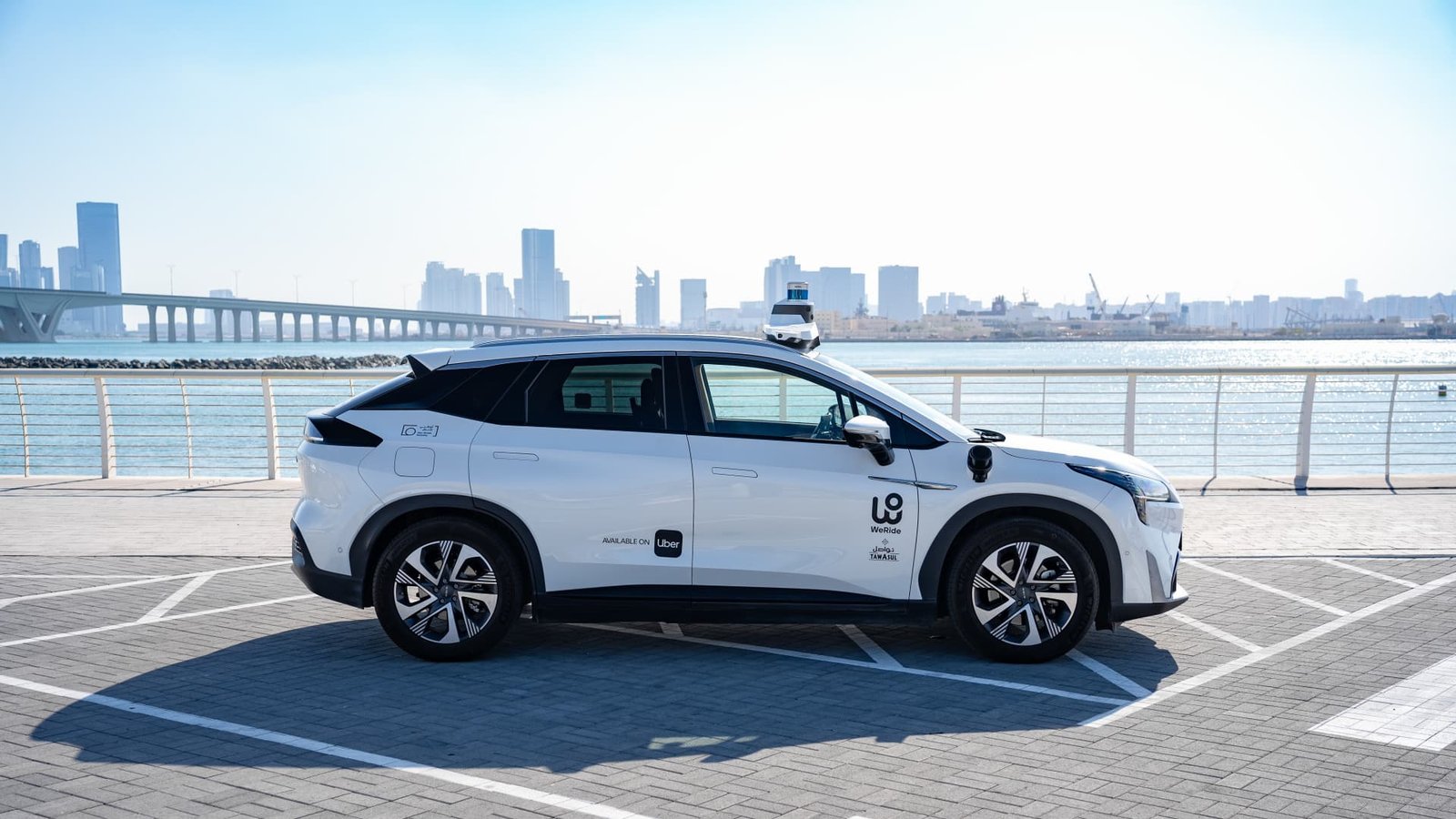
BEIJING — Several Chinese robotaxi companies are expanding their operations in the Middle East, particularly in the United Arab Emirates, despite ongoing regional tensions due to the war in Iran. Didi, a prominent ride-hailing service, plans to commence its first overseas robotaxi testing program in the UAE later this year, as announced by Zhang Bo, co-founder and head of Didi’s autonomous driving division, at a recent business cooperation forum in Beijing.
This initiative coincides with a three-day state visit by Abu Dhabi Crown Prince Sheikh Khaled bin Mohamed bin Zayed Al Nahyan to China. Didi’s move is part of a larger trend of Chinese autonomous driving firms establishing a presence in the Middle East. WeRide, based in Guangzhou, recently launched a fully driverless fare-charging robotaxi service in Dubai’s Jumeirah and Umm Suqeim districts, allowing users to book rides via the Uber app.
Pony.ai is also set to operate in Dubai, with CEO James Peng stating that the ongoing conflict has not derailed its application for a commercial license. In September, Pony.ai received approval from the Roads and Transport Authority in Dubai for local autonomous vehicle testing. Additionally, Baidu’s Apollo Go unit announced in April that it would enable residents and visitors in Dubai to hail fully driverless rides through its app, starting with an initial fleet of 50 vehicles and aspirations for a larger rollout of over 1,000 autonomous taxis in the coming years.
Chinese robotaxi companies have accelerated their global expansion in recent years, with the Middle East serving as a priority market, followed closely by testing efforts in Europe. Meanwhile, Waymo, backed by Alphabet, has expanded its fleets across the United States, as well as initiating tests in London and Japan.
Why this story matters
- This expansion reflects significant international interest in autonomous driving technology.
Key takeaway
- Chinese robotaxi companies are prioritizing the Middle East for their expansion strategies despite geopolitical challenges.
Opposing viewpoint
- Some analysts argue that ongoing regional conflicts could pose risks to investment and operational stability in the Middle East.