


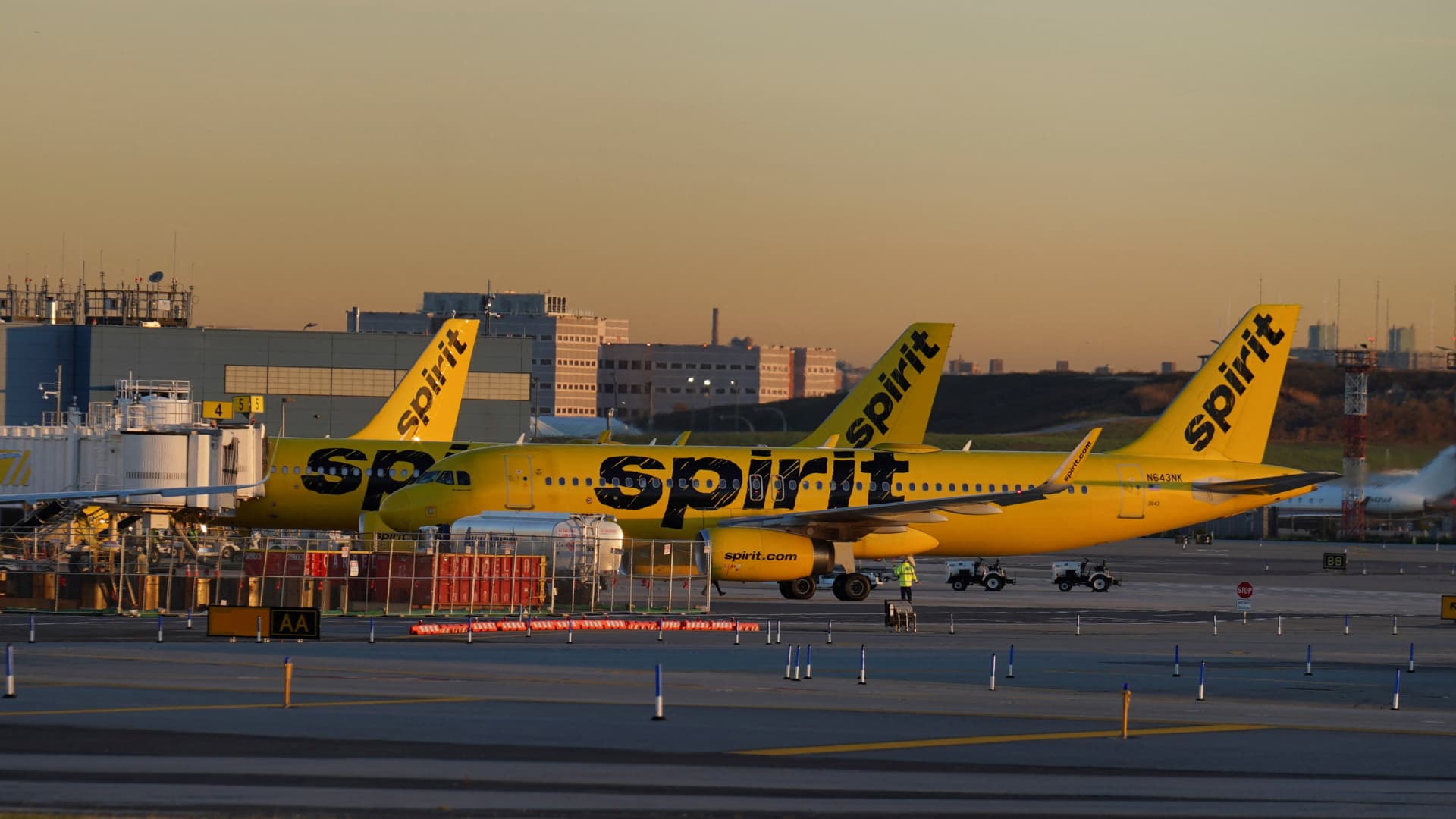
Spirit Airlines is facing a potential liquidation as early as this week, according to sources familiar with the situation. The airline has been struggling to stabilize after entering bankruptcy twice in under a year, compounded by a recent surge in fuel prices, which represent one of its largest operating expenses. The specific timeline for liquidation remains uncertain.
The announcement comes at a time when the U.S. airline industry, including Spirit, is transitioning out of a peak travel season. Despite efforts made by pilot and flight attendant unions to support the airline’s survival, Spirit has been working on plans to reduce its operational footprint by focusing on high-demand routes and travel periods. These changes were intended to position the airline for a recovery following bankruptcy.
Historically, Spirit Airlines maintained steady profitability and competitive margins until the pandemic disrupted the industry. Rising costs, shifting customer preferences, and an oversupply of domestic flights have all contributed to the current challenges. In 2023, mechanical issues tied to a Pratt & Whitney engine recall grounded many of its Airbus fleet, further straining operations. Additionally, a blocked acquisition attempt by JetBlue Airlines has left Spirit to navigate difficulties largely on its own amid fierce competition from larger carriers.
While Spirit initially projected a net profit of $252 million for 2023, it reported substantial losses shortly after its exit from its first Chapter 11 filing, leading to its second bankruptcy filing just a month later. The airline’s attempts to attract higher-spending customers through enhanced services have so far been insufficient to secure a turnaround.
Why this story matters:
- The potential liquidation of Spirit Airlines reflects broader challenges in the airline industry, particularly among budget carriers.
Key takeaway:
- The airline’s struggles exemplify the ongoing impact of the pandemic on travel dynamics and operational costs.
Opposing viewpoint:
- Some argue that consolidations and further competition could benefit the airline industry despite challenges faced by companies like Spirit.