
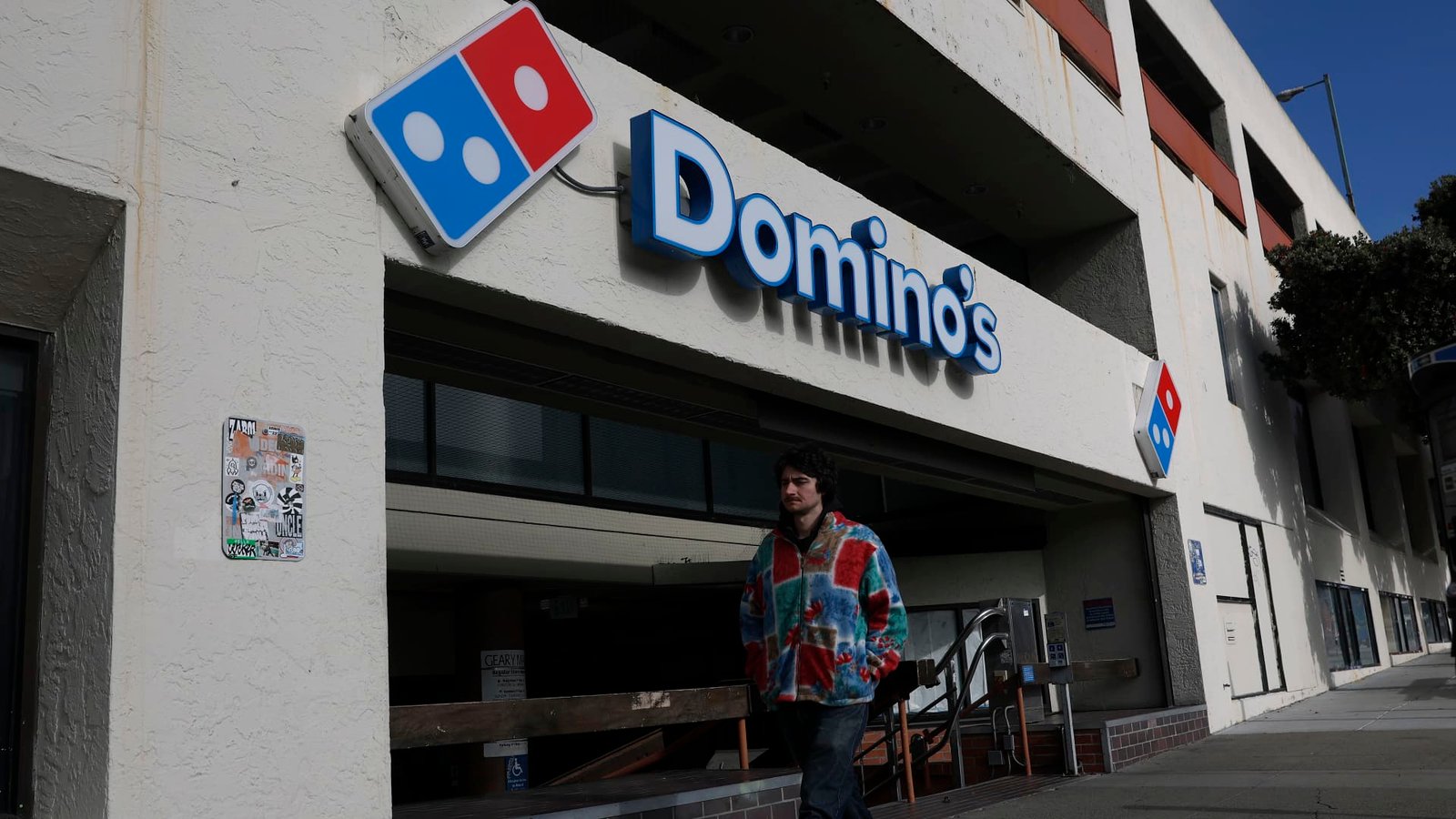
Domino’s Pizza experienced a significant decline in its stock, closing down over 8% following the company’s report of lower-than-anticipated U.S. same-store sales growth. The chain’s domestic same-store sales rose only 0.9%, in contrast to the 2.3% increase forecasted by Wall Street analysts. CEO Russell Weiner expressed disappointment with the results during an interview, emphasizing that the company has revised its full-year growth forecast to low-single digits, down from the previous 3% estimate.
Weiner attributed the subdued sales performance to adverse winter weather conditions and declining consumer sentiment, which has been worsened by rising fuel prices linked to the ongoing conflict in Iran. As the initial earnings report for the restaurant sector, Domino’s results set the tone for other fast-food chains, with Starbucks, Chipotle, and Yum Brands scheduled to announce their earnings soon.
Additionally, Domino’s faced increased competition from rival pizza chains. Both Papa John’s and Pizza Hut introduced similar pricing promotions, while Little Caesars undercut Domino’s pricing for certain deals. Despite the stiff competition, Weiner expressed optimism about Domino’s future, citing a significant advertising budget compared to its competitors and the potential closure of numerous locations by competitors exploring strategic changes.
Over the past year, Domino’s shares have decreased by nearly a third, resulting in a market capitalization of approximately $11.2 billion.
Why this story matters
- The performance of Domino’s could indicate broader trends within the restaurant industry.
Key takeaway
- Despite current challenges, Domino’s maintains a competitive edge through strategic marketing and the potential for rival market consolidation.
Opposing viewpoint
- Critics may argue that Domino’s reliance on promotions and competitive pricing could hurt long-term profitability.