


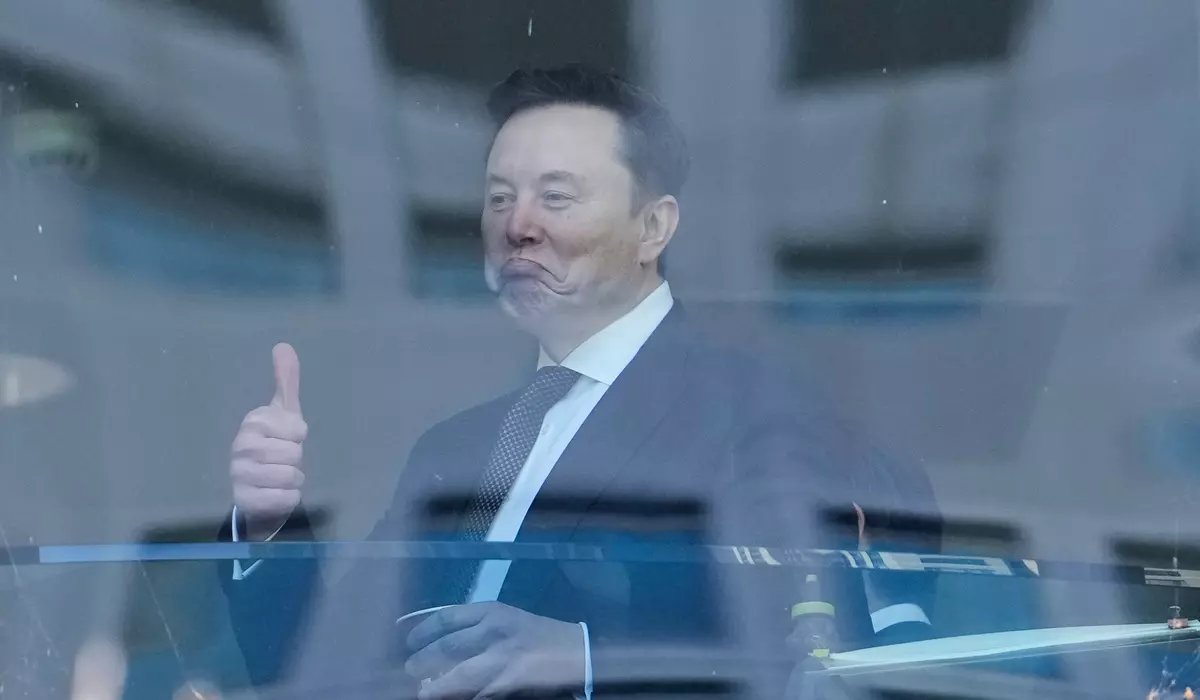
Elon Musk continued his testimony in a significant trial in Oakland, California, where he is challenging Sam Altman, co-founder of OpenAI, over allegations that Altman abandoned commitments to maintain the organization as a nonprofit. The trial stems from the founding of OpenAI in 2015 as a nonprofit, primarily supported by Musk’s investment of approximately $38 million. Since then, OpenAI has transitioned into a for-profit entity valued at $852 billion.
Musk expressed concerns about Altman’s management, suggesting that he feared Altman was "stealing the charity." His distrust reportedly developed over time, especially by late 2022. While Musk acknowledged that OpenAI was founded as a nonprofit, he stated that the situation was more complex than it appeared, comparing questions about his early involvement to misleading inquiries.
During cross-examination, Musk defended his actions and clarified that his initial intent to control OpenAI lessened as the company expanded. He suggested that his perspective shifted from enthusiastic support to skepticism regarding the leadership’s direction. Meanwhile, OpenAI’s legal team countered Musk’s claims, asserting that there were no explicit promises regarding the organization’s nonprofit status, which they argue is part of a broader strategy by Musk to undermine OpenAI’s growth and promote his competing venture, xAI.
The outcome of the trial could significantly impact the future of artificial intelligence and OpenAI’s plans for an initial public offering.
Why this story matters
The trial raises crucial questions about governance and accountability in rapidly evolving technology sectors like artificial intelligence.
Key takeaway
Musk’s allegations against Altman highlight a fundamental conflict over the vision and direction of OpenAI since its inception.
Opposing viewpoint
OpenAI maintains that Musk’s legal actions are an attempt to undermine the company and assert control through competitive pressure.