



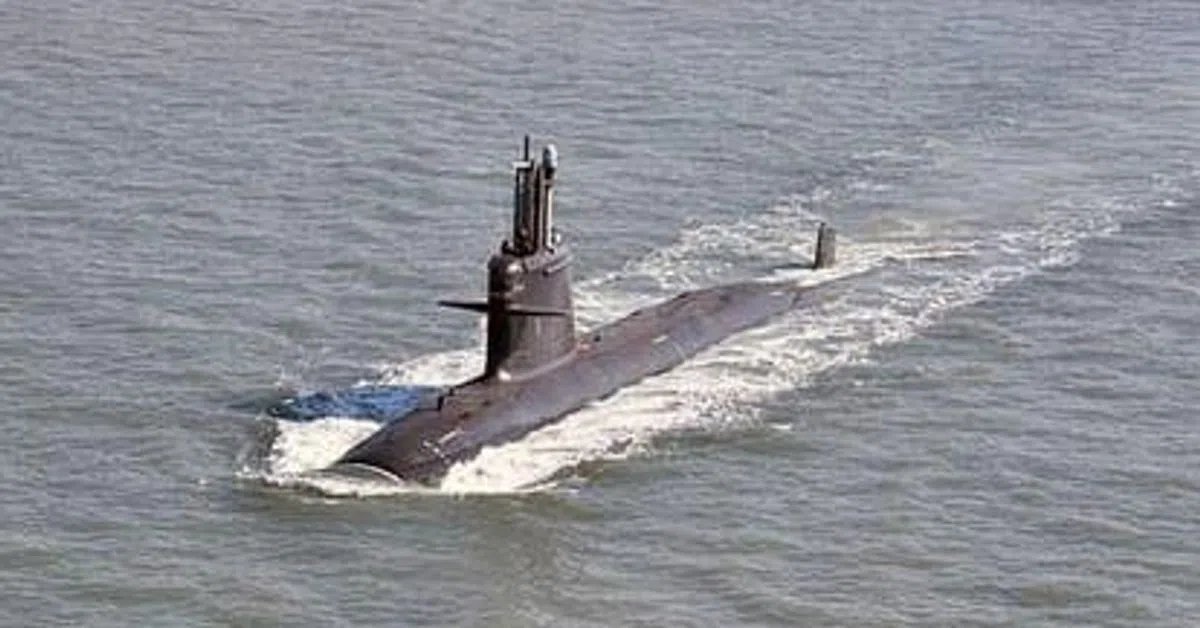
India has officially inducted the INS Aridaman, the third submarine in the indigenous Arihant class, into service under the Strategic Forces Command. Weighing approximately 7,000 metric tonnes, the submarine represents a significant enhancement to India’s nuclear deterrent capabilities, adhering to the country’s policy of "minimum credible deterrence" and "no first use" of nuclear weapons.
The induction event, which took place in early April, was not preceded by any official media announcements from the Indian Navy or the Ministry of Defence. Defence Minister Rajnath Singh highlighted the submarine’s name, which translates from Sanskrit to mean "vanquisher" or "destroyer," signifying its role in boosting national security.
INS Aridaman features an advanced light water reactor, improving upon its predecessors, INS Arihant and INS Arighaat. The last missile test by this class occurred in December, with missiles developed under the K-series, named after former President A P J Abdul Kalam. The addition of Aridaman enhances India’s naval profile and supports the doctrine of continuous at-sea deterrence (CASD), effectively keeping at least one ballistic missile submarine operational and undetected at all times.
Former Indian Navy Chief Admiral Karambir Singh remarked on the importance of the submarine as part of India’s strategic nuclear triad. Meanwhile, India is also developing additional submarines, including a fourth SSBN (submersible ship ballistic missile nuclear) and six nuclear-powered attack submarines (SSNs) to strengthen its naval capabilities.
The Indian Navy’s submarine fleet currently comprises around 19 vessels, a combination of conventional and nuclear-powered submarines. However, the nation faces challenges in increasing its numbers relative to China, which has a larger fleet.
Why this story matters:
- Enhances India’s strategic defense capabilities amidst regional tensions.
Key takeaway:
- The induction of INS Aridaman strengthens India’s nuclear deterrence strategy.
Opposing viewpoint:
- Concerns over the pace of India’s submarine development and technological self-sufficiency remain significant challenges.