



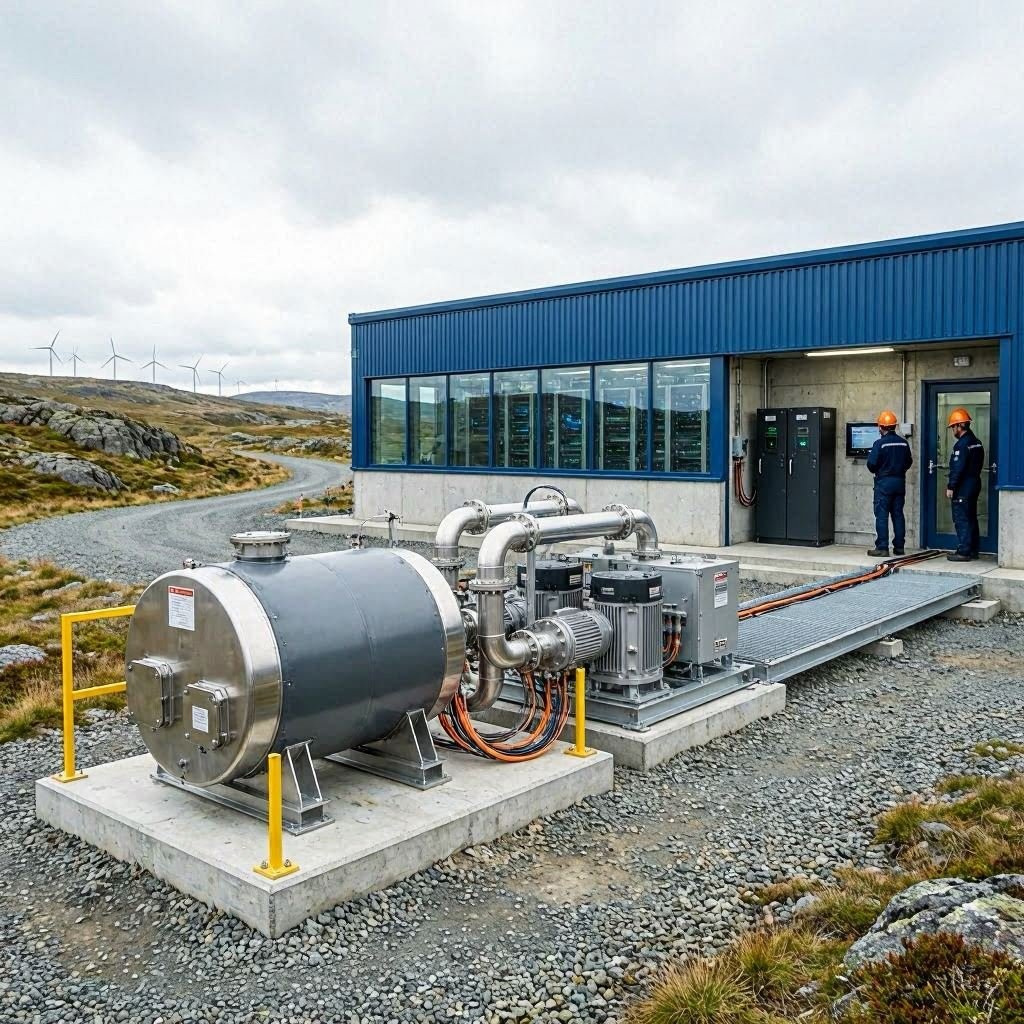
Nuclear power, once a key focus of energy discussions, has experienced a significant shift over the decades due to high-profile failures such as Three Mile Island, Chernobyl, and Fukushima. This has led to a decrease in its prominence, but recent developments suggest a potential resurgence—one that shifts the paradigm from large-scale reactors to much smaller ones known as microreactors.
Microreactors can generate limited amounts of power and are designed to be compact enough to fit in containers akin to shipping crates. This innovative approach aims to overcome the challenges associated with traditional large nuclear plants, which often face cost overruns, delays, and political obstacles. The U.S. Air Force has recently selected several companies, including Radiant, Antares Nuclear, and Westinghouse, to advance projects involving microreactors at various military bases, with plans to have operational systems by 2030.
These smaller reactors are particularly appealing for remote locations where conventional electricity generation methods, such as diesel generators, are less efficient and more complex. Microreactors can autonomously operate for extended periods without refueling, thus mitigating the risks and logistical hurdles associated with fuel supply, especially for military operations.
The broader implications of this technology could lead to a transformative shift in energy distribution, analogous to the movement from centralized mainframe computers to distributed computing systems. As global electricity demand rises—driven by factors like artificial intelligence and the electrification of various sectors—microreactors may fill crucial gaps in energy provision.
While the potential is promising, challenges such as licensing and fuel supply chains must be addressed before widespread adoption can occur. Nevertheless, the evolution of nuclear power towards smaller, more efficient solutions may redefine the future of energy production.
Why this story matters
Key takeaway
Opposing viewpoint