


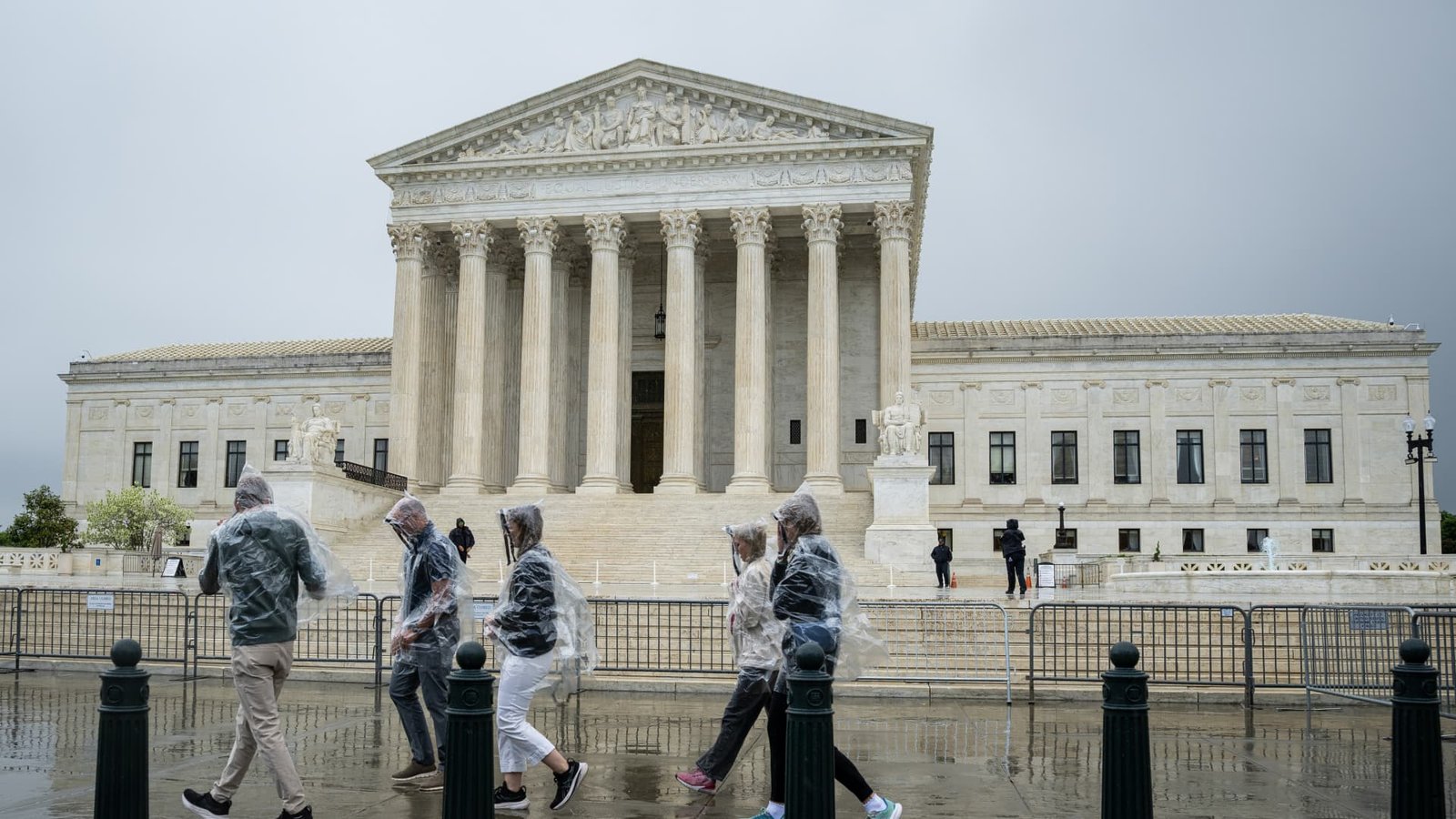
The U.S. Supreme Court has paved the way for Alabama Republicans to pursue a congressional voting map that is likely to favor their party in the upcoming midterm elections. On Monday, the high court overturned a lower court’s ruling that had deemed the proposed map racially discriminatory and accused it of diluting the voting power of Black Alabamians.
With the conservative majority in the Supreme Court endorsing this shift, Alabama Republicans are expected to revert to a previous map that reduces the number of majority-Black districts from two to one among the state’s seven U.S. House seats. This change stands to benefit Republican candidates, who are working to maintain their control over the House and Senate as the elections approach.
The lower court had previously determined that a prior map intentionally discriminated against Black voters, thereby violating their rights. In a notable dissent, Justice Sonia Sotomayor highlighted that the Alabama case carried more extensive implications than similar cases, asserting that the Supreme Court’s decision to reject the lower court’s ruling could create confusion for voters as elections approach.
The backdrop of this decision includes a recent ruling where the Supreme Court struck down a Louisiana map that had included an additional Black-majority congressional district, arguing it relied too heavily on race, violating constitutional principles. Alabama officials contended that their court-ordered map suffered from the same issues.
As the redistricting battle continues, the situation reflects broader national tensions around electoral maps and voting rights, particularly in states led by Republican governments.
Why this story matters
Key takeaway
Opposing viewpoint