

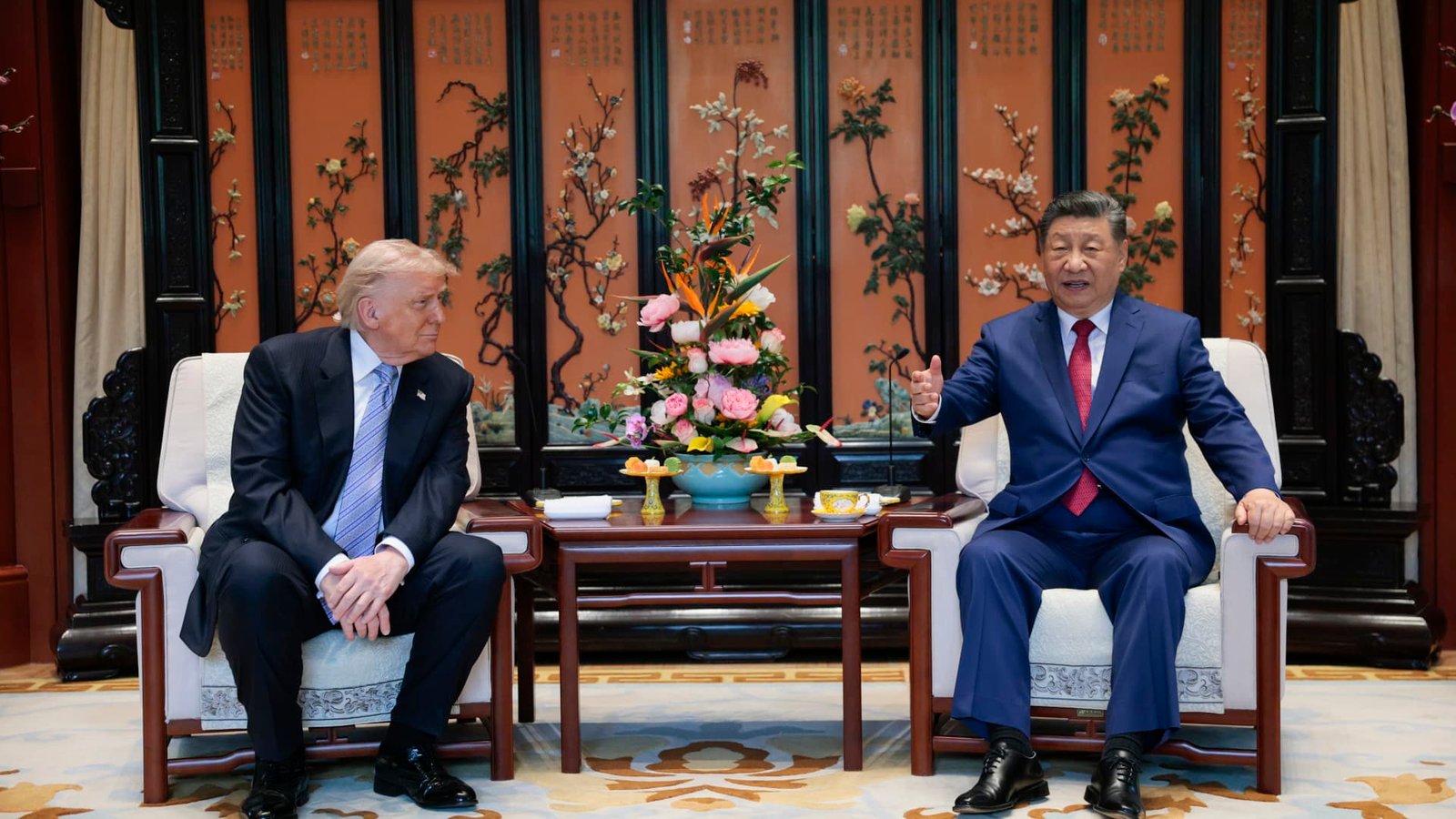
U.S. President Donald Trump concluded a two-day summit with Chinese President Xi Jinping in Beijing on May 15, 2026. The discussions, which encompassed a range of issues including trade, oil, Taiwan, and Iran, featured formal ceremonies and a state dinner attended by youth representatives.
State media reported Xi emphasizing the importance of "strategic stability" as a cooperative framework for the next three years. Trump announced that China had committed to purchasing U.S. oil and a significant order of 200 airplanes from Boeing, which he highlighted in a subsequent interview. However, experts, such as Ryan Fedasiuk of the American Enterprise Institute, noted uncertainties about which agreements would be fully realized, suggesting there are more discussions needed before any deals come to fruition.
Looking ahead, Trump extended an invitation for Xi to visit the White House on September 24, reinforcing the intention to continue trade negotiations. While China has not confirmed this visit, state media acknowledged Trump’s call for further dialogue in Washington. Potential future meetings may also occur at the APEC conference in Shenzhen in November and the G20 meeting in Florida in December. Hai Zhao, a director at the Chinese Academy of Social Sciences, expressed optimism about the visit being a state affair, indicating that Xi might also stop in New York prior to D.C. in light of the upcoming United Nations General Assembly.
Why this story matters:
- The summit reflects ongoing efforts to stabilize U.S.-China relations amid various global challenges.
Key takeaway:
- Both leaders signaled a desire for continued dialogue, with potential future agreements involving significant economic commitments.
Opposing viewpoint:
- Some analysts caution that many agreements may remain unfulfilled, highlighting the complexities of U.S.-China negotiations.