


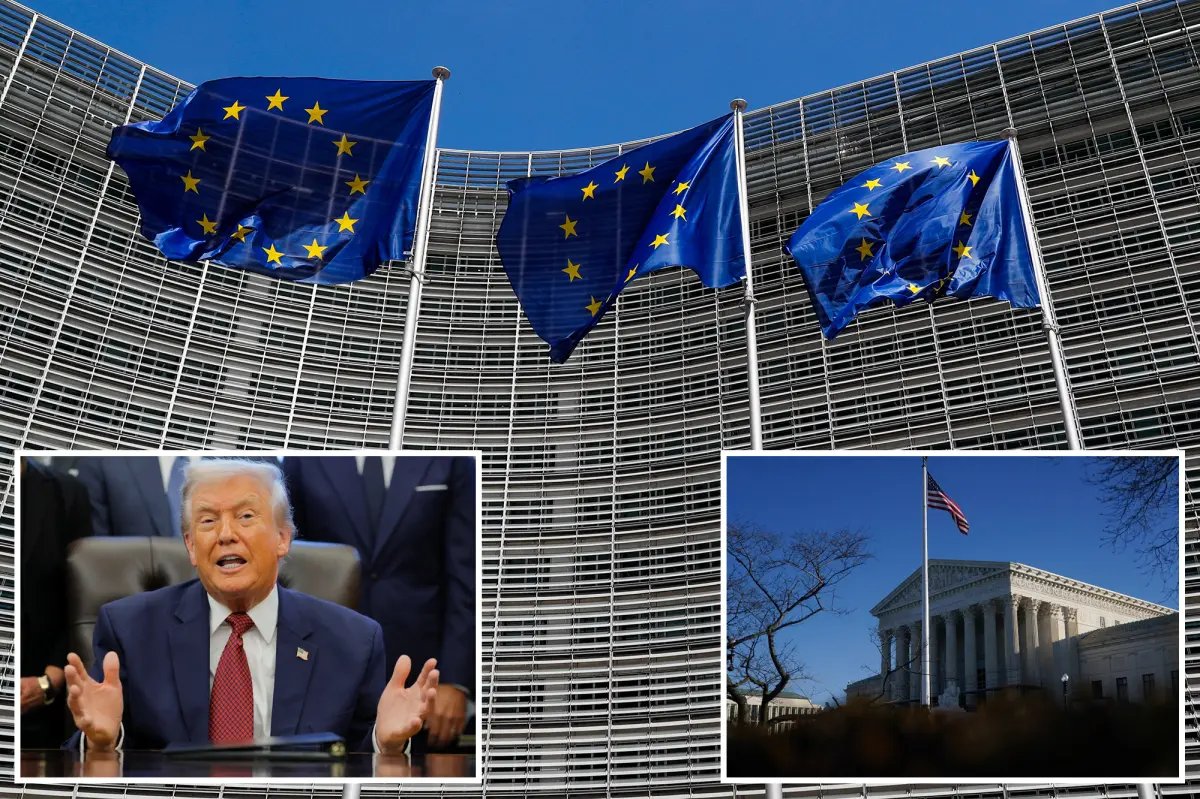
The European Commission has urged the United States to adhere to the terms of a trade agreement established last year, following a recent decision by the US Supreme Court that annulled President Trump’s global tariffs. In response to the court ruling, President Trump implemented temporary tariffs of 10%, which were swiftly increased to 15%.
The Commission, which represents the 27 EU member states in trade negotiations, has called for “full clarity” from Washington regarding its plans after the Supreme Court’s decision. It emphasized that the current situation does not foster “fair, balanced, and mutually beneficial” transatlantic trade and investment, as outlined in the original trade deal. “A deal is a deal,” the Commission asserted.
The previous trade agreement had established a 15% tariff rate for most EU goods, excluding specific sectoral tariffs and allowing zero tariffs on certain products, such as aircraft and spare parts. In return, the EU agreed to eliminate import duties on numerous US goods and withdrew threats of retaliation with increased levies.
The European Commission highlighted that EU products should continue to receive the most competitive treatment without increased tariffs that go beyond the previously agreed thresholds. It expressed concerns that unpredictable tariffs could disrupt markets and undermine global confidence.
EU Trade Commissioner Maros Sefcovic reportedly discussed the situation with US Trade Representative Jamieson Greer and Commerce Secretary Howard Lutnick over the weekend.
Why this story matters:
- The outcome may significantly impact transatlantic trade and future economic relations.
Key takeaway:
- The European Commission is insisting on compliance with previously negotiated tariff agreements amid changing US trade policies.
Opposing viewpoint:
- Supporters of Trump’s tariffs argue that they are necessary to protect American industries and jobs against perceived unfair foreign competition.