



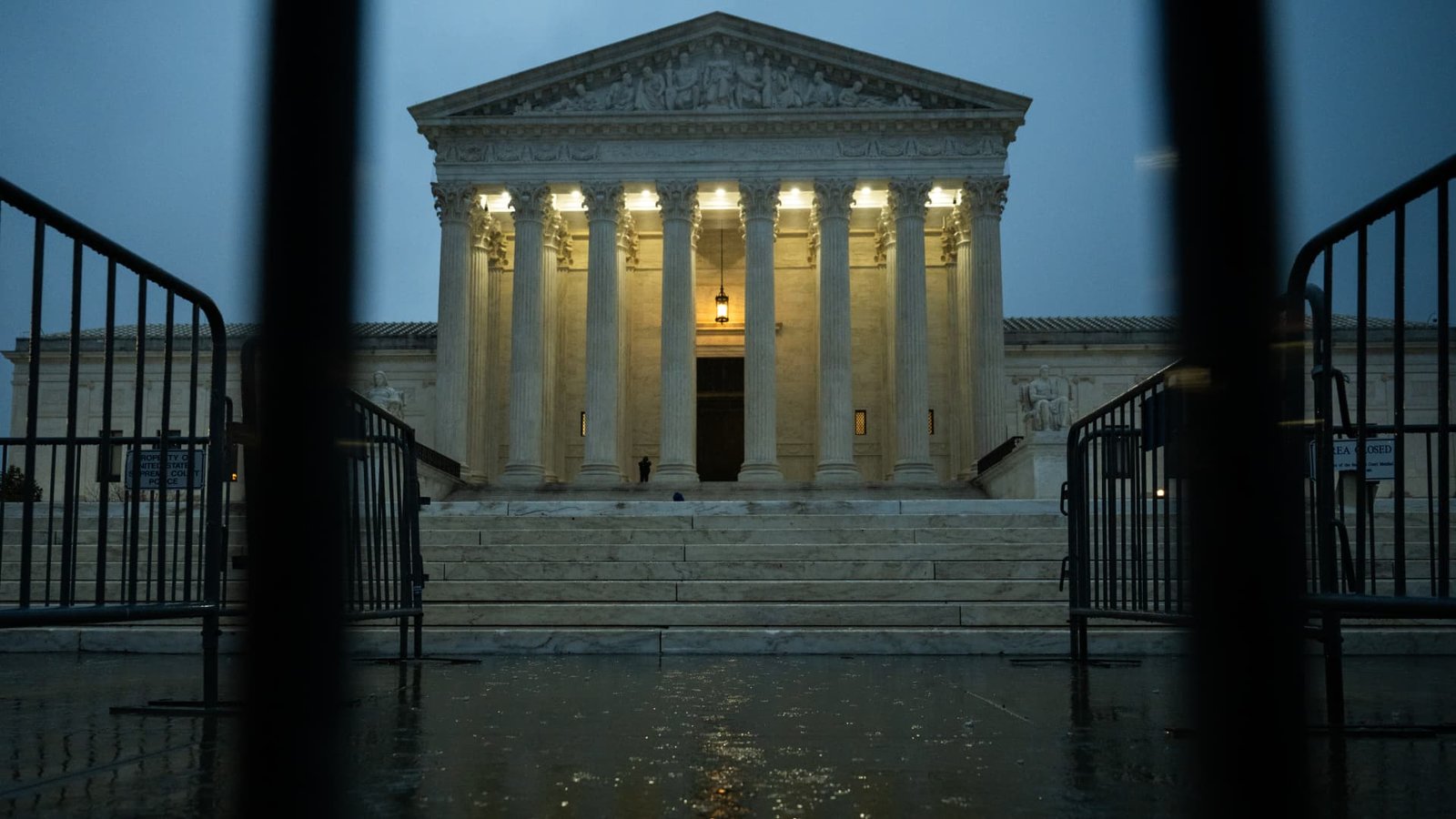
The Supreme Court recently determined that President Donald Trump’s use of country-specific “reciprocal” tariffs is unconstitutional, marking a significant moment for consumer companies burdened by increased import costs. The ruling, which was reached with a 6-3 majority, focused on tariffs enacted under the International Emergency Economic Powers Act of 1977 (IEEPA). Historically, this act has not been utilized by any president to enforce tariffs.
Despite the court’s decision, Trump announced a new global 10% tariff shortly afterward. Notably, the ruling does not affect tariffs established under Section 232 of the Trade Expansion Act of 1962, aimed at protecting national security. Consequently, tariffs on various products, including steel and semiconductors—targeted to safeguard national interests—remain in effect.
The automotive industry continues to navigate the ramifications of these tariffs, with automakers estimating costs ranging from $2 billion to $4 billion this year. Firms like General Motors and Ford are adapting to market conditions, with some negotiations resulting in reduced rates with specific countries.
The pharmaceutical sector is also under pressure, as Trump has alluded to potential tariffs that could reach as high as 250%. While existing negotiations have postponed these tariffs, the uncertainty remains, especially following an investigation into the implications of pharmaceutical imports on national security.
The furniture industry has similarly felt the impact of the ruling; 25% tariffs on various items will remain, exacerbating the challenges faced by smaller companies. The food and packaged goods sectors will continue to contend with increased costs due to existing aluminum tariffs, although some agricultural products have been exempted from earlier tariffs.
Why this story matters
- The ruling impacts consumer costs and cross-border trade practices.
Key takeaway
- The Supreme Court’s decision has significant implications for specific industries, yet some tariffs aimed at national security remain.
Opposing viewpoint
- Proponents of the tariffs argue they are necessary for protecting domestic industries and national interests.