

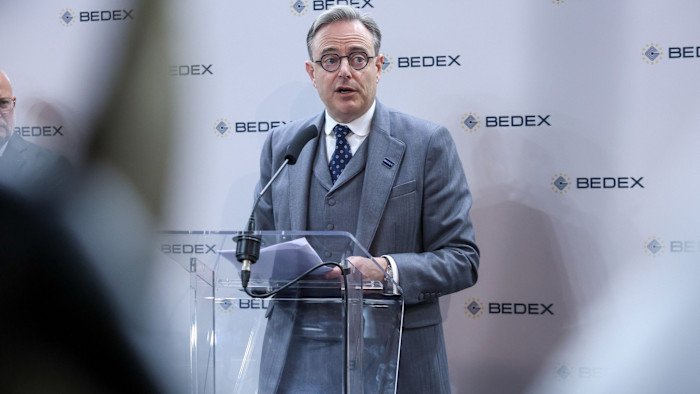
Belgium’s Prime Minister Bart De Wever has called for the European Union to reconsider its relationship with Russia in order to secure access to cheaper energy. This stance contradicts the EU’s current approach, which emphasizes strong support for Ukraine during its ongoing conflict with Russia. In an interview with the Belgian newspaper L’Echo, De Wever stated, “We must normalize relations with Russia and regain access to cheap energy. That is common sense.” He suggested that many European leaders privately share this view but hesitate to voice it publicly.
Since Russia’s full-scale invasion of Ukraine in February 2022, the EU has provided substantial financial and military support to Ukraine while imposing sanctions aimed at crippling the Russian economy. A key element of this strategy has involved halting oil and gas imports from Russia, a major energy supplier to Europe. Rising energy prices, exacerbated by escalating tensions in the Middle East, have triggered renewed discussions among EU nations about energy affordability for households and businesses.
De Wever’s call for renewed dialogue comes ahead of a meeting of EU foreign ministers to discuss the ongoing conflicts in Ukraine and the Middle East. His perspective has sparked criticism from Belgium’s Foreign Minister Maxime Prévot, who stressed that while diplomacy is essential, normalization of relations with Russia should not be confused with mere dialogue. Prévot reiterated that Belgium’s support for Ukraine is unwavering and no easing of sanctions is considered at this point.
Key Points:
-
Why this story matters: It highlights the tensions within the EU regarding energy policy and support for Ukraine amidst rising global energy prices.
-
Key takeaway: Belgium’s Prime Minister advocates for a shift in EU policy towards Russia, raising concerns about unity among member states.
-
Opposing viewpoint: Belgium’s Foreign Minister emphasizes diplomacy but warns that normalization could weaken European resolve and unity in supporting Ukraine.