


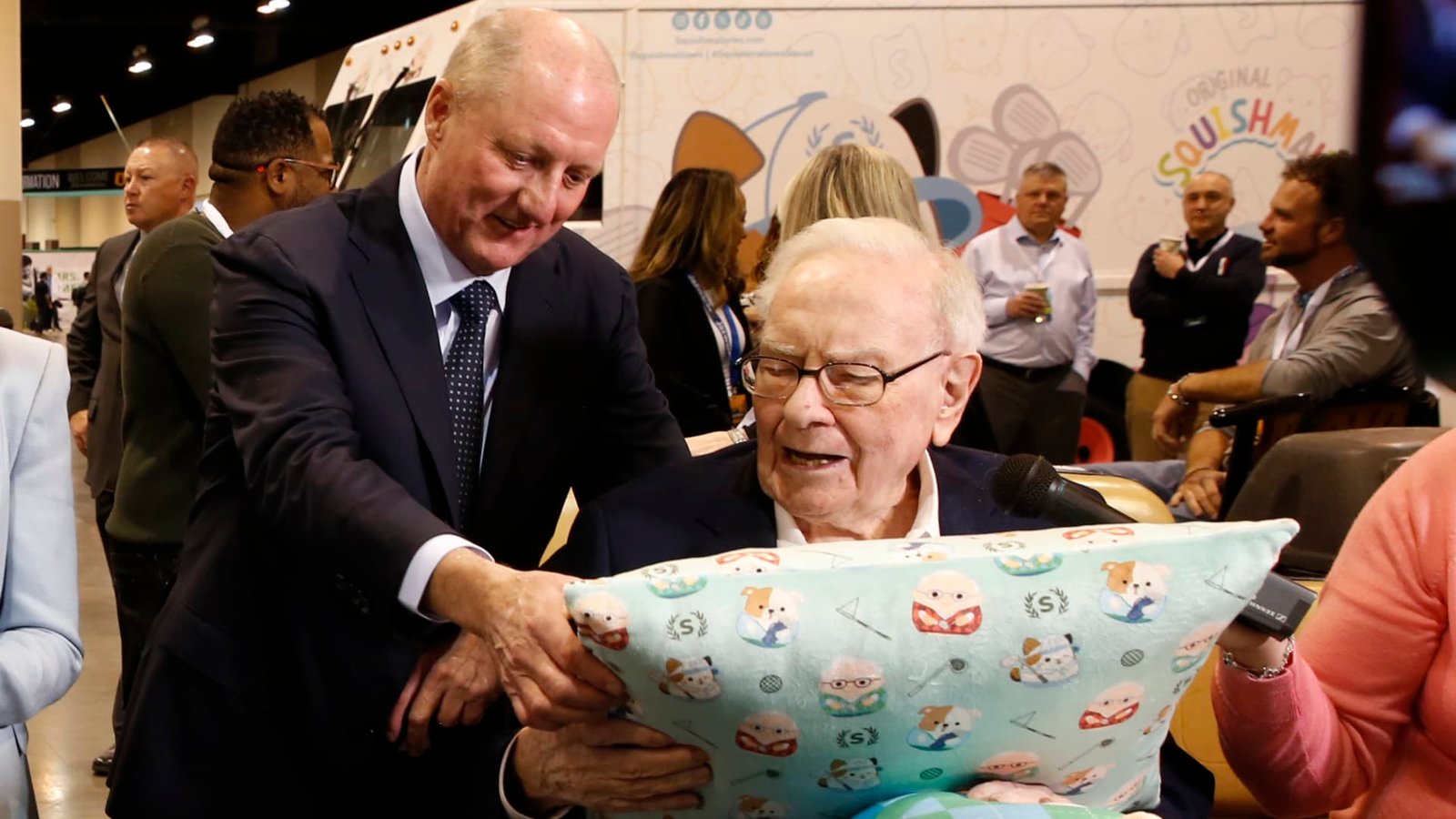
Berkshire Hathaway experienced a significant decline in operating earnings for the fourth quarter of 2025, largely attributed to challenges within its insurance sector. The company’s operational earnings amounted to $10.2 billion, a decrease of over 29% from $14.56 billion in the fourth quarter of the previous year. This quarter marked the last under CEO Warren Buffett, who officially transitioned leadership to Greg Abel at the start of 2026. Buffett remains chairman and emphasized in the company’s annual letter that Abel is committed to maintaining Berkshire’s established culture of financial discipline and strength.
Insurance underwriting profits fell sharply by 54%, from $3.41 billion to $1.56 billion year-over-year, while insurance investment income experienced a nearly 25% decline, dropping to $3.1 billion. Over the course of 2025, the company reported total operating earnings of $44.49 billion, down from $47.44 billion the year before. Full-year underwriting profits from insurance decreased to $7.26 billion compared to $9 billion in 2024, with investment income also falling.
While total earnings—including stock market investment results—slightly decreased to $19.2 billion in Q4, an impairment of $4.5 billion from investments in Kraft Heinz and Occidental Petroleum influenced these figures. Full-year overall earnings dropped to $66.97 billion from $89 billion. Berkshire noted that short-term investment performance should be viewed with caution, as it can mislead investors unfamiliar with accounting practices.
Berkshire Hathaway’s cash reserves slightly decreased to $373.3 billion, despite refraining from share buybacks. The company’s Class A shares rose 10% in 2025, trailing behind the S&P 500’s 16.4% increase. Under Buffett’s leadership since 1965, Berkshire achieved compounded annual gains of 19.7%, far surpassing the broader market’s performance.
Why this story matters: Berkshire’s performance reflects broader trends in the insurance sector and investor sentiment during leadership transitions.
Key takeaway: Despite recent declines, Buffett’s legacy of financial prudence may position Berkshire for long-term growth under Abel.
Opposing viewpoint: Critics may argue that Berkshire’s recent performance highlights vulnerabilities that could challenge its robust history of growth.